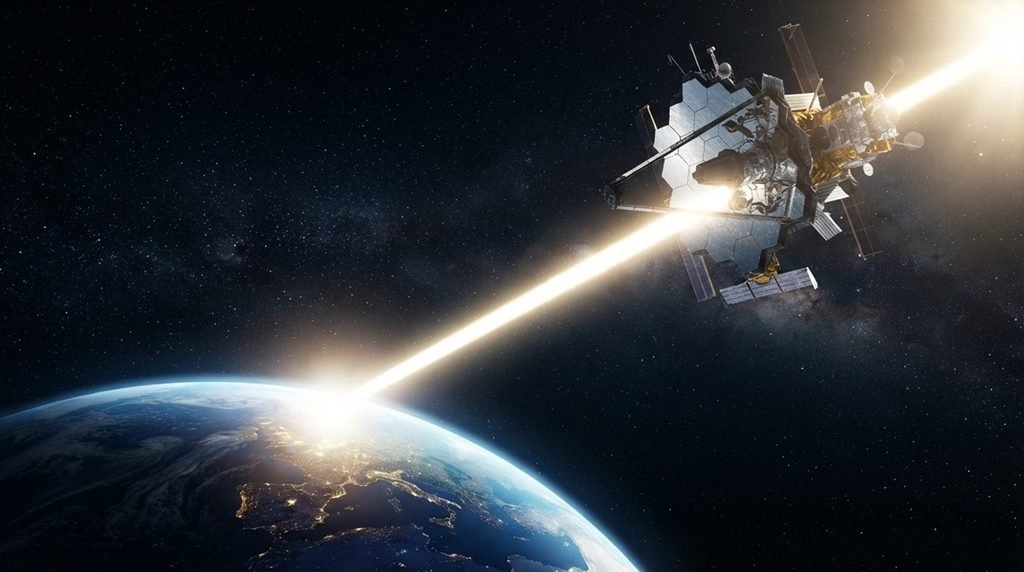
The night sky is changing fast, but a silent hazard orbiting right above our heads could be targeting your eyes.
💡 Scientists just exposed a hidden danger from giant space mirrors that reflect blinding sunlight down to Earth. These massive orbital structures aim to light up cities at night, but they risk causing severe glare and irreversible eye damage to millions of people.
💡 Astrophysicist Salvador Bará published a critical study detailing how these reflective satellites alter our environment. The math shows that looking up at the wrong moment could expose your eyes to intense solar radiation, permanently scorching your retinas without protection.
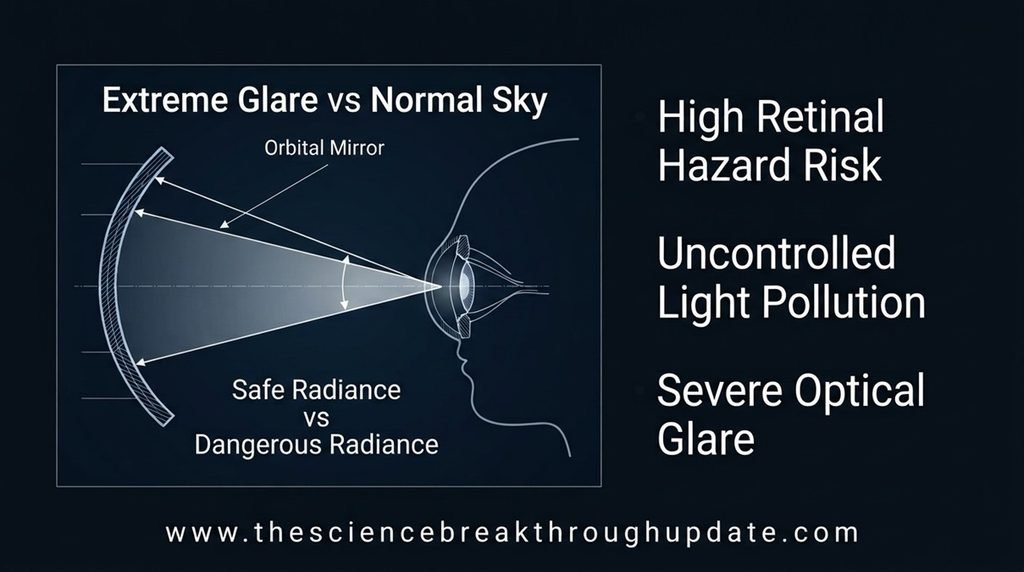
The Looming Threat of Artificial Space Glare
- 🌌 Thousands of highly reflective satellites could soon flood the night sky to beam solar energy or artificial light downward.
- ⚠️ This uncontrolled light pollution creates extreme optical hazards for skywatchers, pilots, and everyday citizens walking outside at night.
- 👁️ Looking directly at these moving focal points can trigger photochemical retinal damage similar to staring straight into a solar eclipse.
- 🔭 The continuous flash of these systems disrupts critical astronomical observations and completely alters natural nocturnal wildlife behaviors across the globe.
How Scientists Measure the Radiation Risk
- 📐 Researchers utilize advanced radiometric modeling to calculate the exact radiance and thermal impact of these space-based mirrors.
- 📊 The study evaluates retinal hazard functions to determine the precise threshold where artificial starlight becomes dangerous to human vision.
- 🛰️ Optical sensors track the angular velocity of satellites to map out how fast the blinding glare sweeps across geographic zones.
- 🛑 Experts urge international aerospace agencies to establish strict reflectivity limits before companies launch these massive structures into orbit.
The Global Impact on Human Health and Astronomy
- 🛡️ Standardizing these safety metrics protects billions of human eyes from unexpected optical injuries during routine nighttime activities.
- 🌌 Enforcing these hardware boundaries saves global dark sky reserves from permanent light pollution and preserves our view of outer space.
- 🛠️ Aerospace companies must now redesign their satellite chassis materials to absorb excess sunlight instead of scattering dangerous glare.
- 📜 This research forces international space policymakers to update orbital environmental laws to prevent corporate monopolies over night sky brightness.
My Take: We cannot sacrifice public health for corporate greenwashing. Profitable nighttime illumination is useless if walking outside risks blinding everyday people and permanently destroying our last remaining dark skies.
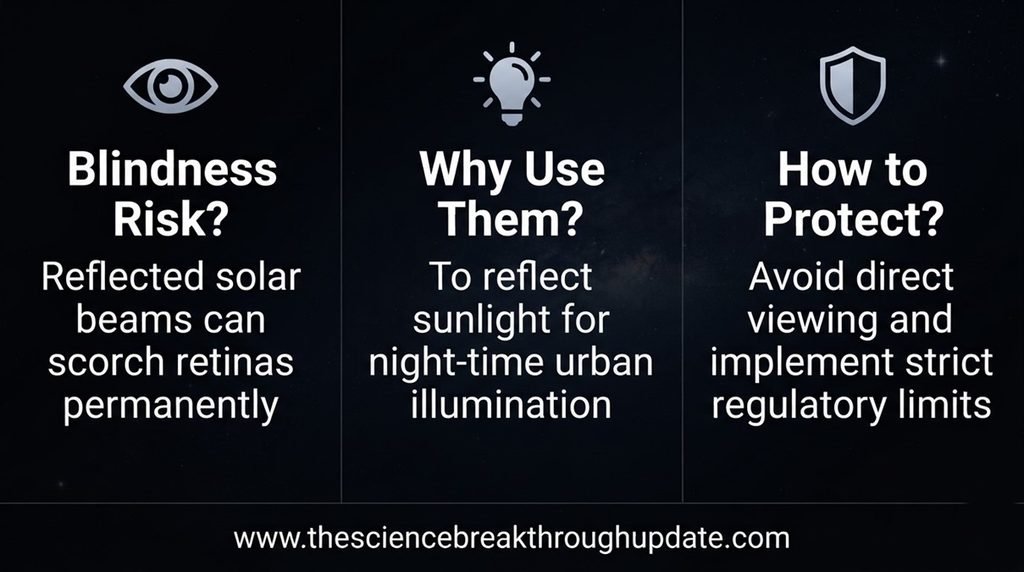
Reader Doubts: Core Questions Answered
- Can these space mirrors actually blind someone permanently?
- 👁️ Yes, looking directly at a highly concentrated beam of reflected sunlight can cause thermal and photochemical burns on your retina. This damage can lead to permanent blind spots in your field of vision.
- Why are companies trying to put mirrors in space?
- 💡 Private companies want to reflect sunlight to specific regions on Earth during the night. This technology aims to provide solar power after dark or illuminate major cities to reduce local electricity bills.
- How can everyday people protect their eyes from this orbital glare?
- 🛡️ The best protection is avoiding direct eye contact with hyper-bright, moving objects in the night sky. Regulatory agencies are also working to ensure these satellites never exceed safe human vision brightness thresholds.
News source link: arXiv.org
Share this useful knowledge with your friends now!”
Disclaimer: This content is based on preliminary scientific research (Preprints) from arXiv.org and current global findings. It is shared strictly for educational and informational purposes and does not constitute professional, legal. Readers are encouraged to verify facts independently and consult relevant experts before making any decisions.