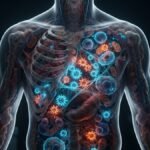
The hidden ecosystem inside your stomach holds the secret code to spotting deadly tumors before they even form.
🚨 Doctors routinely miss early cellular mutations because traditional medical tools like colonoscopies cannot spot microscopic changes quickly enough. This delay causes intense physical discomfort and high emotional anxiety for millions of patients facing invasive hospital screenings globally.
🧬 Fortunately, a brilliant analytical framework called BreCol completely changes how medical teams analyze the human microbiome. By benchmarking deep-learning networks, this computational research successfully detects colorectal cancer and breast cancer early using simple, non-invasive stool samples.
The Silent Crises Lurking Inside Human Digestion
- 🔍 Traditional clinical screening tools frequently miss early cellular mutations because standard laboratory tests completely lack the advanced cellular sensitivity needed for microscopic cancer detection.
- 😰 Millions of high-risk patients routinely skip vital preventative screenings because old hospital testing procedures cause immense physical discomfort and high levels of emotional anxiety.
- 🏥 Standard clinical screening tools require highly expensive hospital infrastructure, which unfortunately makes modern preventive healthcare completely inaccessible for underprivileged communities across the globe.
- ⚠️ Current medical tumor treatments yield much lower clinical success rates because doctors uncover aggressive gut tumors only after advanced physiological symptoms surface.
How Artificial Intelligence Decodes Gut Bacteria
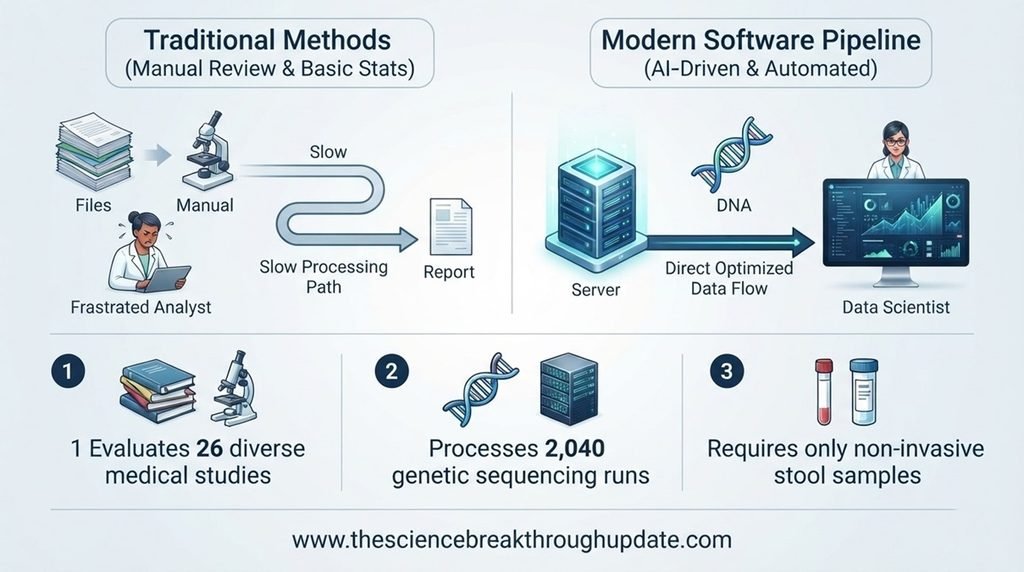
- 📊 The innovative BreCol framework evaluates data across 26 studies to discover the single most accurate medical analytical model for early cancer tracking.
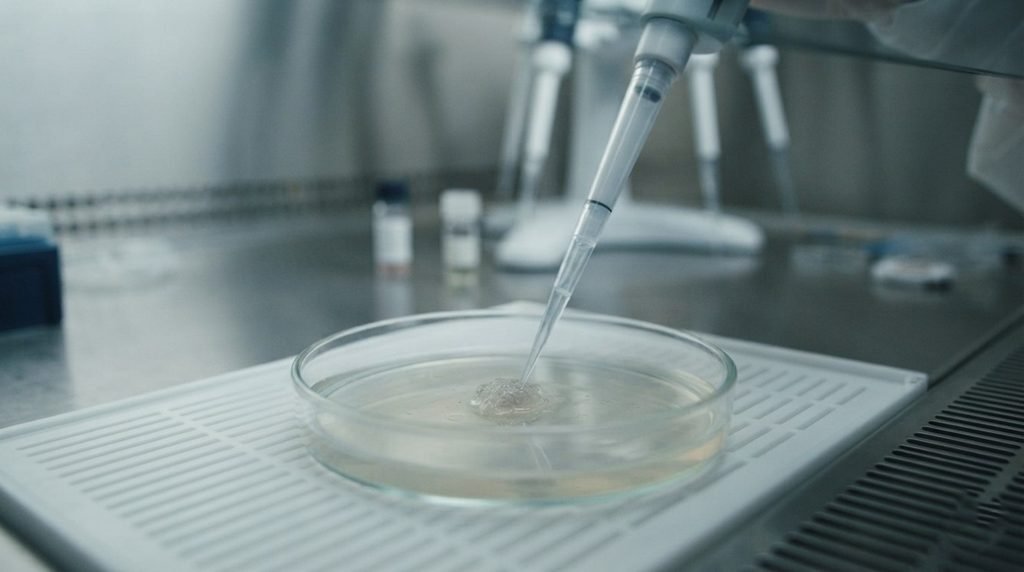
- 💻 Advanced computer programming models thoroughly analyze the delicate human microbiome by processing exactly 2,040 sequencing runs extracted from completely non-invasive patient stool samples.
- 🦠 Intelligent automated computer algorithms quickly isolate distinct bacterial imbalances within the intestines that act as clear warning signs for specific oncological diseases.
- ⚙️ The standardized software testing pipeline completely eliminates critical human error by utilizing automated data processing systems to deliver highly consistent clinical diagnostics.
The Global Shift Toward Painless Preventative Medicine
- 😌 Everyday people gain immediate access to completely painless health checkups that fully eliminate the stressful need for prolonged hospital stays and invasive surgeries.
- 📉 Modern healthcare systems significantly reduce overall operational costs by identifying high-risk individuals through simple, highly affordable community health screenings worldwide.
- 🛡️ Early medical intervention finally becomes a real clinical reality as family physicians deploy targeted therapies long before any malignant cells can spread.
- 🌍 Global cancer survival rates will climb significantly because automated computing frameworks make rapid diagnostic software tools highly accessible to local clinics everywhere.
My Take: Trading painful hospital screenings for simple routine stool tests changes everything. If this intelligent tracking engine scales globally, catching tumor cells early becomes a frictionless habit that saves countless families.
Reader Doubts: Core Questions Answered
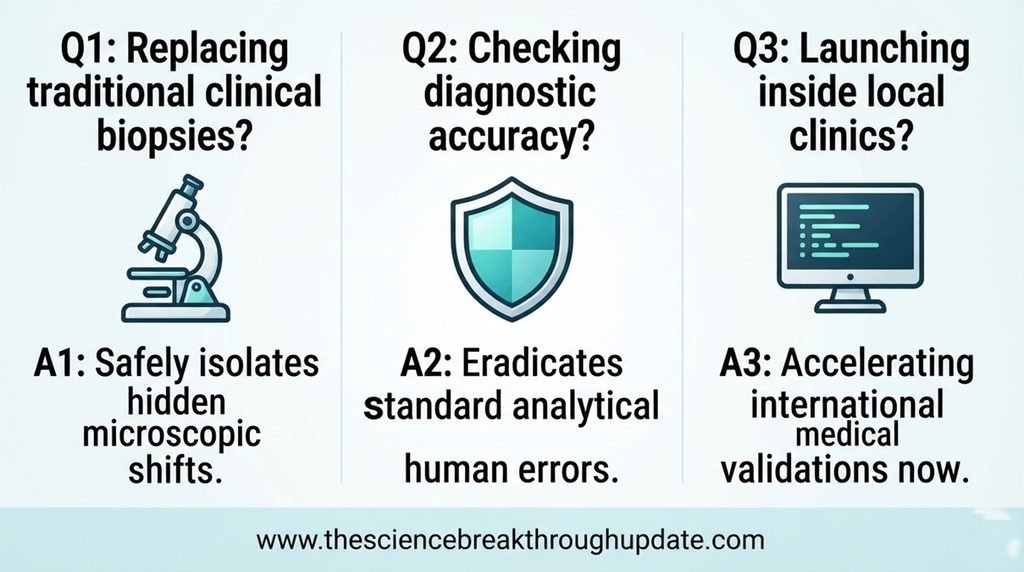
1)Can a simple stool test really replace a traditional hospital biopsy?
- 🔬 Yes, advanced computing frameworks can identify microscopic bacterial shifts that appear long before physical tumors grow large enough to see clinically. This software pipeline offers a completely painless, non-invasive alternative for initial oncology screenings. Everyday patients can easily complete this screening from home without visiting specialized medical centers or clinics.
2)How accurate is this new machine learning method compared to real doctors?
- 🎯 The evaluation framework achieves exceptional clinical precision by combining deep-learning networks with vast genomic databases to eliminate standard human analytical errors completely. It acts as an ultra-sensitive bacterial radar that helps medical doctors make much faster, data-driven diagnostic decisions across clinical setups. This digital collaboration ensures patients receive the highest standard of modern preventative healthcare.
3)When will this technology become available at regular local clinics?
- 🚀 Medical researchers are actively testing the software models using diverse global datasets to guarantee maximum safety and high reliability across different patient demographics. Clinical adoption will accelerate very rapidly as standardized diagnostic testing validation expands across international medical boards. The system will integrate smoothly into regular annual health checkup routines very soon.
Source Document Link: arXiv.org
Share this useful knowledge with your friends now!”
Medical Disclaimer: The information on this website is for educational and informational purposes only and is not intended as medical advice. Always consult a qualified healthcare professional before making any medical decisions or changes to your treatment plan.