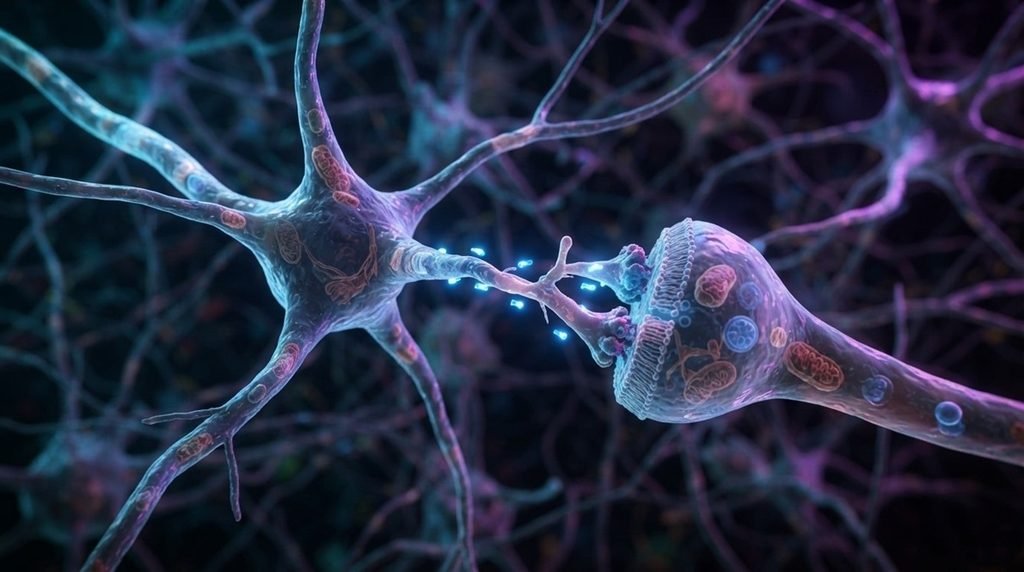
🧠 Your brain possesses a hidden ability to physically reconstruct its internal wiring system long after childhood, completely shattering old medical beliefs about human aging.
For decades, mainstream science claimed that the physical network of the mature human brain remains completely static. However, a comprehensive research analysis published on arXiv by neuroscientist Michael Fauth proves that adult neural networks continuously alter their anatomical wiring every single day without stopping.
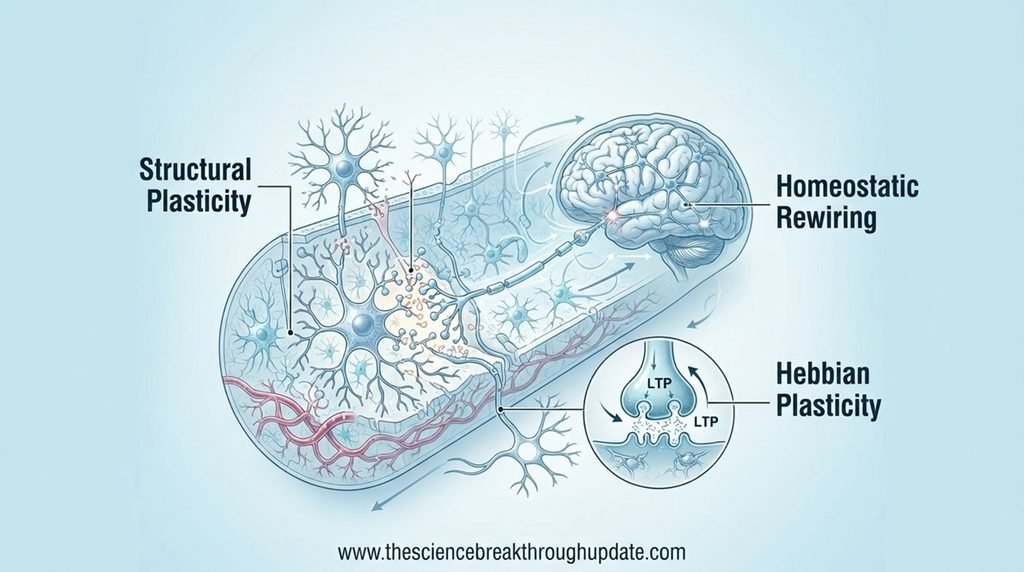
This dynamic biological phenomenon, known as structural plasticity, allows the mature nervous system to adapt to challenging new environments. By remodeling tiny microscopic structures called dendritic spines, your brain naturally optimizes its intricate capacity for learning while safeguarding older vital long-term memories very safely.
🚨 Why the Human Brain Struggles with Constant Modern Sensory Overload
- Modern digital lifestyles constantly expose humans to intense sensory stimulation that frequently pushes internal neural activity far past healthy biological boundaries every single day.
- When chronic psychological stress triggers excessive cellular firing, delicate neural micro-structures experience sudden structural destabilization and trigger rapid, irreversible synaptic loss across vital networks.
- Furthermore, traditional medical frameworks completely failed to explain how adult networks maintain functional stability during prolonged sensory deprivation or sudden acute traumatic brain injury.
- Consequently, clinical physicians historically lacked specific effective therapeutic pathways to successfully reverse the cellular decay driven by severe neurological disease in adult human patients.
⚙️ How Dynamic Neural Networks Successfully Rebuild Lost Connections
- Distinguished study co-author Andreas Vlachos discovered that adult networks deploy a unique negative feedback loop called homeostatic structural plasticity to restore biological balance efficiently.
- This specific biological mechanism prompts individual neurons to sprout new synaptic elements whenever incoming electrical signals drop below a predefined physiological set point internally.
- Concurrently, mature brains utilize a highly complementary process called Hebbian structural plasticity to permanently stabilize vital pathways that fire together during active learning exercises.
- These coordinated adjustments allow human neural circuits to safely explore fresh connection patterns without threatening crucial long term memory retention protocols over extended time.
🚀 The Promising Medical and Technological Future of Brain Rewiring
- Advanced clinical teams now deploy targeted brain stimulation protocols to accelerate functional recovery in stroke victims by successfully triggering local structural neural network growth.
- Fascinatingly, splitting magnetic therapy sessions into brief active intervals with short rests optimizes global network remodeling far better than standard continuous magnetic stimulation approaches.
- Additionally, modern computer hardware engineers apply these biological rewiring principles to build highly energy efficient neuromorphic hardware architectures for complex artificial intelligence applications today.
- Replicating sparse biological network connectivity allows next generation computing microchips to drastically minimize power consumption while boosting their digital data capacity significantly over time.
My Take: This clean departure from rigid biological dogmas fundamentally reframes human potential, proving that our minds are built to rebuild. It hands computing and medicine a practical, eco-friendly roadmap for endless future adaptation.
❓ Reader Doubts: Core Questions Answered
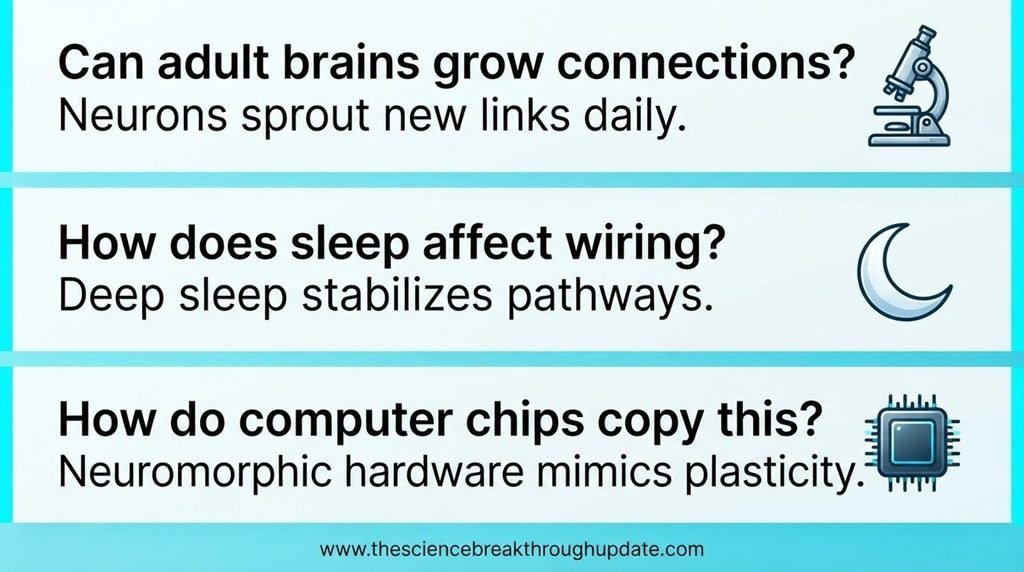
- Can a mature human brain grow entirely new connections?
Adult neurons regularly sprout new connections and prune old ones every day through structural remodeling. While traditional medical frameworks long claimed that brain structures became completely rigid after adolescence, long term longitudinal microscopic imaging clearly confirms ongoing changes. This continuous structural reorganization directly enables your human nervous system to master complex new skills very easily and successfully. - How does deep sleep affect your brain’s internal wiring?
Deep sleep provides the perfect physiological window for stabilizing newly formed neural pathways within the cortex. As you rest quietly, your brain actively replays the specific electrical firing patterns experienced during your previous waking hours. This natural reactivation process selectively reinforces your important structural changes while safely clearing away weak, unnecessary connections to maintain peak mental efficiency. - How do computer engineers copy biological brain rewiring?
Technology developers apply biological rules to construct next generation neuromorphic computing hardware systems. These innovative microchips save immense amounts of electrical power by dynamically creating or deleting digital links based on real-time processing demands. As a direct result, this neuro-inspired computing architecture allows artificial neural networks to perform complex calculations using a tiny fraction of traditional hardware resources.
Source Document Link: arXiv.org
Share this useful knowledge with your friends now!”
Disclaimer: This content is shared strictly for educational and informational purposes and does not constitute professional medical advice. Always consult a qualified healthcare professional or doctor before making any health decisions.