
🚨 Relationships do not fail because of old emotional baggage, but because couples lack a real-time feedback system to navigate daily stress.
Most traditional psychologists treat adult romantic attachment as a rigid, unchangeable personality trait deeply rooted in childhood trauma. This old-school perspective leaves millions of struggling couples feeling completely helpless, believing that their anxious or avoidant relationship habits are permanently hardwired into their brains.
A recent breakthrough study by researcher Mateusz Pomianek introduces a powerful cybernetic control framework that completely changes this narrative. By viewing intimacy through the lens of dynamic feedback regulation, this fresh scientific approach explains how romance functions as a living, breathing system that couples can actively manage.
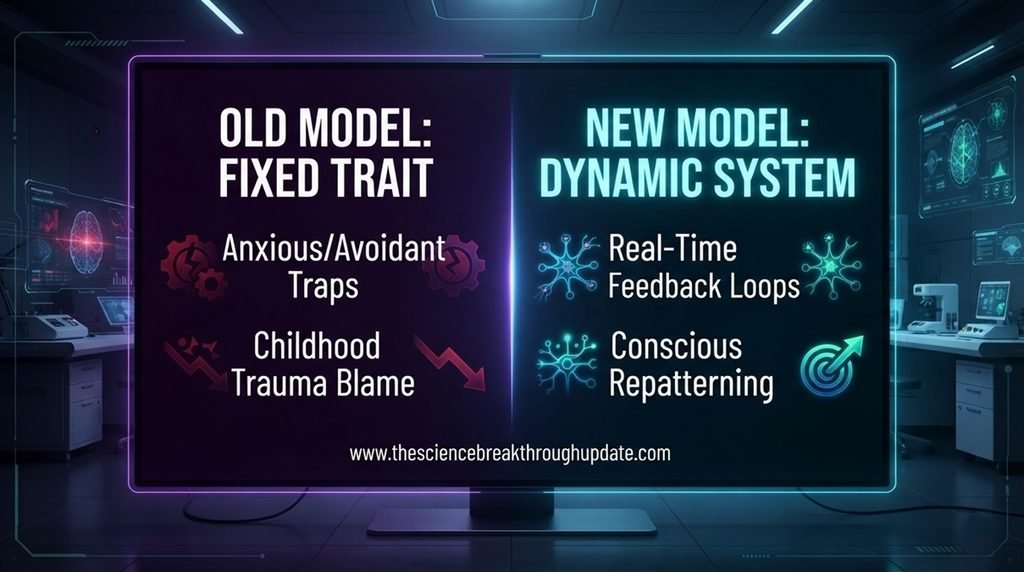
🧠 Why Traditional Relationship Advice Fails Modern Couples
- Many couples feel trapped in a destructive loop because conventional therapy views attachment styles as permanent emotional sentences instead of flexible habits.
- Partners often struggle to communicate effectively during high-stress situations because they do not understand how their individual anxiety triggers impact the joint relationship.
- Most standard counseling methods completely ignore how subtle, daily interactions create a continuous psychological feedback loop between two romantic partners.
- People frequently blame childhood memories for their current relationship failures instead of fixing the faulty emotional regulation patterns happening right now.
⚙️ Mapping Intimacy with Mathematical Precision
- The researcher developed a unique cybernetic control framework to track exactly how emotional signals pass between partners during conflicts.
- This system introduces a specialized math model that monitors how love, anxiety, and avoidance fluctuate based on incoming behavioral data.
- By tracking these real-time adjustments, the model shows how couples can consciously tune their intimacy levels to maximize stability.
- The new framework provides clear, actionable data that helps individuals identify exactly when their internal emotional thermostat needs a manual reset.
🚀 The Future of Modern Love and Therapy
- Therapists can now design highly customized intervention strategies based on predictive mathematical models of human behavior.
- Couples gain the practical ability to stop toxic arguments before they escalate by recognizing their shared feedback loop errors.
- This scientific breakthrough empowers people to actively reshape their attachment habits through conscious, daily behavioral adjustments.
- Future relationship apps could utilize this precise framework to offer users real-time psychological guidance during stressful relationship phases.
My Take: Replacing static childhood trauma labels with a live feedback model strips away the helplessness of bad relationships, giving couples a practical, real-time steering wheel to fix their daily emotional drift.
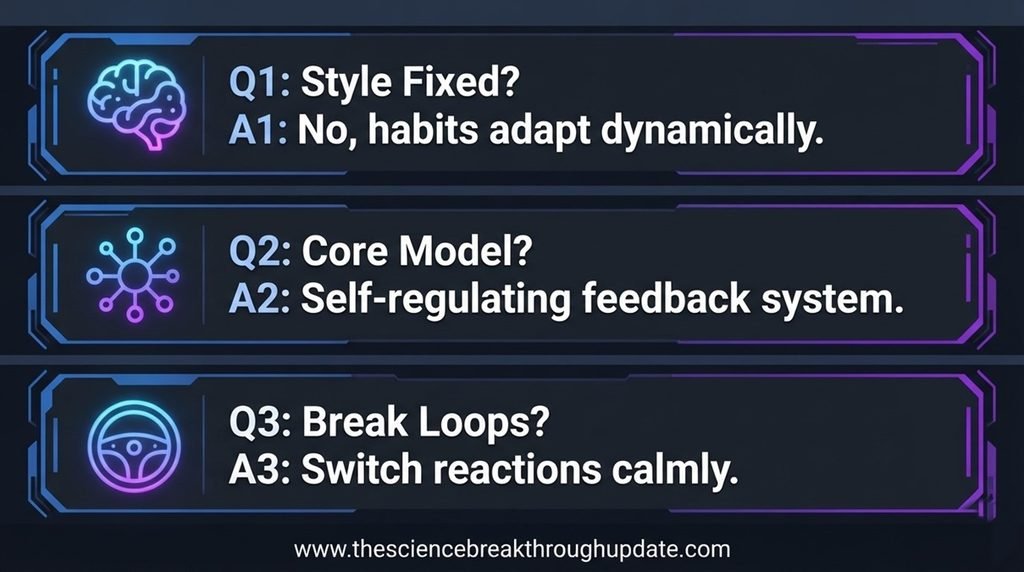
💬 Reader Doubts: Core Questions Answered
- Can a person actually change their romantic attachment style over time?
Yes, because your attachment style is not a fixed personality trait but a dynamic system that responds to new behavioral inputs. By changing your daily communication habits, you can train your brain to become more secure. - How does cybernetics apply to human love and relationships?
Cybernetics is simply the study of how systems regulate themselves using constant feedback loops. In romance, it maps how your partner’s mood affects your response, which then loops back to influence your partner. - What is the fastest way to break a toxic relationship loop?
You must consciously interrupt the automatic feedback cycle by changing your usual negative reaction into a calm, unexpected response. This sudden shift forces the entire relationship system to recalibrate and find a healthier equilibrium.
Source Document Link: arXiv.org
Share this useful knowledge with your friends now!”
Disclaimer: The information on this website is for educational and informational purposes only and is not intended as medical advice. Always consult a qualified healthcare professional before making any medical decisions or changes to your treatment plan.