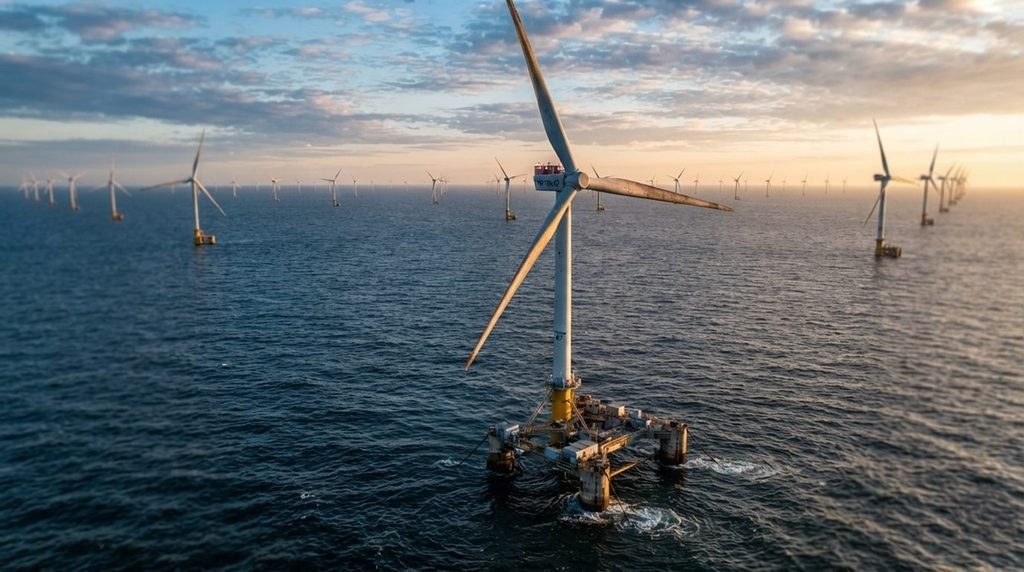
🌊 Imagine giant wind turbines moving on the ocean surface to hunt for the strongest breeze while talking to each other.
Engineers are moving clean energy infrastructure into deep ocean waters using massive, floating structures to capture powerful, uninterrupted marine winds. However, these deep-water installations face a silent, invisible enemy that chokes their power output and drains renewable energy efficiency from downstream installations.
Now, researchers Zekai Chen and Ryozo Nagamune have introduced a brilliant way to let floating offshore wind farms autonomously rearrange their physical layout. This data-driven, model-free control system allows individual turbines to dynamically shift positions, unlocking unprecedented levels of marine wind capture.
⚠️ Why Deep Sea Wind Farms are Losing Massive Power
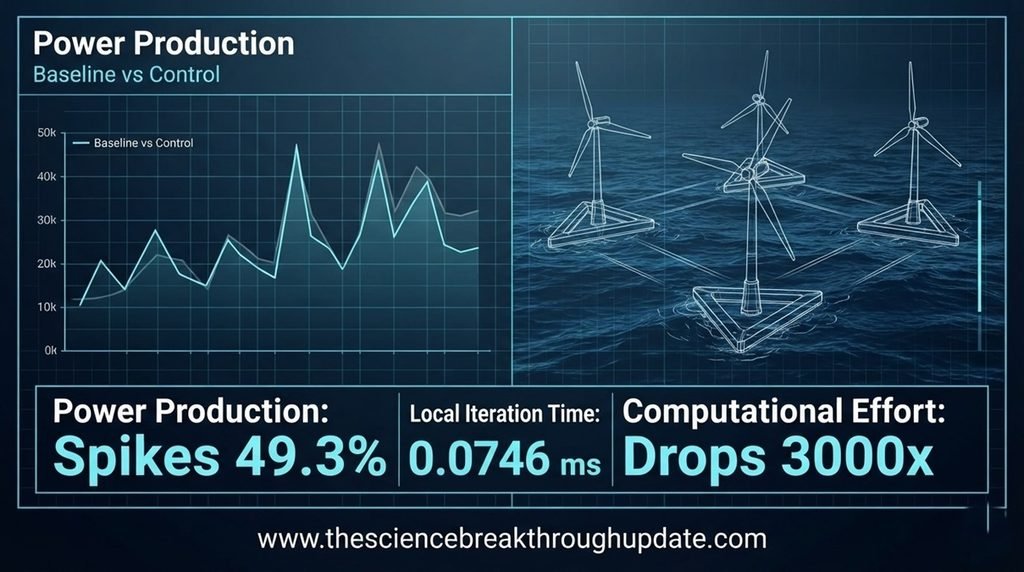
- Front-row turbines naturally steal wind energy and leave behind slow, turbulent pockets of air known as destructive wake zones.
- This turbulent air crashes directly into downstream turbines, causing a severe drop in their clean electricity generation.
- Traditional fixed-foundation installations cannot move, meaning static layouts force rear turbines to suffer from constant efficiency drops.
- Relying on complex atmospheric models to predict these moving air currents requires massive computing power and often fails in unpredictable oceans.
💡 The Intelligent System and Autonomous Repositioning Tech
- The engineers developed a distributed, model-free control framework that coordinates turbine movement without needing complex wind simulations.
- Each floating platform uses real-time local power measurements to find the absolute optimal position on the ocean surface.
- Turbines use smart algorithms to actively slide away from incoming wakes, ensuring every unit receives maximum wind velocity.
- This decentralized network lets turbines communicate with immediate neighbors, eliminating the need for a vulnerable centralized supercomputer.
🚀 The Global Impact on Green Energy and Electricity Costs
- Minimizing wake overlap significantly boosts total power generation, making deep-sea wind projects vastly more financially viable.
- Increased efficiency will accelerate the global transition to clean energy, drastically reducing our reliance on fossil fuels.
- Lowering operational losses directly decreases utility costs, passing the financial savings down to everyday electricity consumers.
- This mobile infrastructure protects physical components from turbulent stress, extending the operational lifespan of floating wind assets.
My Take: Giving static machines the freedom to move and communicate transforms passive infrastructure into an intelligent, cooperative network, fundamentally solving marine energy’s biggest efficiency flaw without expensive hardware overhauls.
❓ Reader Doubts: Core Questions Answered
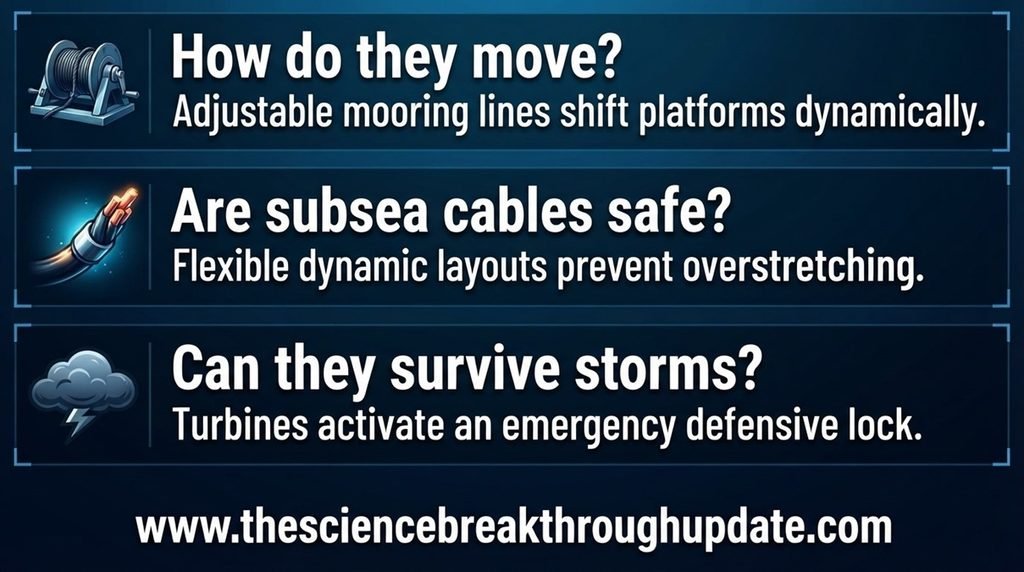
- How do floating wind turbines physically move across the water?
Floating wind turbines connect to the seabed using adjustable mooring lines and electronic winches. The smart automated control system pulls or loosens these lines to shift the turbine’s position on the ocean surface. - Will this constant movement damage the deep-sea power cables?
No, engineers design these systems with flexible dynamic subsea cables that safely bend and move. The platforms only shift within a precise, restricted radius that never overstretches the electrical connections. - Can this technology work during severe ocean storms?
The system prioritizes structural survival when ocean conditions become dangerous. During heavy storms, the turbines lock safely into a baseline defensive position rather than trying to optimize for power generation.
Source Document Link: arXiv.org
Share this useful knowledge with your friends now!”
Disclaimer: This content is based on preliminary scientific research (Preprints) from arXiv.org and current global findings. It is shared strictly for educational and informational purposes and does not constitute professional, legal. Readers are encouraged to verify facts independently and consult relevant experts before making any decisions.