🔒 The invisible ambush strategy used by woodland ticks completely redefines our understanding of how dangerous bacterial infections spread to unsuspecting humans.
A groundbreaking scientific analysis conducted by researchers Carli Peterson, Erika Gallo, and Christopher M. Kribs reveals the sophisticated methods behind how forest parasites target human beings. Published in the respected scientific repository arXiv, this intensive study unravels the complex link between parasite movement and the explosive transmission of the debilitating Lyme disease pathogen.
Scientists traditionally believed that parasite transmission relied completely on random encounters in nature. However, this mathematical modeling project proves that specific environmental cues guide these minuscule hunters, transforming ordinary fields into highly precise zones of biological ambush strategies.
🌲 The Hidden Mechanics of Parasite Ambush Strategies
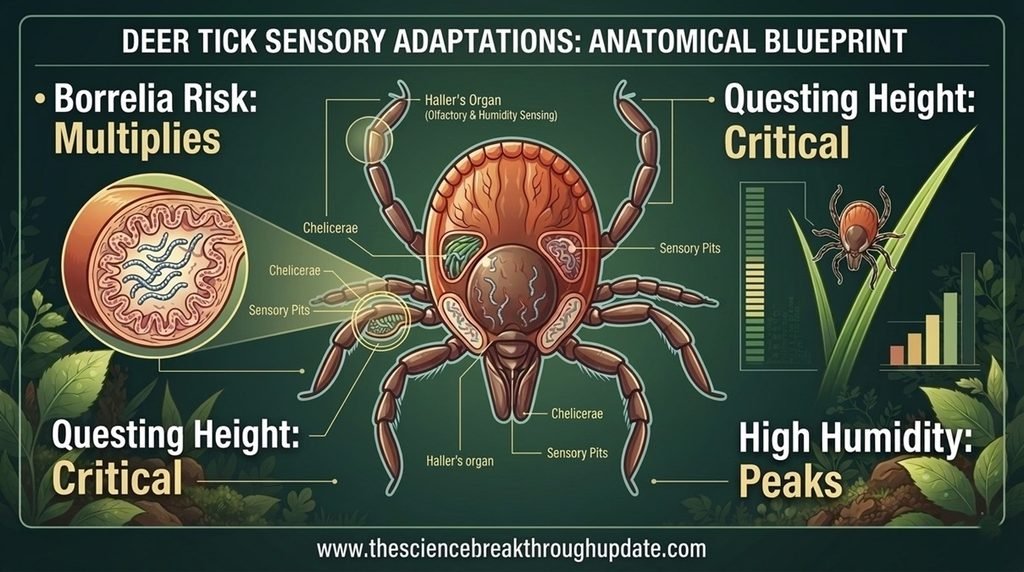
- Host-seeking parasites do not merely wait in the undergrowth; they actively monitor subtle changes in local temperature, humidity, and ambient carbon dioxide to time their precise hunting movements.
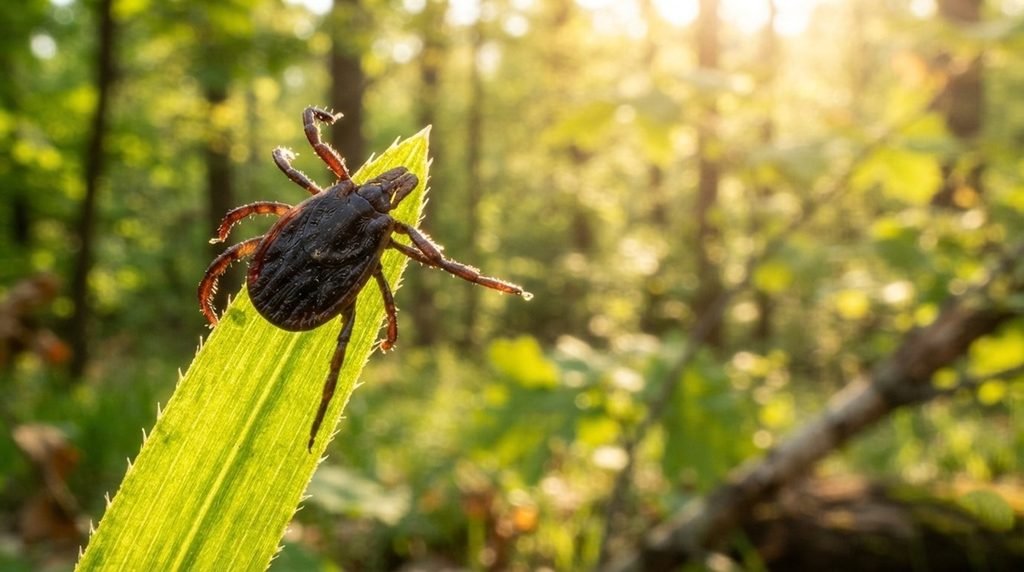
- The physical height at which a microscopic attacker chooses to sit on a blade of grass drastically alters its likelihood of successfully attaching to a passing human.
- Standard transmission models routinely underestimate actual infection risks because they ignore the deliberate, calculated patterns behind how these organisms track and intercept warm-blooded targets.
- Dense forest paths create intense localized infection vectors where heavy human foot traffic directly intersects with the peak hunting schedules of local tick populations.
🧬 Unlocking the Blueprint of Host Interception Control
- Researchers developed an advanced mathematical framework to map the exact relationship between aggressive questing behavior and successful pathogen transmission across diverse woodland environments.
- The predictive algorithm accurately accounts for variable factors including local humidity thresholds, foliage density, and the behavioral response of parasites to changing weather patterns.
- This innovative framework successfully identifies the precise ecological tipping points where a minor local parasite population evolves into a major regional health threat.
- By isolating these specific behavioral variables, the analytical model provides public health officials with an objective, data-driven method to anticipate seasonal spikes in infection rates.
🛡️ The Real World Significance for Public Safety
- Public safety organizations can utilize these precise behavioral insights to issue hyper-localized, real-time warning alerts for specific hiking trails and public parks.
- Modern land management teams can actively alter local vegetation structures to directly disrupt the specific height advantages that parasites require for host interception.
- Communities can deploy highly targeted environmental interventions during peak threat windows rather than relying on broad, chemically intensive pesticide applications across massive areas.
- This mathematical breakthrough transforms passive public health tracking into a powerful, predictive defensive system that directly protects millions of outdoor enthusiasts globally.
My Take: This brilliant study finally turns the tables on a hidden outdoor threat. By mapping parasite behavior mathematically, we can stop guessing where danger hides and actively protect hikers using smart data.
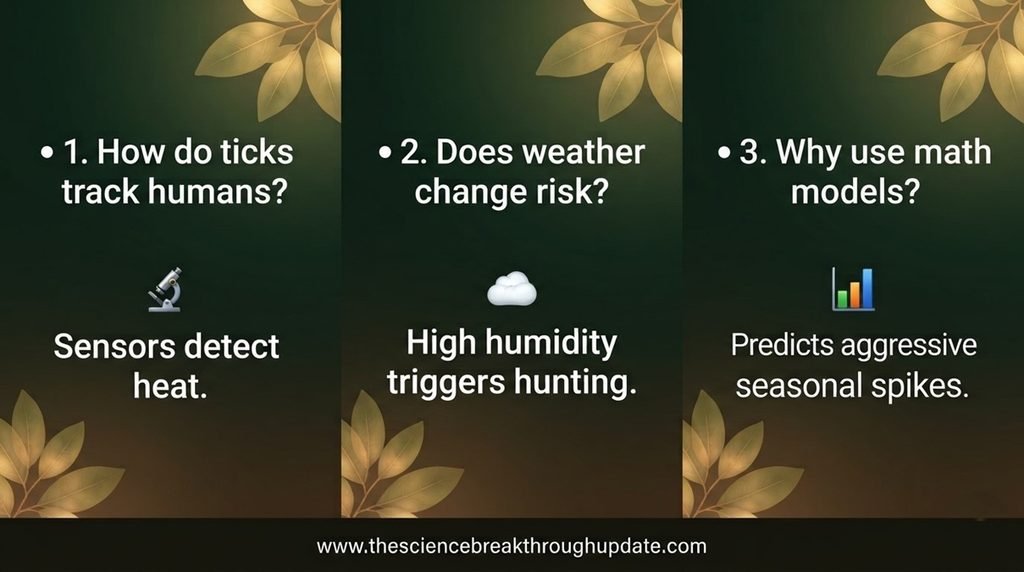
💬 Reader Doubts: Core Questions Answered
1. How do parasites find humans so accurately in the wild?
Parasites utilize highly sensitive biological sensors to detect sudden changes in carbon dioxide, body heat, and physical vibrations. They actively position themselves on vegetation at optimal heights to instantly brush off onto passing hosts.
2. Can weather conditions directly affect your chances of getting infected?
Yes, weather conditions play a massive role. High humidity and moderate temperatures trigger intense questing activity, whereas extreme heat or severe dryness forces the organisms to retreat into the soil for survival.
3. Why is this mathematical study a major turning point for public health?
This research replaces general guesswork with precise mathematical certainty. It allows authorities to predict exactly when and where parasites will be most aggressive, enabling highly effective, localized prevention strategies.
Source Document Link: arXiv.org
Share this useful knowledge with your friends now!”
Disclaimer: This content is based on preliminary scientific research (Preprints) from arXiv.org and current global findings. It is shared strictly for educational and informational purposes and does not constitute professional, legal. Readers are encouraged to verify facts independently and consult relevant experts before making any decisions.