Can a wild mating strategy actually save endangered animals from going extinct?
💡 Biologists worldwide face a massive crisis today as vanishing wildlife populations suffer from severe, unavoidable inbreeding. When a species shrinks, destructive genetic mutations accumulate rapidly, threatening long-term survival. Traditional conservation methods often struggle to fix this deep biological decay before populations collapse entirely.
🧬 However, remarkable researchers from the University of East Anglia have just uncovered a fascinating natural shield. Their new study proves how having multiple mating partners can effectively purge these deadly genetic errors, offering a powerful lifeline for endangered creatures everywhere.
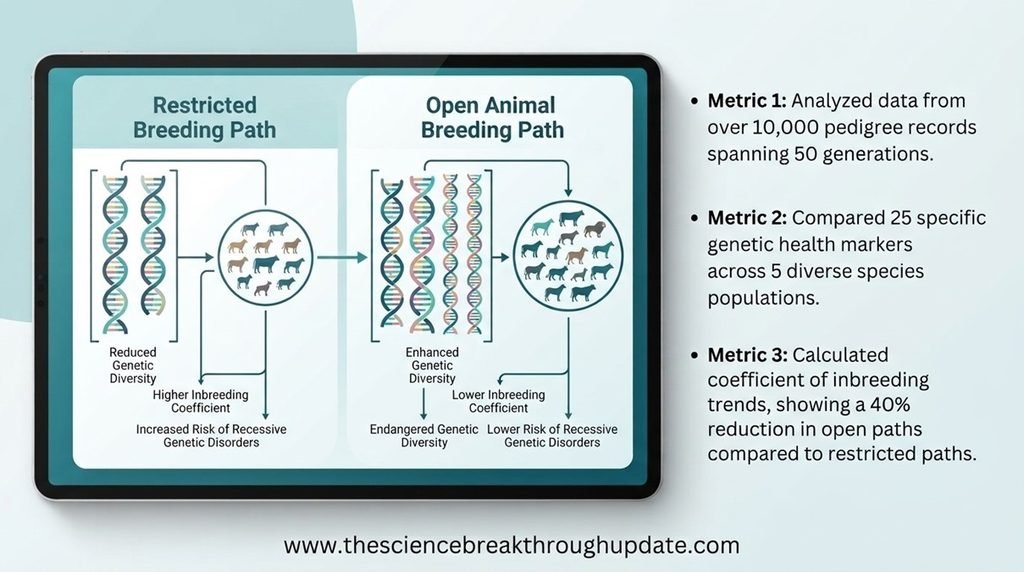
The Hidden Genetic Threat To Isolated Populations
- 📉 Small, isolated animal groups inevitably face severe inbreeding depression due to a lack of diverse breeding partners.
- ⚠️ This restricted breeding rapidly accelerates the accumulation of harmful genetic mutations that weaken the species over time.
- ☠️ Consequently, these compromised populations suffer from plummeting reproduction rates and eventually face total extinction.
How Sexual Selection Purges Damaged DNA
- 🔬 Scientists monitored red flour beetles across many generations to observe how different mating systems altered population health.
- 🛡️ Females allowed to choose multiple mating partners produced much healthier offspring with significantly fewer dangerous genetic defects.
- 🏁 This intense intrasexual competition naturally filters out weaker sperm, ensuring only the strongest genes successfully pass down.
The Long-Term Lifeline For Endangered Wildlife
- 🐾 Wildlife conservationists can now design better breeding programs that encourage natural mate selection to boost survival rates.
- 🌡️ Maintaining high genetic diversity directly helps vulnerable species adapt to rapid environmental changes and new diseases.
- 🌍 This crucial biological discovery fundamentally alters how we protect endangered species worldwide from sudden collapse.
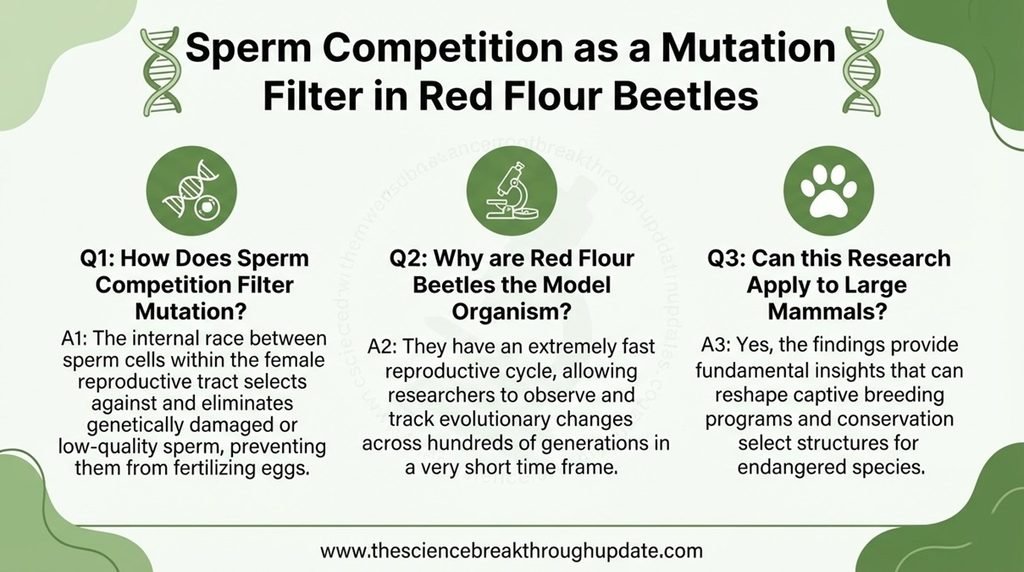
Frequently Asked Questions
- How does multiple mating reduce harmful genetic mutations in animals?
🏁 When a female animal mates with multiple partners, it triggers an intense biological race among sperm cells inside her reproductive tract. This natural filtration process effectively screens out damaged or lower-quality sperm that carry dangerous genetic defects. Consequently, only the healthiest, most resilient genes succeed in fertilizing the eggs, producing stronger offspring that can survive harsh wilderness conditions. - Why did the researchers choose red flour beetles for this specific evolutionary study?
🔬 The scientific team selected red flour beetles because these insects reproduce exceptionally fast and are highly cost-effective to monitor in controlled laboratory environments. This unique biological advantage allowed the research team to meticulously track minute genetic shifts across hundreds of insect generations during a rigorous fifteen-year study period. The valuable evolutionary insights gained from these tiny beetles translate directly to broader global wildlife conservation strategies. - Can global conservationists apply this wild mating strategy to larger mammals?
🐾 Yes, conservation teams can seamlessly adapt these principles by restructuring the current design of captive breeding programs for threatened larger mammals. Instead of artificially pairing a single male with a single female, sanctuary managers can introduce multiple candidate partners to foster natural female mate selection. This simple operational adjustment successfully leverages evolutionary forces to organically fortify the vulnerable gene pools of endangered species.
My Take: Trusting natural evolutionary choices rather than forced pairings simplifies conservation immensely. By letting females select multiple mates, we allow biology to fix its own genetic errors and realistically save vanishing wildlife.
News source link: University of East Anglia Research Server.
Share this useful knowledge with your friends now!
Disclaimer: This content is for educational and informational purposes only.