
An innovative automated screening system can accurately analyze visual field progression and shorten hospital waiting lists by up to 40%.
👁️ Managing a high volume of eye patients poses a significant challenge for modern healthcare systems, particularly within specialized glaucoma tracking clinics. Overburdened clinics often face long appointment delays, which increases the likelihood of undetected disease progression and permanent vision loss among high-risk individuals.
📉 Traditional patient triage demands an extensive, manual review of longitudinal data by a specialist, creating a massive administrative bottleneck that slows down clinical intervention. To address this challenge, researchers created an automated platform called the Glaucoma Field Defect Classifier 2 (GFDC 2) to streamline patient classification.
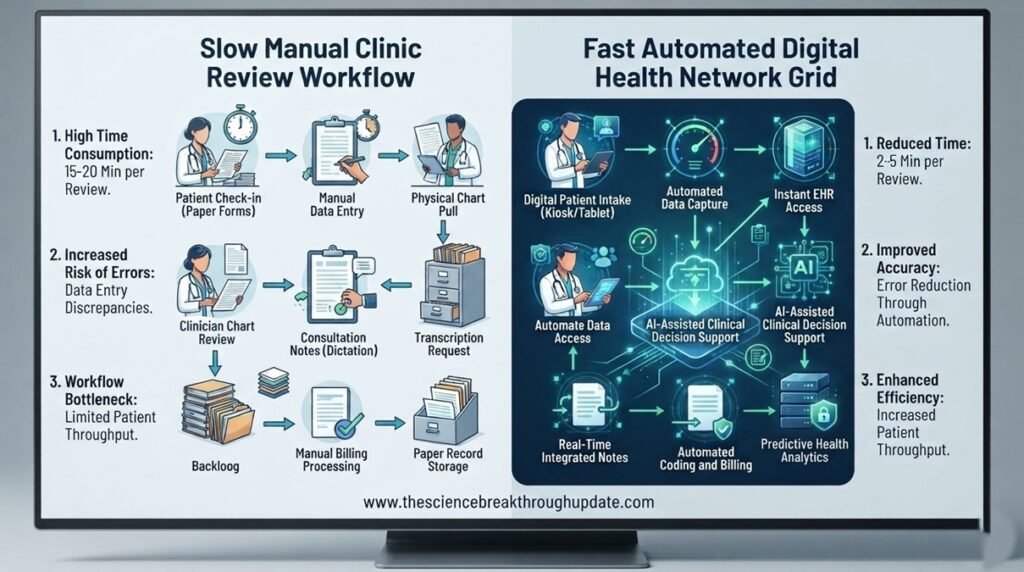
The Bottleneck in Modern Vision Clinics
- 🏥 Overburdened eye clinics struggle to manage millions of active glaucoma patients who require frequent visual field evaluations to monitor optic nerve health.
- ⏳ Manual triage of complex longitudinal data consumes substantial clinical hours, leaving ophthalmologists with less time for face-to-face patient care.
- 👁️ Delayed appointments create prolonged gaps in patient monitoring, which exposes vulnerable individuals to the risk of irreversible, asymptomatic peripheral sight loss.
Automating Visual Field Assessment
- 🧪 A clinical research team led by Nancy Wang and Arun J. Thirunavukarasu developed the automated GFDC 2 tool to interpret bulk perimetry test data.
- 📊 The digital health system achieved absolute accuracy with an intraclass correlation coefficient of 1.000 when evaluating static parameters from visual field assessments.
- 📈 The software tracks changes over time by monitoring crucial metrics, achieving a near-perfect 0.994 score for visual field index progression tracking.
Transforming Patient Triage Frameworks
- 🗂️ Implementing automated triage pathways can successfully reduce outpatient clinic backlogs by a massive 40% without compromising patient safety.
- 🎯 The algorithm instantly identifies central visual field defects with 100% accuracy, allowing hospital staff to fast-track high-risk patients for immediate surgery or treatment.
- 💰 Clinics can safely transition toward secure, asynchronous virtual patient reviews, optimizing hospital resource allocation and lowering overall delivery costs.
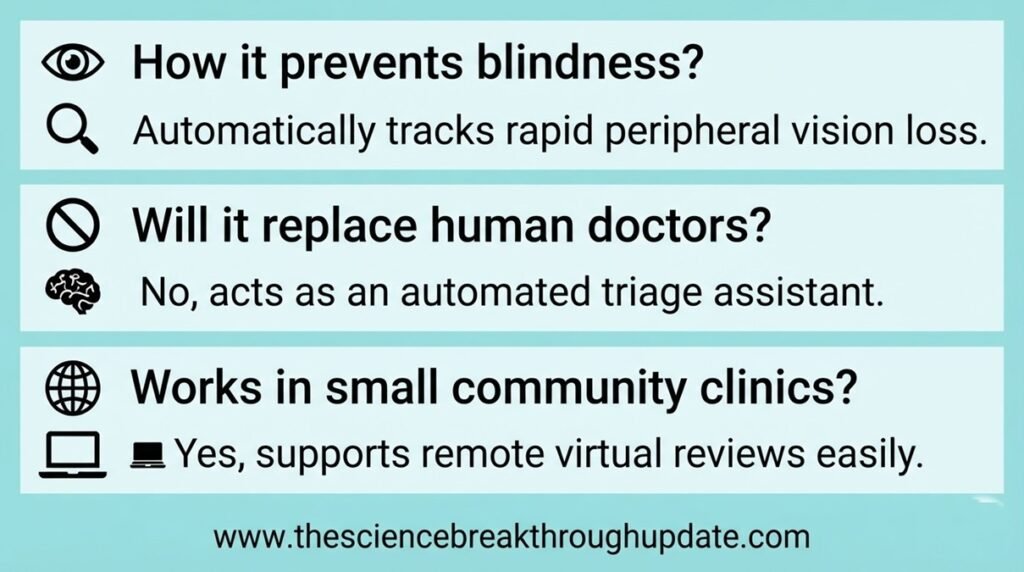
Reader Doubts: Core Questions Answered
- How does this new software help prevent permanent blindness?
- 🔎 The software tracks small changes in a patient’s peripheral vision over time. By spotting rapid vision loss instantly, doctors can treat high-risk patients much faster.
- Will this digital tool completely replace eye doctors?
- 🚫 No, the tool does not replace human clinical judgment. It acts as an automated assistant that pre-sorts test results so doctors can focus on urgent cases.
- Can this technology be used in smaller community clinics?
- 🌐 Yes, because it automates data processing without needing extra hardware, it can support remote virtual reviews and risk-stratified pathways anywhere.
My Take: This tool shifts eye care from reactive treatment to proactive prevention. By clearing clinic backlogs, it ensures high-risk patients get priority care before losing their sight forever.
News source link: Nature Eye Journal
Share this useful knowledge with your friends now!
Disclaimer: This content is for educational and informational purposes only.