A massive installation built by a famous British artist now allows humans to see the world entirely through the eyes of an insect.
🚀 British artist Luke Jerram completely shifted our perspective on nature by building a massive, six-meter-tall dome called the Pollenarium. By utilizing over 100 specialized optical lenses, the creative structure successfully replicates the mosaic-like compound vision that flying insects experience daily.
🌍 This clever cross-over between landscape art and environmental science highlights how pollinating insects process light and navigate their immediate surroundings. The project gives the general public a rare sensory experience to understand the world from a completely non-human point of view.
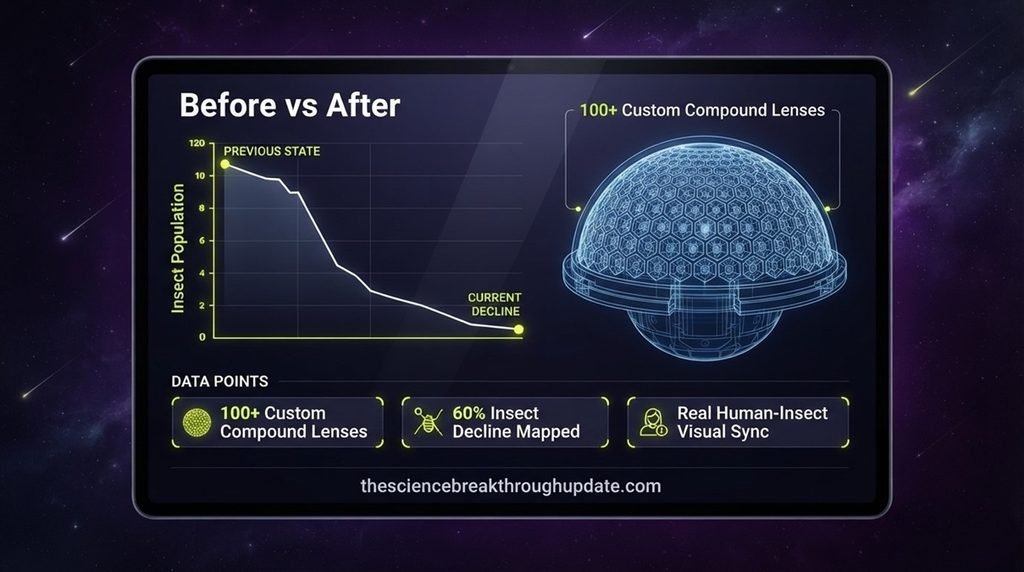
The Blind Spot in Human Environmental Awareness
- 👁️ Humans naturally perceive nature through a single focused lens, completely ignoring how crucial backyard pollinators actually see their vibrant surroundings.
- 📉 Without a clear visual connection, regular city dwellers struggle to sympathize with the devastating 60% drop in global insect populations.
- 🛡️ This severe lack of empathy limits community support for local urban conservation initiatives designed to protect critical ecosystem biodiversity.
Simulating Compound Vision Through Custom Glass Domes
- 🏗️ The design team resolved this sensory disconnect by constructing a giant walk-in structure equipped with over 100 custom compound lenses.
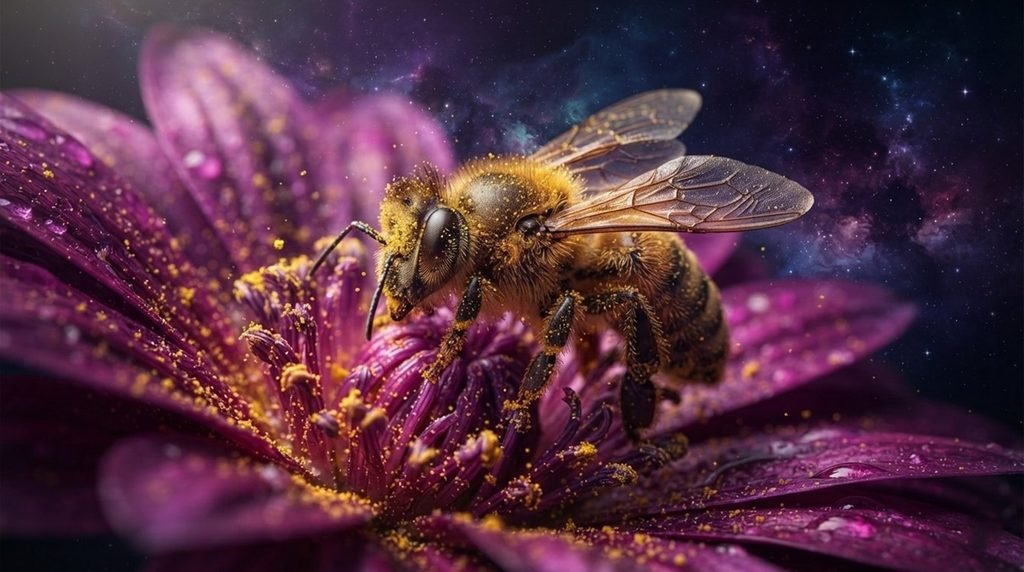
- 🐝 Specialized glass segments bend incoming sunlight to perfectly mimic the fragmented, wide-angle mosaic grids of a tiny honeybee eye.
- 📊 This unique integration of structural engineering and optics transforms regular human sight into a fully functioning insect sensory grid.
Why Seeing Like a Bee Alters Conservation Efforts
- 🏙️ Experiencing these unique visual patterns helps urban planners design much better, highly attractive city landscapes for native wild pollinators.
- 💡 Understanding the extreme sensitivity of insect vision reveals how modern artificial light pollution disrupts natural nocturnal foraging cycles.
- 🌱 This fresh perspective strengthens community engagement, encouraging people to build healthier backyard habitats to combat rapid insect decline.
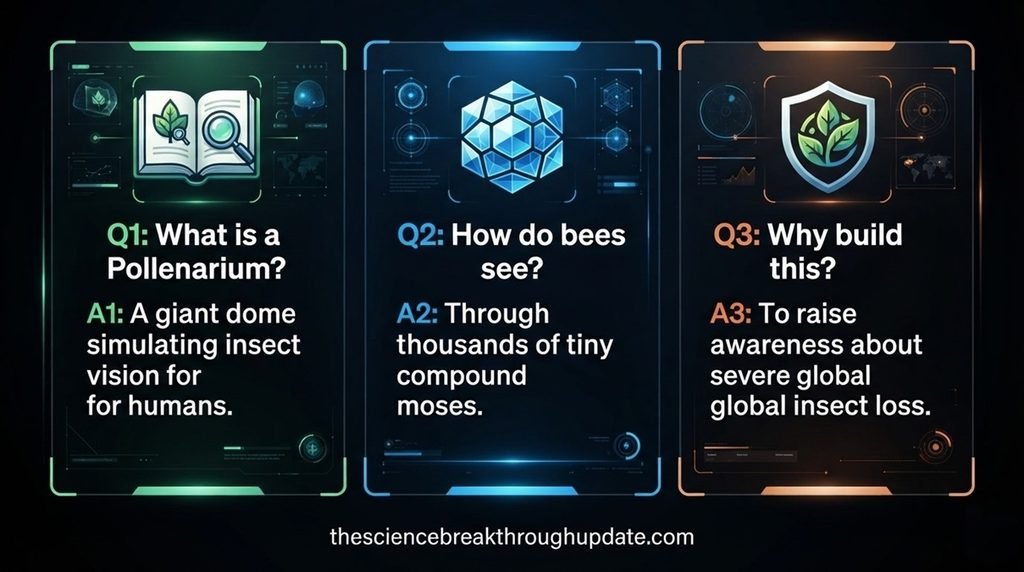
Reader Doubts: Core Questions Answered
- How do compound lenses simulate insect vision for a human?
🔮 The installation uses an array of tiny curved lenses that break a single image into hundreds of separate visual fragments. This setup successfully copies the way an insect’s eye pieces together an ultra-wide mosaic view of the surrounding landscape. - Why is understanding insect vision important for the environment?
🌸 Insects see ultraviolet light patterns on flowers that are completely invisible to humans, guiding them directly to nectar sources. Experiencing this specialized vision reminds us how dependent global food crops are on these fragile visual hunting systems. - Can changing our visual perspective actually help save endangered bees?
❤️ Yes, experiencing this installation creates a powerful emotional connection that standard data sheets and scientific charts simply cannot achieve. This hands-on understanding directly motivates citizens to support local wildlife friendly policies and reduce pesticide usage.
My Take: Step inside this beautiful multi-lens matrix and you instantly realize that preserving our global food security means learning to respect the unique sensory worlds of tiny backyard pollinators.
News source link: The Guardian
Share this useful knowledge with your friends now!
Disclaimer: This content is for educational and informational purposes only.