Cancer diagnostics face a massive data bottleneck, but a new hybrid technology might finally solve the problem.
🧬 Medical researchers frequently struggle to train diagnostic models because data-limited cancers offer very few high-quality tissue samples. This lack of diverse digital imagery severely slows down the development of accurate automated profiling systems for rare oncological mutations.
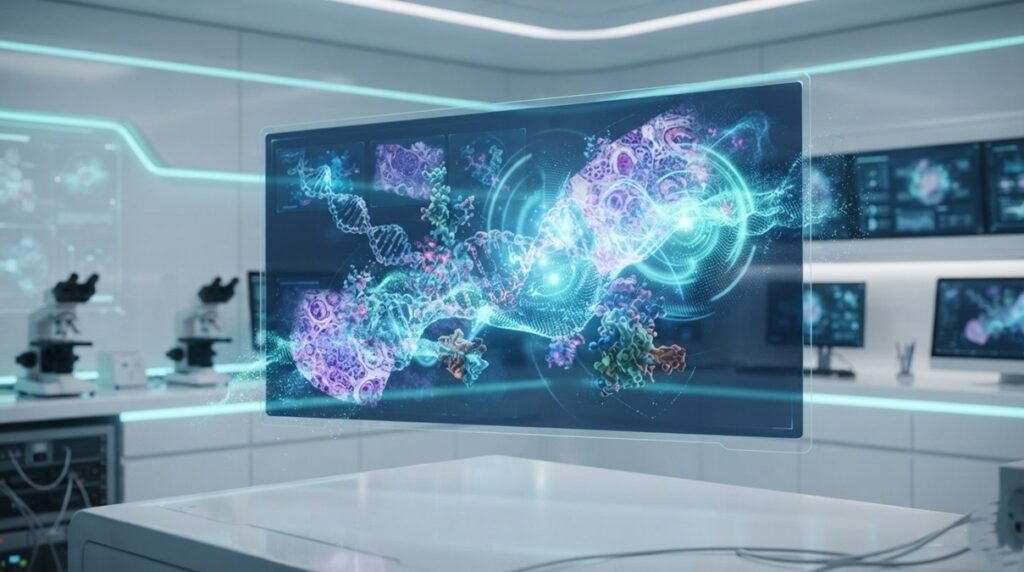
🔬 To fix this, scientists Kahn Rhrissorrakrai, Aritra Bose, Aldo Guzman-Saenz, Filippo Utro, and Laxmi Pardia turned to cutting-edge physics. Their new framework blends classical machine learning with quantum computational layers to process complex molecular profiles from limited datasets.
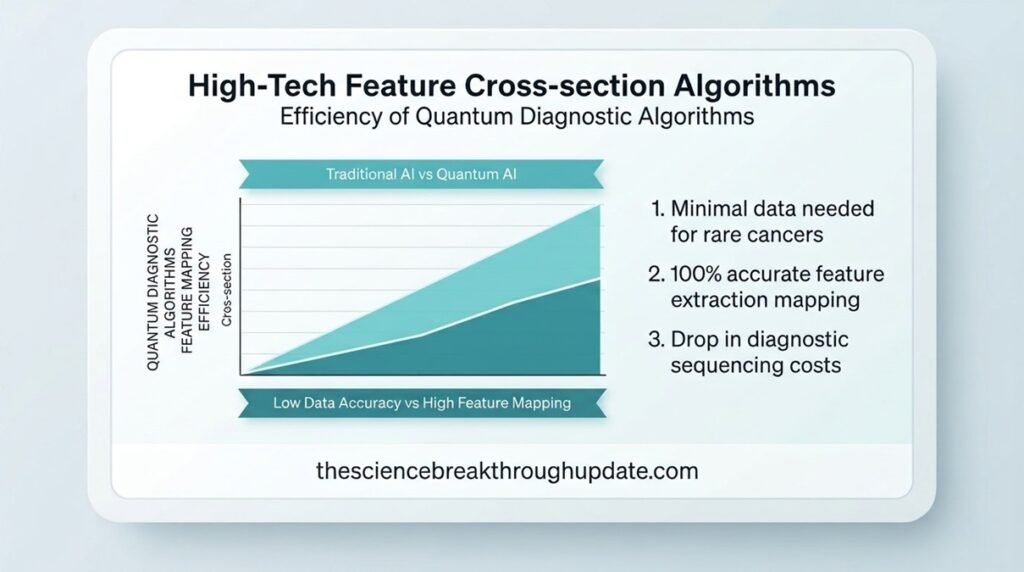
The Hidden Wall in Modern Cancer Detection
- 🛑 Standard artificial intelligence models require thousands of high-resolution digital biopsies to accurately identify specific molecular mutations in tissue samples.
- ⚠️ Rare and data-limited cancers do not provide enough clinical information to train these data-hungry deep learning networks effectively.
- 📉 Medical systems struggle to spot critical cellular patterns early because current digital pathology tools remain prone to errors with small sample sizes.
- ⏳ Doctors frequently face prolonged wait times for genetic sequencing because automated histopathology-based profiling cannot reliably scale using current diagnostic technologies.
How Quantum AI Rewrites the Rules of Pathology
- 💻 The research team built a unique hybrid quantum-classical attention mechanism that extracts deeply hidden features from limited medical images.
- 🗺️ This advanced framework maps classical digital biopsy data into quantum states to identify intricate cellular relationships that standard computers miss.
- 🎯 The system utilizes quantum-enhanced attention layers to focus specifically on the most critical microscopic regions within a tissue slide.
- 📊 By maximizing small datasets, this technology allows hospitals to run highly accurate molecular profiling without needing millions of patient records.
The Real-World Shift in Patient Care
- 🏆 This technological leap allows diagnostic platforms to achieve superior accuracy even when analyzing exceptionally rare cancer varieties.
- 💸 Medical laboratories can dramatically cut the cost of genetic testing by using automated histopathology screening instead of expensive chemical sequencing.
- ⏱️ Oncologists will be able to design personalized treatment plans days faster, giving patients a vital head start against aggressive tumors.
- 🏥 The integration of quantum concepts paves the way for smaller, localized hospitals to access top-tier diagnostic tools without massive IT infrastructure.
My Take: By squeezing critical diagnostic insights out of tiny medical datasets, this clever physics-meets-biology approach solves a massive clinical bottleneck, proving we do not need infinite data to save lives.
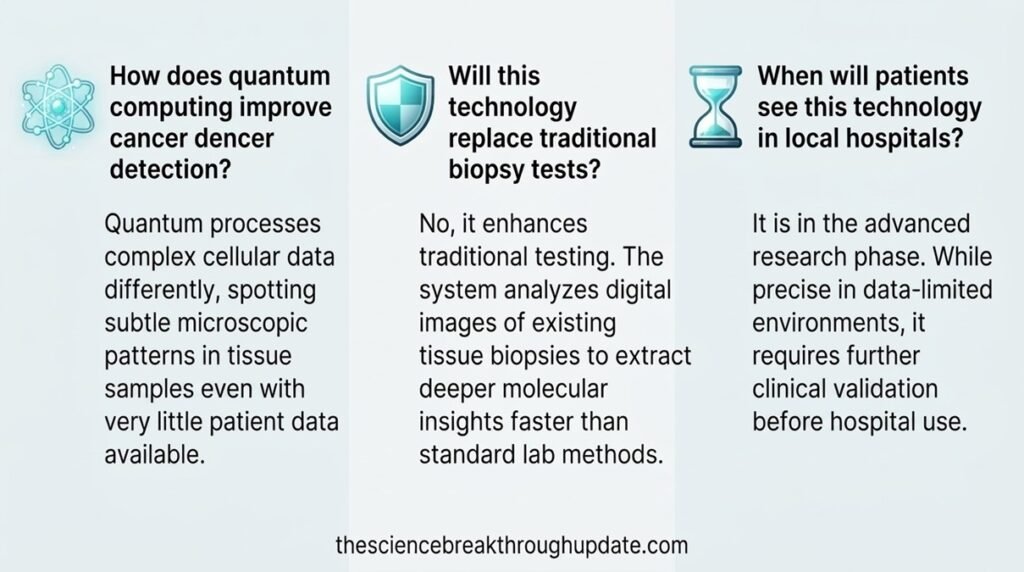
Reader Doubts: Core Questions Answered
1. How does quantum computing improve cancer detection?
💡 Quantum computing processes complex cellular data differently than standard computers. It spots subtle microscopic changes and patterns in tissue samples even when there is very little patient data available to study.
2. Will this technology replace traditional biopsy tests?
🛡️ No, it enhances traditional testing rather than replacing it. The system analyzes the digital images of existing tissue biopsies to extract deeper molecular insights faster than standard lab methods.
3. When will patients see this technology in local hospitals?
⏳ The framework is currently in the advanced research phase. While it shows incredible precision in data-limited environments, it requires further clinical validation before integrating into routine hospital workflows.
News source link: arXiv.org
Share this useful knowledge with your friends now!”
Medical Disclaimer: The information on this website is for educational and informational purposes only and is not intended as medical advice. Always consult a qualified healthcare professional before making any medical decisions or changes to your treatment plan.