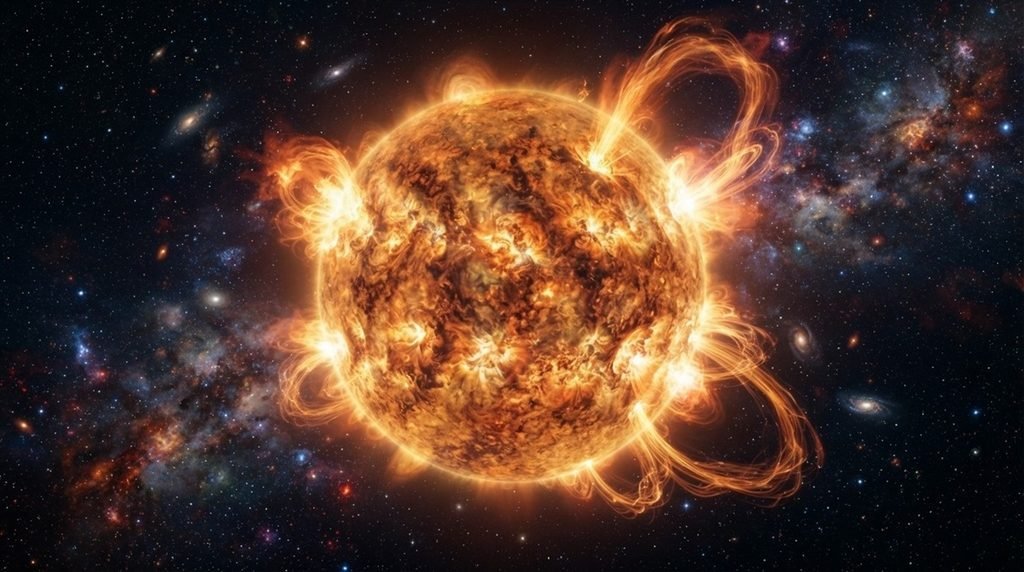
An ancient solar mystery hidden in historical texts just solved how our sun behaves over centuries.
🚀 Scientists from Nagoya University just cracked a massive solar mystery by digging through historical records written before telescopes even existed. By analyzing ancient auroral accounts, the research team successfully reconstructed lost solar activity cycles that standard modern data models completely missed.
🌍 This incredible deep-dive into the past reveals that solar storms and regular space weather cycles followed a surprisingly consistent rhythm long before modern tracking began. The findings give astrophysicists a vital historical baseline to predict how violent solar outbursts might impact Earth today.
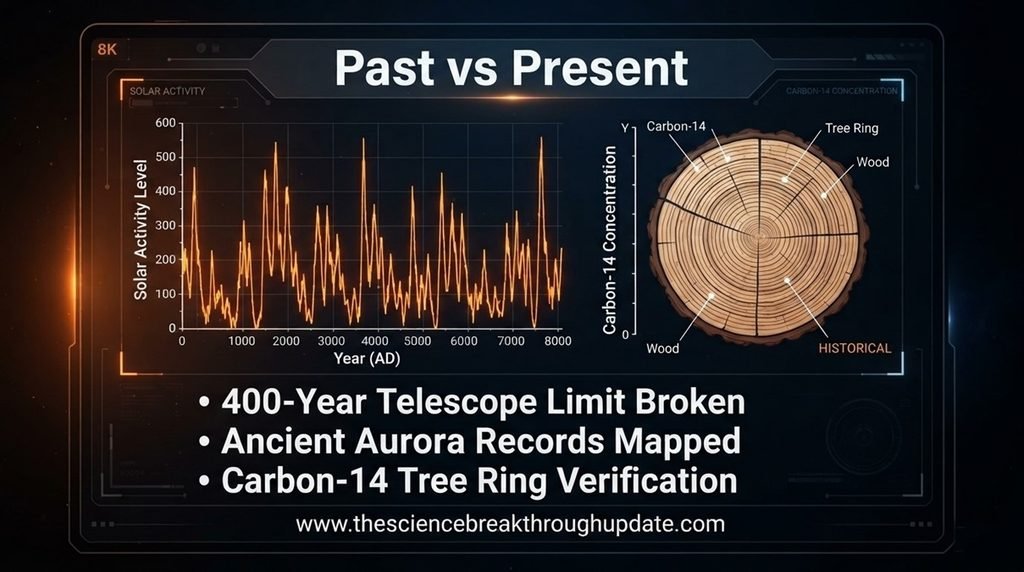
The Blind Spot in Our Solar History
- 🔭 Modern space weather models rely heavily on telescope data that only goes back about 400 years, leaving a massive blank space in our long-term solar history.
- 📜 Without long-term data, scientists struggle to understand if modern extreme solar storms are rare anomalies or part of a regular century-long pattern.
- ⚡ This severe data shortage limits our ability to protect modern satellite networks and global power grids from unpredictable, catastrophic solar flares.
Resurrecting Solar Data Without Telescopes
- 🔍 The research team solved this historical gap by analyzing detailed historical aurora records from centuries before the telescope was invented.
- 🌳 Scientists matched these ancient visual descriptions with carbon-14 isotope data found in tree rings to accurately map old solar cycles.
- 📊 This clever combination of historical texts and environmental science allowed researchers to build a precise timeline of ancient solar magnetic activity.
Why Ancient Records Matter for Modern Technology
- ☀️ Understanding these ancient patterns helps space agencies map out the long-term predictable life cycle and behavior of the sun.
- 📡 Knowing the true frequency of massive historical solar storms allows engineers to build much more resilient satellite communication networks.
- 🛡️ This new baseline drastically improves our long-term forecasting models, keeping global power grids safe from sudden, destructive space weather events.
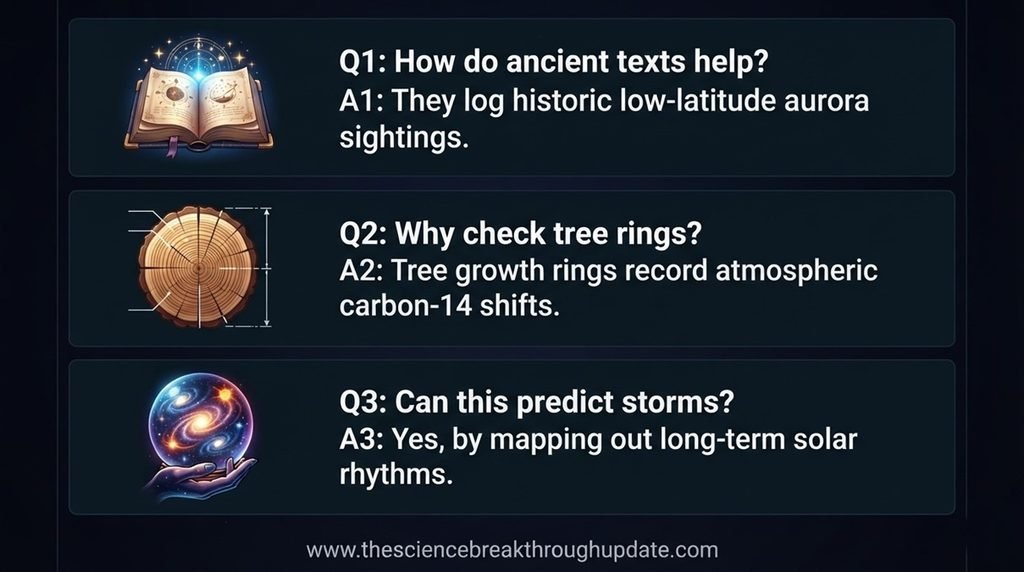
Reader Doubts: Core Questions Answered
- How can historical texts help modern space science?
📖 Ancient records describe frequent aurora sightings at lower latitudes, which indicate periods of intense solar activity. By cross-referencing these descriptions with modern environmental data, scientists can verify when the sun experienced massive solar cycles in the distant past. - Why do tree rings contain clues about the sun?
🧪 When cosmic rays hit our atmosphere, they create carbon-14, which trees absorb as they grow. During high solar activity, the sun’s magnetic field shields Earth, lowering carbon-14 levels and leaving a measurable record in the tree rings. - Can this research help predict future solar storms?
🔮 Yes, by identifying consistent patterns that span over multiple centuries, scientists can better predict when the sun will enter highly active phases. This long-term forecasting gives us more time to protect vulnerable global infrastructure.
My Take: Looking at the sky through old library books instead of lenses shows that our history holds the ultimate key to safeguarding tomorrow’s digital infrastructure from solar chaos.
News source link: Nature Scientific Reports
Share this useful knowledge with your friends now!
Disclaimer: This content is for educational and informational purposes only.