An invisible, silent enemy is turning a vibrant underwater paradise into melting ghost towns, and the clock is ticking for our global oceans.
🤿 Imagine diving into a crystal-clear ocean, expecting to be greeted by a vibrant kaleidoscope of colors, only to find that the magnificent underwater forests sustaining thousands of unique marine species are literally melting away before your eyes.
🇰🇷 Deep beneath the surface of the sea surrounding Jeju Island, a quiet ecological catastrophe is unfolding, and its ripples threaten oceans worldwide. For generations, these temperate waters have been celebrated for their neon-hued soft coral gardens.
🐟 These gardens act as vital nurseries for countless fish and marine organisms. Unlike hard corals that build rigid, stony calcium carbonate skeletons, soft corals are flexible, flesh-like creatures that rely entirely on internal fluid pressure to remain upright and thrive in flowing ocean currents.
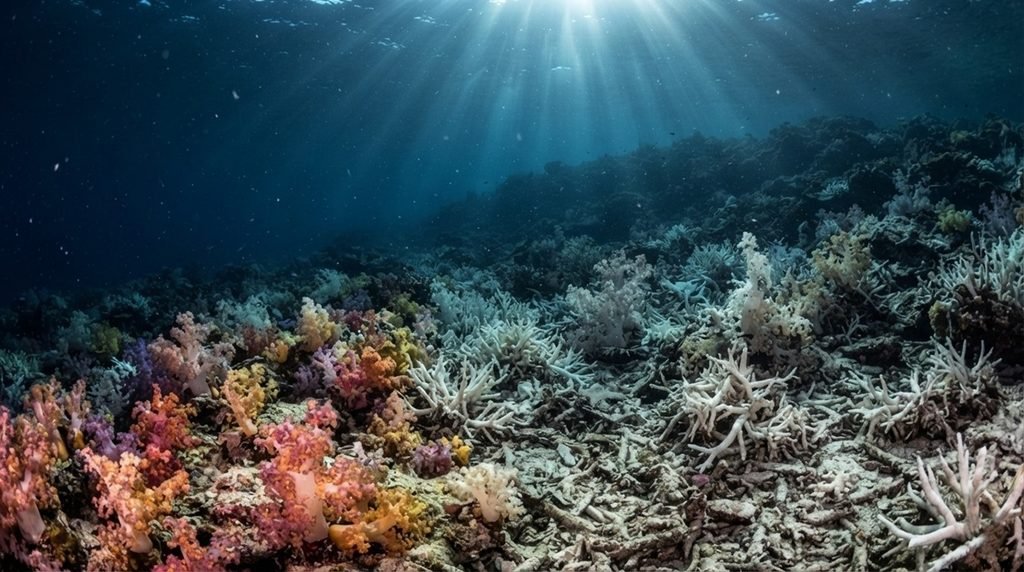
🪸 However, underwater explorers, local divers, and marine scientists have recently started documenting a deeply unsettling sight. Vast fields of these delicate organisms are suddenly losing their brilliant colors, turning into pale, ghost-like figures, and structurally collapsing under the weight of an invisible environmental enemy.
🍂 This sudden and widespread degradation represents a massive distress signal from our changing planet. When a foundational habitat like a soft coral reef collapses, the entire surrounding food web begins to unravel, jeopardizing coastal protections, marine biodiversity, and human livelihoods.
🌍 Understanding the precise reasons behind this structural failure and looking at how modern science is trying to intervene is critical if we want to prevent a devastating ecological domino effect. Every year, millions of people visit these beautiful locations, unaware that the core infrastructure of the marine ecosystem is experiencing an unprecedented breakdown.
🏝️ The beautiful pink and purple gardens that once covered the ocean floor are rapidly disappearing, leaving behind a barren landscape of decaying organic matter. Local fishing communities, who have coexisted with this marine environment for centuries, are now facing a grim reality where their traditional catches are running dry.
🎣 This critical decline is prompting urgent calls for global environmental awareness and immediate local conservation measures. Independent researchers are racing against time to catalogue the genetic diversity of these dying fields, hoping to find colonies that possess a natural resilience to thermal stress.
🌡️ As the water grows warmer, the window of opportunity to study these organisms in their natural, undisturbed state narrows significantly, creating an atmosphere of deep urgency within the scientific community. The rapid degradation observed by teams on the ground indicates that shifting marine conditions are outpacing natural evolutionary adaptation rates.
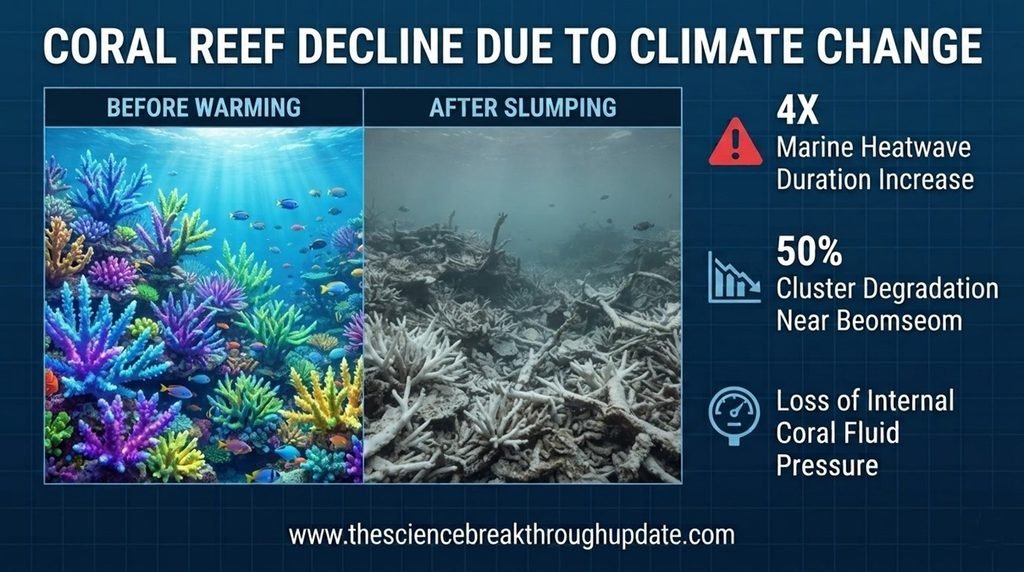
The Hidden Ocean Fever Flattening Underwater Kingdoms
- 🥵 Prolonged periods of intense marine heat stress force fragile soft corals to expel their vital symbiotic algae, leaving host organisms starved of nutrients and prone to catastrophic bleaching.
- 🥀 Without their energetic partners, corals suffer from extreme physical weakness, causing their flexible, fluid-filled bodies to lose structural integrity and experience a devastating slumping phenomenon.
- 📉 This physical collapse means that entire underwater forests are literally flattening out, destroying the complex architectural habitats that hundreds of rare fish species rely on for daily survival.
Documenting the Damage with Citizen Science and Submersible Research
- 📸 Specialized marine protection teams are systematically plunging into deep coral beds to capture high-resolution photographs and document real-time structural changes for national research databases.
- 🔬 National marine ministries and scientific research institutions are establishing long-term environmental monitoring programs to investigate the combined triggers of heatwaves and changing salinity levels.
- 🗺️ This combined approach of crowdsourced citizen observations and rigorous laboratory analysis provides a clear blueprint of the exact damage patterns, allowing authorities to plan targeted protection zones.
A Revitalized Wilderness Securing the Future of Coastal Life
- 🐠 Successfully stabilizing these delicate soft coral ecosystems ensures that foundational marine food webs remain intact to provide essential breeding grounds and shelter for commercial fish.
- 🛡️ Maintaining healthy coral populations directly secures the long-term economic livelihoods of traditional coastal fishing communities and acts as natural, highly effective underwater breakwaters.
- 🌊 By absorbing powerful wave energy and protecting fragile coastlines from severe erosion, we maintain the critical ecological balance of our oceans for future generations to inherit.
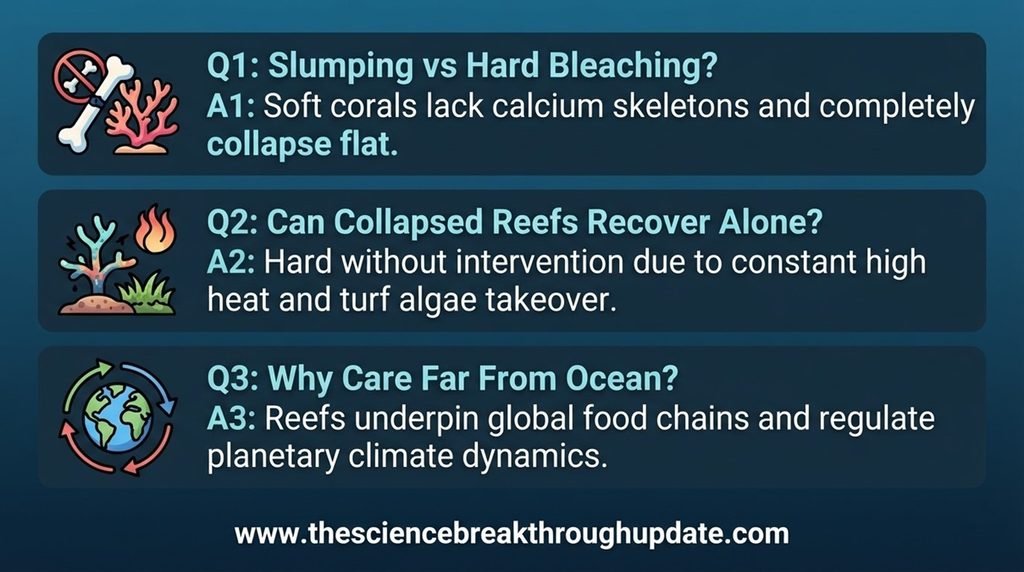
Frequently Asked Questions
- ❓ How does soft coral slumping differ from typical hard coral bleaching?
🦴 Hard corals leave behind a white, rigid calcium carbonate skeleton when they bleach, which can remain standing as a physical structure for many years. In contrast, soft corals lack this stony internal architecture and rely entirely on fluid pressure. When they experience severe heat stress and bleach, they completely lose their internal structural tone, sag downwards, and undergo a rapid physical collapse or “slumping” that quickly flattens the entire habitat into mush. - ❓ Can these collapsed soft coral reefs ever recover on their own without help?
🌱 Natural recovery is exceptionally difficult when ocean temperatures remain consistently high because the corals require stable, cooler conditions to heal and recruit new larvae. Without human interventions like reduced coastal pollution, strict protection from destructive fishing practices, and localized conservation grids, collapsed reefs are frequently overtaken by opportunistic turf algae. This algae prevents new corals from taking root, permanently altering the ecosystem into a barren zone. - ❓ Why should someone living far away from the ocean care about soft coral degradation?
🌍 Soft coral reefs are foundational marine ecosystems that support global fish populations, which billions of people depend on for food security and economic stability. Additionally, healthy oceans play a massive role in regulating the global climate, absorbing carbon, and producing oxygen. The collapse of major marine habitats anywhere eventually impacts weather patterns, food supplies, and environmental safety everywhere on Earth.
My Take: Seeing these ancient underwater forests literally dissolve proves climate change is no longer a distant threat. If we lose these fragile ecosystems, our own coastal safety net completely unravels.
News source link: Reuters Official Environment Report
Share this useful knowledge with your friends now!
Disclaimer: This content is for educational and informational purposes only.