🚨 Your smartphone navigation system is silently vulnerable to an invisible hijacking trick that completely fakes your real-world location.
Most modern applications rely heavily on location-based services to track locations, map daily navigation routes, and manage logistics or ride-sharing operations. However, standard commercial smartphones lack the deep hardware visibility required to protect users against malicious radio frequency interference attacks happening over the air.
This vulnerability exposes ubiquitous mobile devices to systemic location manipulation and severe security bypasses across dense urban agglomerations. Cybercriminals exploit these weak structural chains to easily overwrite native positioning data, leaving common users completely unaware that their true physical location is being redirected.
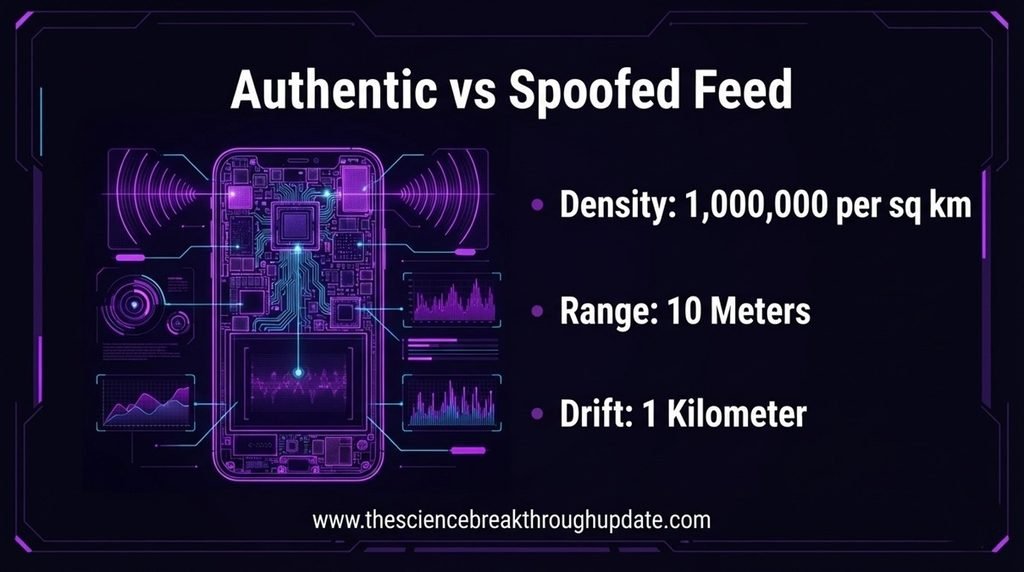
📡 The Hidden Traps in Commercial Smartphone Navigation Architecture
- Commodity smartphone architectures rely on low-power open signals that possess zero built-in cryptographic protection or authentication protocols.
- Hackers broadcast forged satellite signals using radio frequency transmitters to deliberately force the victim device into computing an entirely false PVT solution.
- Hardware constraints create massive hurdles because manufacturer restrictions tightly block direct developer access to the low-level correlation outputs inside consumer chipsets.
- The widespread fragmentation of Android operating system layers frequently results in absent navigation messages and restricted access to chipset diagnostics.
🛠️ Decoding the Cross-Layer Defense Strategies for Mobile Security
- Researchers Robert Argo, Andrea Nardin, Alex Minetto, and Pau Closas successfully established a specialized comparative framework to analyze mobile architecture countermeasures.
- The system utilizes the raw GNSS measurements API to actively extract internal signal parameters directly from the phone operating system.
- Security applications evaluate ongoing threats by running automatic gain control metrics alongside raw carrier-to-noise density ratios to reveal energy anomalies.
- Advanced detection systems run temporal correlation-based cross-checks to identify identical channel distortions caused by single-antenna spoofing setups.
📈 How Layered Countermeasures Transform Global Position Authentication
- Integrating internal inertial measurement unit data with satellite telemetry immediately flags mismatched physical acceleration trends during an active hijacking attempt.
- Gathering crowdsourced data from a network of co-located devices isolates localized receiver errors and accurately maps interference zones.
- Independent multi-frequency tracking protocols effectively insulate dual-band chipsets by continuously validating L1 and L5 frequency consistency against single-band attacks.
- The public deployment of an open-access smartphone spoofing dataset allows international engineers to build and optimize cross-device defensive software.
My Take: This brilliant open dataset exposes our dangerous reliance on unverified mobile data. By stripping away hardware opacity, it forces tech giants to finally fix consumer vulnerabilities before digital lockouts stall urban transit completely.
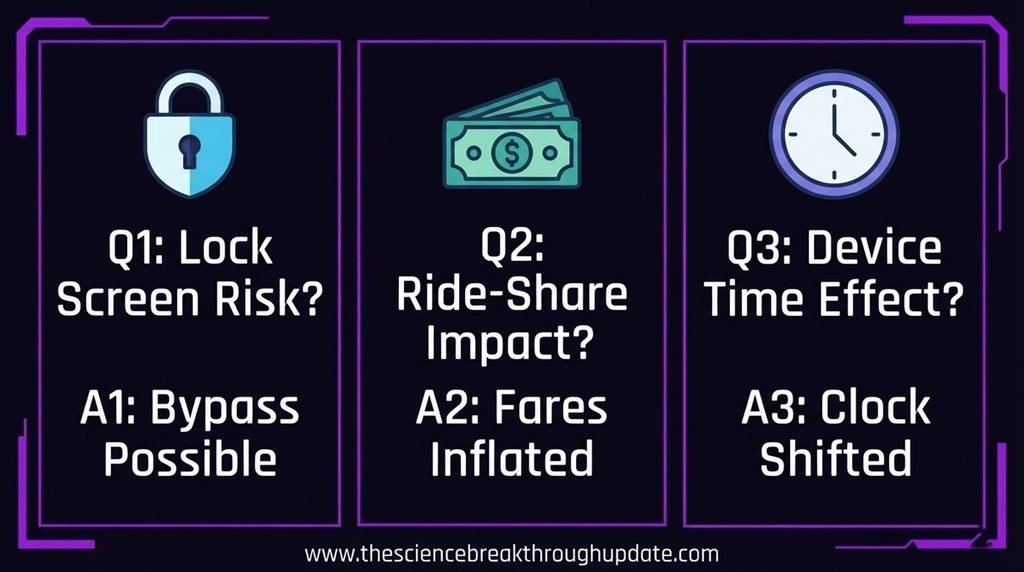
❓ Reader Doubts: Core Questions Answered
1. Can hackers use this trick to bypass phone lock screens?
Yes. Google’s Trusted Places feature allows a user to fully disable security features when within a geofenced area. A malicious actor can spoof that specific area to gain access to personal information without a password.
2. How do ride-share drivers exploit this navigation vulnerability?
Drivers can deliberately spoof their phone’s location during a paid drive. This tricks the internal application into logging a longer distance than actually occurred, artificially inflating the final fare for the rider.
3. Can a spoofing attack change the date or time on my phone?
Yes, it can. Unintentional simulator leaks have previously caused multiple smartphones within a close radius to lock onto forged signals, forcing the victim devices to report an incorrect date or time.
Source Document Link: arXiv.org
Share this useful knowledge with your friends now!”
Disclaimer: This content is based on preliminary scientific research (Preprints) from arXiv.org and current global findings. It is shared strictly for educational and informational purposes and does not constitute professional, legal. Readers are encouraged to verify facts independently and consult relevant experts before making any decisions.