Smart connected vehicles can be manipulated into dangerous network isolation by broadcasting fake weather data that forces unauthorized frequency selection changes.
📱 Autonomous vehicles constantly adjust their wireless signal frequencies to maintain stable transmission channels during heavy environmental downpours. However, a glaring security loophole allows malicious hackers to spoof localized weather broadcasts and force smart vehicles into selecting highly vulnerable communication lines. This cross-layer data manipulation creates massive signal degradation and completely blinds the onboard navigation stacks without requiring physical vehicle access.
How Fake Weather Broadcasts Blind Autonomous Vehicles
- 🛑 Malicious actors can exploit the automated Vehicle-to-Everything (V2X) communication networks by broadcasting falsified rain and weather data packets.
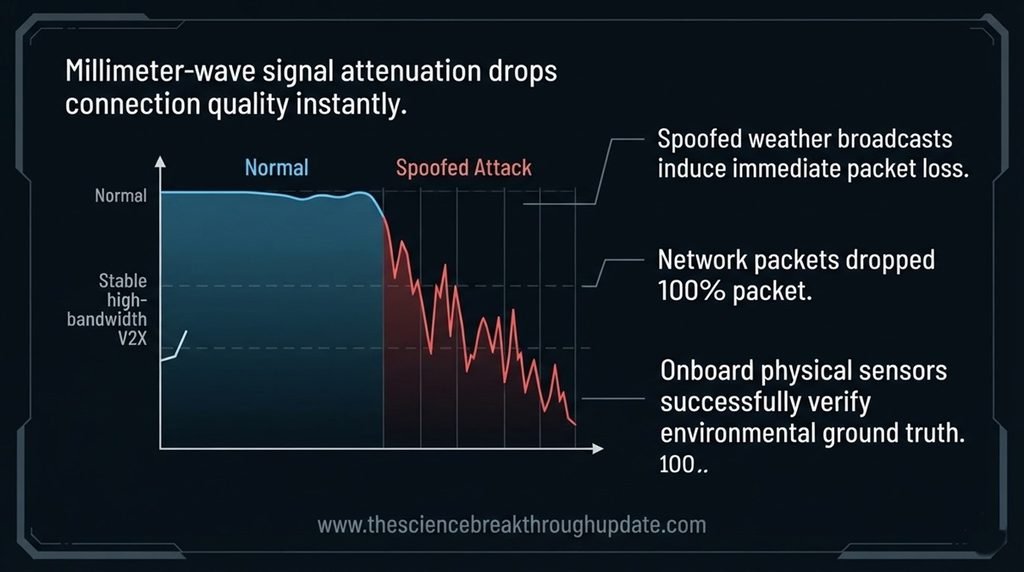
- 📡 Autonomous vehicles automatically shift their millimeter-wave (mmWave) frequencies to alternative channels when they receive these fake rain alerts.
- 📉 This forced frequency migration causes immediate signal attenuation and packet loss because the vehicle drops its optimal connection line.
- ⚠️ The sudden loss of reliable data streams disrupts real-time cooperative driving decisions and forces smart cars into dangerous sensor isolation.
Building a Smart Deflector Stack to Verify Environmental Data
- 👥 Researchers Rasheed Bello, Idreez Yusuf, and their team developed a protective frequency selection stack to identify these spoofing attacks.
- 🔄 The new defense system constantly cross-checks external wireless weather reports with the car’s actual onboard sensor readings.
- 🌧️ The vehicle measures real-world physical indicators like windshield wiper activity and ambient moisture levels to verify external data accuracy.
- 🛡️ If a discrepancy is detected, the algorithm rejects the spoofed network command and maintains its secure, high-bandwidth connection channel.
Why Weather Verification Is Vital for Future Transit Security
- 🚚 Implementing this dual-verification system protects automated delivery fleets and passenger shuttles from unpredictable wireless signal hijackings.
- ⚔️ Securing the mmWave spectrum ensures that critical crash-avoidance systems remain fully functional during complex electronic warfare scenarios.
- 🔑 The research proves that future autonomous infrastructure requires zero-trust verification frameworks for all incoming environmental data streams.
- 🚦 Validating weather parameters prevents massive traffic gridlocks caused by coordinated digital attacks on smart city transit grids.
My Take: This research exposes a chilling reality; software smarts mean nothing if simple environmental spoofing blinds the system. True autonomy requires cars to trust their own physical senses over external network feeds.
Reader Doubts: Core Questions Answered
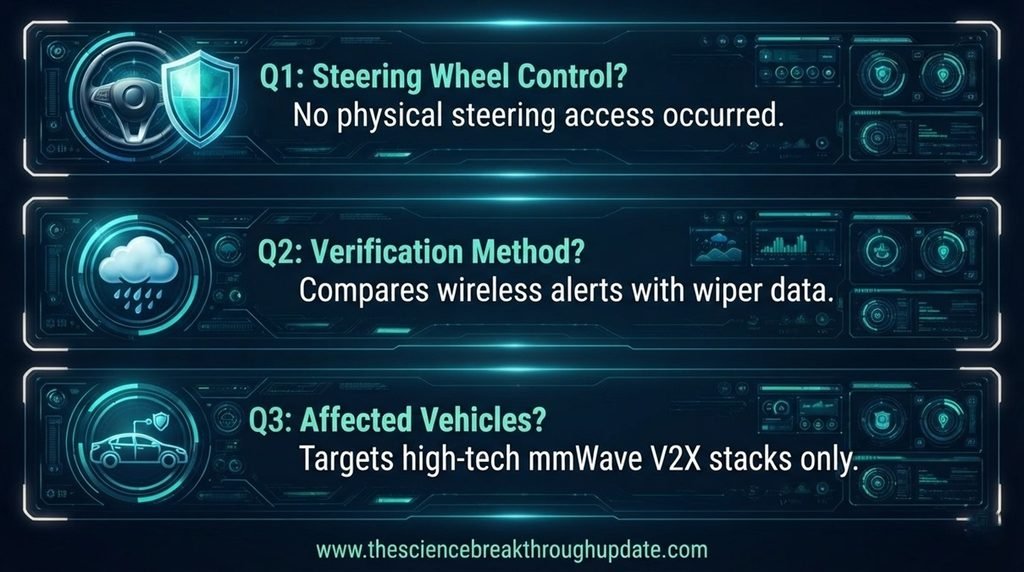
1. Can hackers use fake weather data to take physical control of my steering wheel?
- ❌ No, this specific attack does not let hackers steer your vehicle remotely. It strictly disrupts the communication network, causing the car to lose vital real-time data from surrounding infrastructure and nearby vehicles.
2. How does a car verify if a wireless rain report is actually real or fake?
- 🧠 The vehicle compares the digital weather broadcast against its physical onboard sensors. If the network reports heavy rain but the optical cameras and windshield wiper sensors detect dry conditions, the car flags the broadcast as fake.
3. Will this security vulnerability affect normal manually driven cars on the highway?
- 🚗 No, this vulnerability specifically targets advanced autonomous and connected vehicles that rely heavily on V2X millimeter-wave frequencies for cooperative navigation. Traditional vehicles without these automated network connections are completely unaffected by this spoofing method.
News source link: arXiv.org
Share this useful knowledge with your friends now!”
Disclaimer: This content is based on preliminary scientific research (Preprints) from arXiv.org and current global findings. It is shared strictly for educational and informational purposes and does not constitute professional, legal. Readers are encouraged to verify facts independently and consult relevant experts before making any decisions.