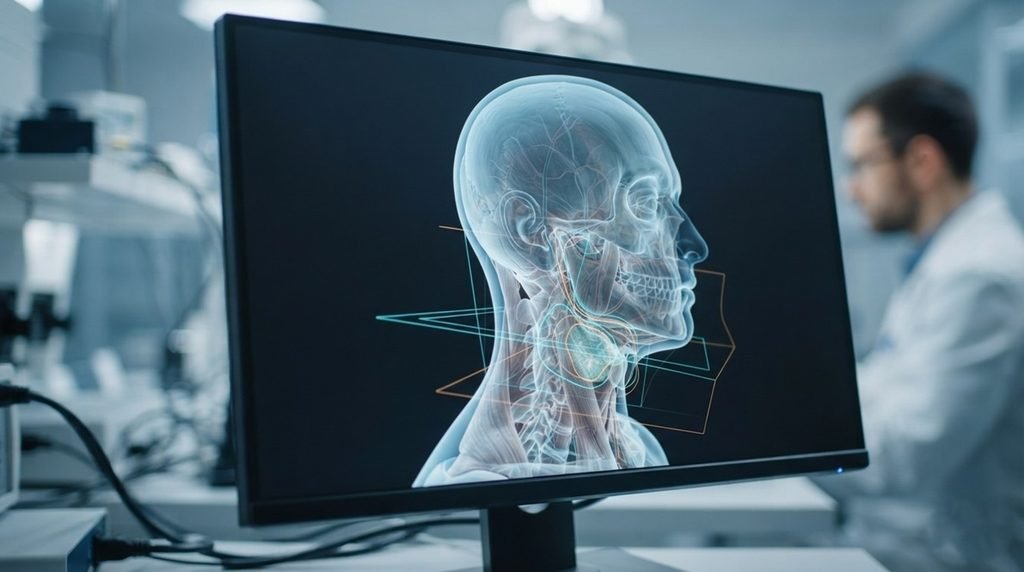
🧬 This computational twin uses predictive programming to forecast exactly how a tumor changes shape before the first beam of radiation hits a patient’s neck.
Medical science is quietly shifting away from uniform hospital setups toward creating live computational clones that preview complex radiation therapy directly on a patient’s digital replica before the real energetic treatment beams ever touch their physical body during clinical oncology sessions.
A major hurdle in head and neck oncology is that patients undergo rapid structural variations, meaning targeted proton beams frequently hit normal tissue zones when a person’s shape changes even by a few millimeters over six to seven weeks of therapy.
⚠️ The Delayed Roadmap of Traditional Cancer Mapping
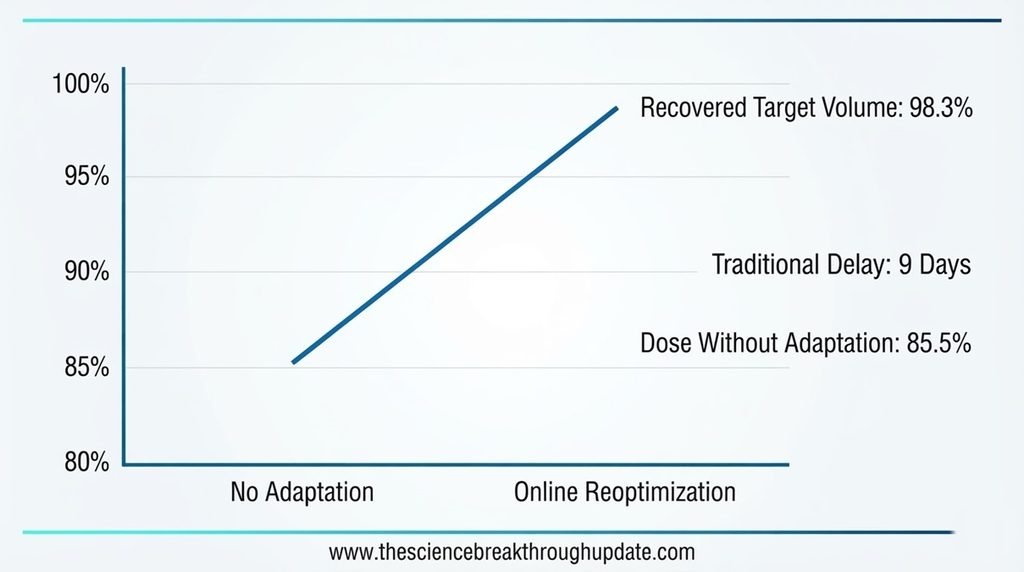
- Standard offline clinical re-planning requires a median of 9 days of manual coordination and complex calculations to build a completely new treatment map for a changing body.
- Because medical teams lack a system to update targeting charts instantly, everyday variations in human geometry frequently cause treatment delivery beams to deviate from the intended high-dose volume.
- This extensive operational delay means standard clinical radiation protocols regularly expose surrounding normal tissue zones to unnecessary stress during the multi-week treatment course.
- Prolonged exposure to displaced proton ranges increases the long-term likelihood of severe physical side effects, including permanent salivary gland damage and swallowing difficulties.
🤖 The Predictive Simulation Tracking Daily Anatomy
- A collaborative research team featuring Yizhou Wu, Xiaofeng Yang, and Chih-Wei Chang developed an uncertainty-guided digital twin framework to automate daily internal target tracking.
- The system utilizes a deep learning deformation library built from 88 previously treated patients to accurately forecast treatment-day patient anatomy prior to active radiation sessions.
- By incorporating automated image registration algorithms through a pretrained foundation model, the platform maps structural changes to evaluate whether online adaptive adjustments match clinical standards.
- The framework successfully recovers high-dose target volume metrics to over 98%, demonstrating that real-time reoptimization matches offline plan quality without causing structural clinic delays.
🛡️ Why Real-Time Target Adjustments Protect Vital Organs
- The predictive model tracks severe internal tissue shifts dynamically, allowing the treatment beam to safeguard adjacent critical structures like the human brainstem and spinal cord.
- Moving completely away from slow, reactive offline modifications enables hospital infrastructure to shift toward anticipatory online adaptation while the patient remains on the treatment couch.
- High-dose accuracy ensures that sensitive normal tissues receive minimized dose deposition, significantly reducing the probability of severe treatment-induced physiological complications.
- Detailed testing validated that the computed digital twin framework generates high-quality adjustment maps that score within 1.7% of physician-approved baseline quality benchmarks.
My Take: Replacing slow, manual mapping with instant data twins eliminates dangerous treatment blindspots. This shift moves oncology from reactive troubleshooting to true precision, saving vital organs from accidental damage.
🧠 Reader Doubts: Core Questions Answered
- What is an uncertainty-guided digital twin in cancer therapy?
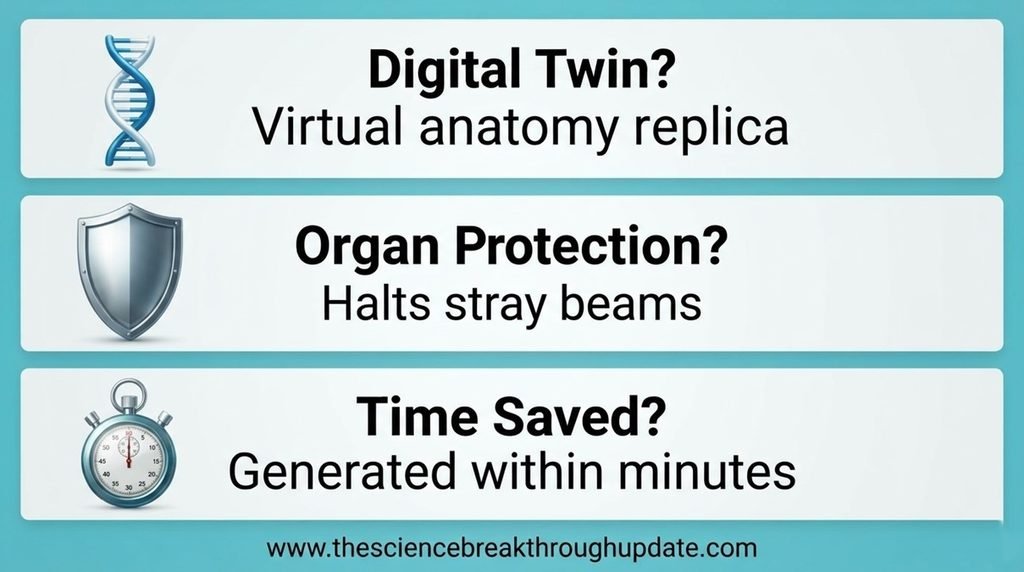
It is a computational platform that uses historical patient libraries to forecast how a specific individual’s internal anatomy will shift on any given treatment day. This predictive map allows the clinical software to adjust radiation beam coordinates dynamically before delivery. - How does this system improve standard proton therapy protocols?
Conventional re-planning methods take close to a full week to manually compute structural body changes. This new framework completely automates the tracking process, providing adaptive target plans that match baseline quality within minutes instead of days. - Does the automated framework risk over-radiating healthy facial tissues?
No, comprehensive clinical evaluations demonstrate that the automated system keeps maximum radiation doses for vital structures, such as the spinal cord and brainstem, strictly below accepted biological safety tolerances.
Source Document Link: arXiv.org
Share this useful knowledge with your friends now!”
Disclaimer: The information on this website is for educational and informational purposes only and is not intended as medical advice. Always consult a qualified healthcare professional before making any medical decisions or changes to your treatment plan.