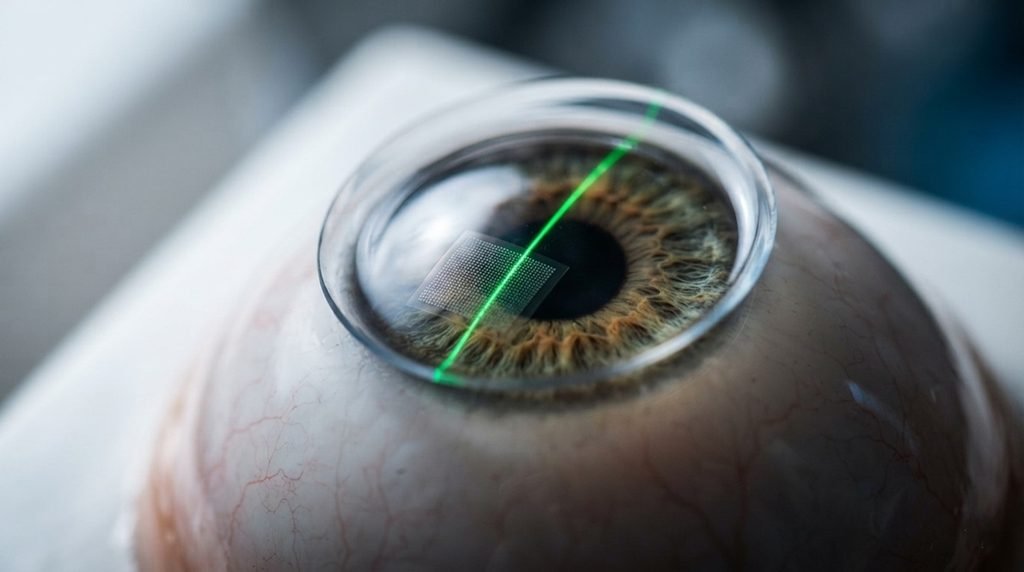
🚀 Imagine wearing a tiny, invisible laser inside your eye that quietly shields you from permanent blindness without you ever feeling a single thing.
Glaucoma remains a massive global health threat, damaging the optic nerve through elevated internal fluid pressure before patients notice loss. Traditional clinical eye tests only capture a single snapshot of eye pressure during brief, occasional doctor visits, leaving dangerous spikes undetected.
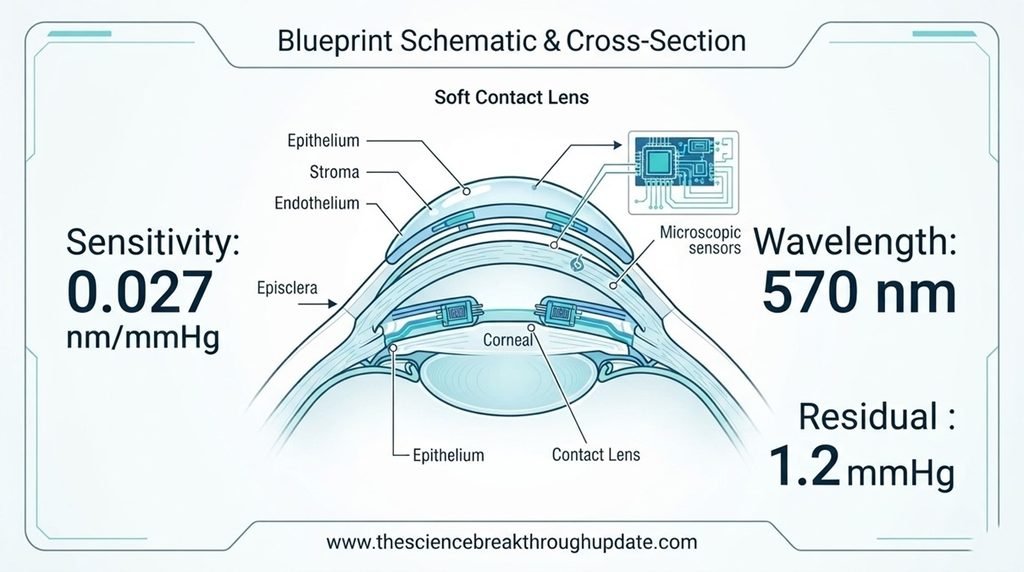
A team led by scientist S.A. Ivanov has created a stretchable distributed-feedback laser embedded directly into a contact lens. This smart lens uses an ultra-thin, flexible polymer structure that rests comfortably to monitor pressure changes, changing its optical emission wavelength instantly.
👁️ The Hidden Danger of Silent Vision Loss
- High fluid pressure inside the eyeball slowly destroys retinal ganglion cells without causing any early pain or obvious warning signs.
- Standard clinical tonometer tools require numbing drops and mechanical contact, making continuous hourly tracking outside hospitals completely impossible.
- Eye pressure naturally fluctuates wildly during sleep, exercise, and stress, meaning a single daytime checkup misses the most dangerous spikes.
- Late diagnosis often means irreversible damage has already occurred, forcing patients to manage permanent vision deficits for life.
🔬 Embedding Microscopic Lasers in Soft Lenses
- The research team integrated a highly stretchable organic semiconductor laser directly into a standard biocompatible silicone contact lens structure.
- This micro-laser reacts dynamically to the nanometer-scale stretching of the corneal surface caused by changing internal fluid dynamics.
- The system operates entirely on wireless optical principles, requiring no heavy internal batteries or metallic wires inside the eye.
- Patients experience completely unobstructed vision because the laser components are transparent and structurally microscopic within the lens matrix.
🔮 A New Era for Preventative Ophthalmology
- Continuous tracking allows doctors to catch toxic pressure spikes early, helping them customize targeted medication schedules before cells die.
- The stretchable sensor design prevents localized irritation, enabling safe long-term wear during normal daytime and nighttime hours.
- Precise tracking metrics reduce the need for exploratory surgeries, shifting the medical focus entirely toward proactive lifestyle management.
- This optical technology paves the way for other wearable biosensors capable of tracking complex ocular biomarkers without invasive needles.
My Take: This thin laser lens quietly fixes the biggest flaw in eye care by replacing scary clinic tests with painless, constant tracking. It turns passive wearables into true lifesavers.
❓ Reader Doubts: Core Questions Answered
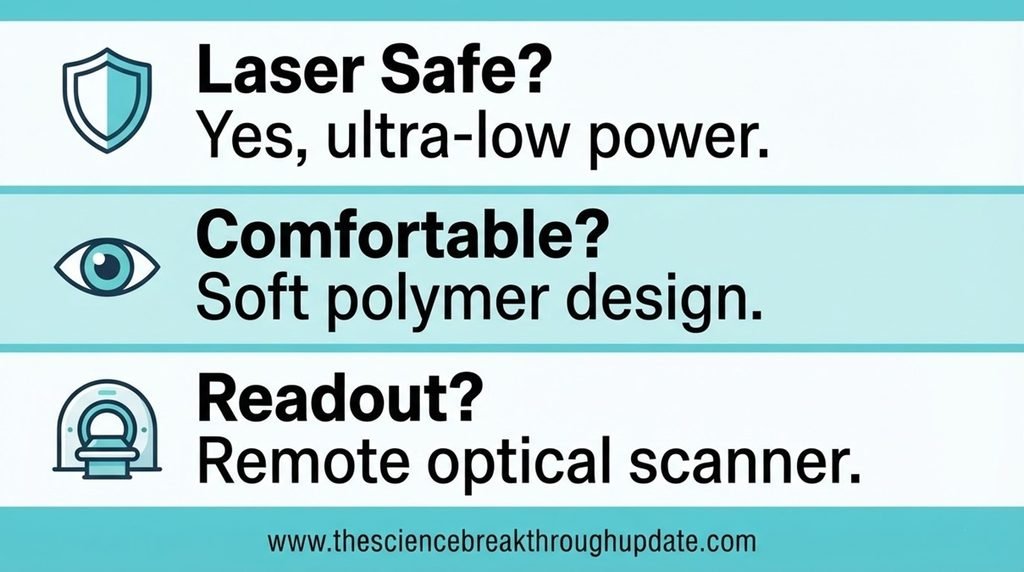
- Can the built-in laser accidentally burn or damage my eye?
No, the system uses ultra-low-power optical emissions that are completely safe for delicate human tissue. The light levels operate well below safety thresholds for continuous ocular exposure. - Will wearing this smart lens feel different from normal contact lenses?
The stretchable polymer material matches the flexibility and thickness of standard commercial soft lenses. Users experience the same level of comfort without noticing the embedded optical components. - How do doctors actually read the pressure data from the lens?
An external optical scanner captures the light wavelength emitted by the lens laser from a safe distance. Specialized software instantly converts these light shifts into precise pressure measurements.
Source Document Link: arXiv.org
Share this useful knowledge with your friends now!”
Disclaimer: The information on this website is for educational and informational purposes only and is not intended as medical advice. Always consult a qualified healthcare professional before making any medical decisions or changes to your treatment plan.