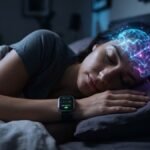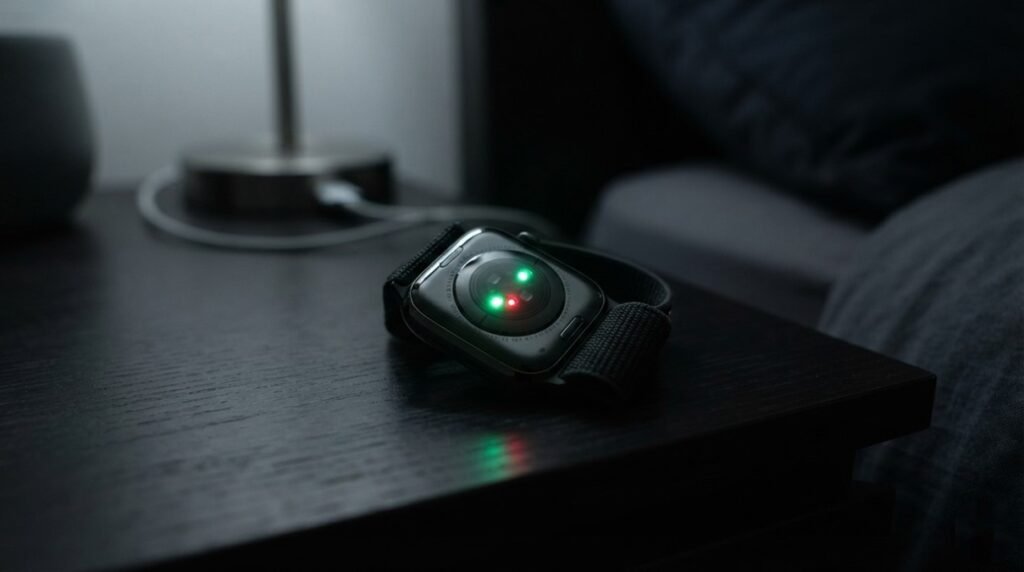
Your smartwatch might be lying to you about how well you sleep at night.
💡 Many adults struggle with chronic sleeplessness and rely on smart wearables to track their daily rest patterns. However, looking at data from just a few nights fails to reveal the true severity of chronic insomnia or biological clock disruptions.
🔬 A team of researchers including Soheil Saghafi, Thomas C. Neylan, Qiao Li, Samuel A. McLean, and Gari D. Clifford analyzed long-term tracking limitations. Their findings show that short-term tracking creates a false sense of security or unnecessary panic about sleep health.
Why Short-Term Tracking Fails Sleep Science
📉 Short-term sleep tracking data captures temporary lifestyle changes and daily stress instead of tracking real circadian rhythm disorders.
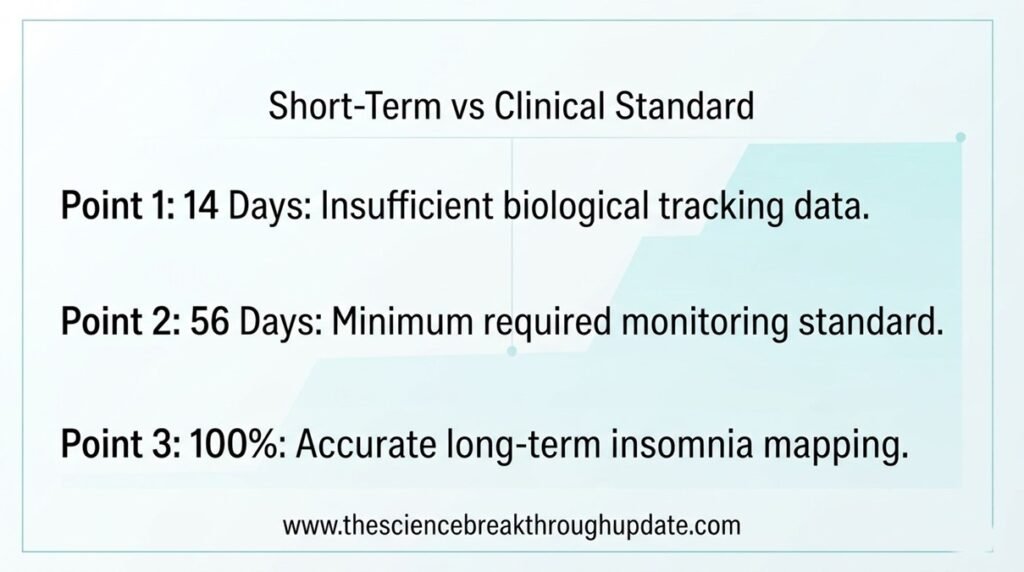
⏳ Most people stop tracking their sleep after 7 or 14 days, which provides completely insufficient biological data for clinical analysis.
❌ Wearable devices frequently misinterpret normal nighttime movement as wakefulness, leading to highly inaccurate health scores on smart applications.
🩺 Doctors cannot accurately differentiate between mild, temporary sleep issues and severe clinical insomnia using brief tracking windows.
The New Eight-Week Sleep Monitoring Standard
📅 Scientists discovered that a minimum of 8 weeks of continuous monitoring is required for a meaningful medical assessment.
📊 This extended timeframe allows algorithms to map circadian derived features and identify deep biological sleep trends accurately.
🛡️ Long-term tracking filters out random anomalies like a late-night dinner or a single night of high work-related stress.
📋 Gathering 56 days of continuous data gives healthcare providers the precise information needed to design personalized treatment plans.
How Extended Data Transforms Insomnia Care
🎯 Patients get an accurate diagnosis that matches their actual biological clock instead of relying on unreliable daily guesswork.
❤️ Clinical experts can identify severe sleep disorders early, preventing long-term risks like chronic fatigue and cardiovascular health issues.
📱 Smart wearables become valuable medical tools rather than basic fitness gadgets by providing validated clinical insights.
🧘 Individuals gain peace of mind by understanding their long-term health trajectory instead of obsessing over single-night scores.
My Take: This study exposes our obsession with quick fitness metrics. True health tracking requires patience, forcing tech companies to pivot from daily scores to long-term medical data.
Reader Doubts: Core Questions Answered
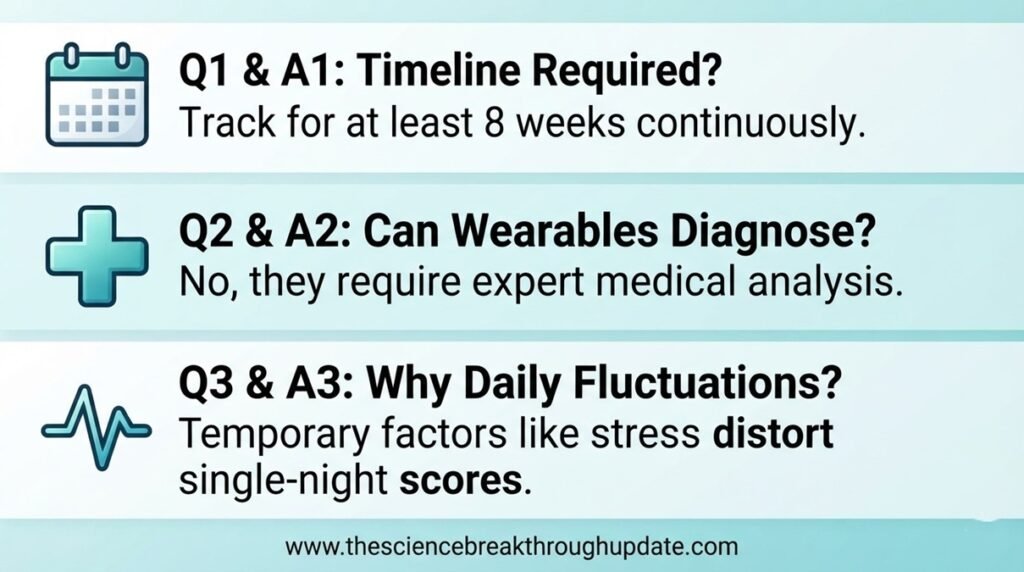
- How long should I track my sleep to get accurate results?
⏳ You need to track your sleep for at least 8 weeks continuously. Short-term data only shows daily variations rather than your true biological patterns. - Can consumer smartwatches diagnose clinical insomnia?
🩺 No, consumer smartwatches cannot diagnose insomnia on their own. They require long-term data tracking combined with clinical analysis by a medical professional. - Why does my sleep data change so much from night to night?
📉 Daily data fluctuates due to temporary factors like stress, diet, and room temperature. An 8-week look smooths out these anomalies to show the big picture.
Source Document Link: arXiv.org
Share this useful knowledge with your friends now!”
Disclaimer: This content is based on preliminary scientific research (Preprints) from arXiv.org and current global findings. It is shared strictly for educational and informational purposes and does not constitute professional, legal. Readers are encouraged to verify facts independently and consult relevant experts before making any decisions.