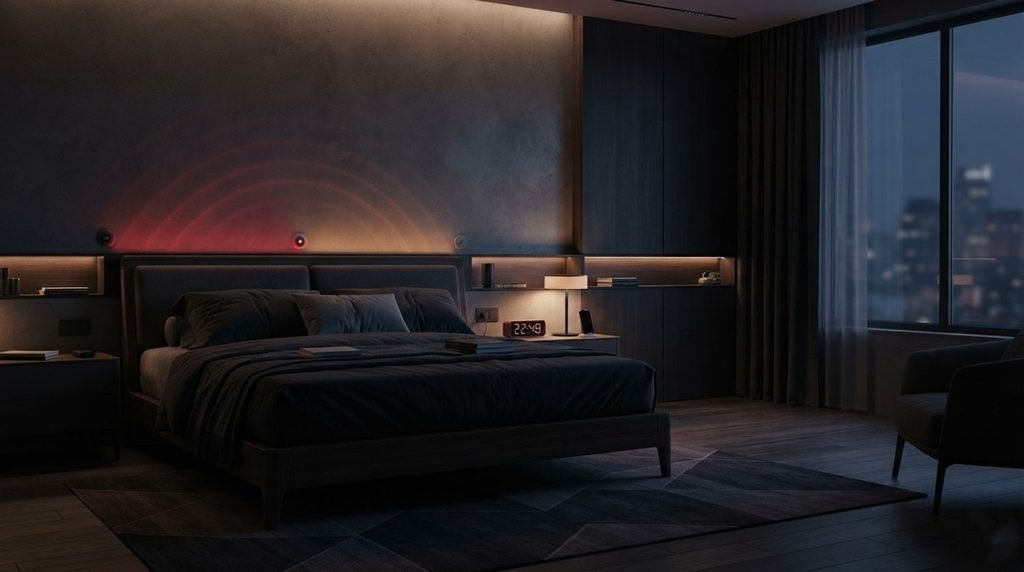
Millions of people stare at the ceiling every night, hopelessly tracking their insomnia while smartwatches helplessly watch them suffer.
💡 Your modern fitness tracker tells you exactly how badly you slept last night, but it cannot actively change your bedroom environment to help you fall asleep faster. This passive approach leaves chronic insomniacs feeling frustrated as they collect useless data without receiving any real-time, actionable relief.
📉 Recent scientific breakthroughs reveal that static routines fail because human biology changes dynamically, meaning your body requires an automated, personalized environmental intervention to successfully transition into deep rest. Traditional smart home applications simply lack the intelligence to adapt to these immediate physiological shifts.
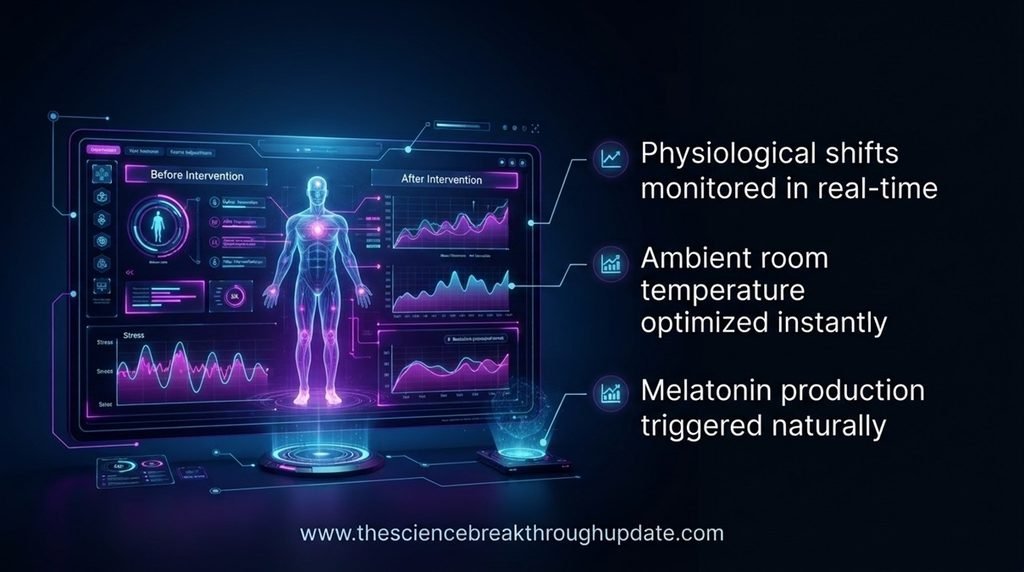
Why Current Sleep Tech Fails To Cure Your Insomnia
- 🛑 Standard wearable devices merely record your restless movements instead of actively fixing the underlying environmental disruptions in real-time.
- 🌡️ Fixed bedroom routines fail because your body temperature and heart rate change dynamically throughout the late-night hours.
- 🎧 Relying on generic sleep sound playlists often overstimulates the human brain rather than guiding it into deep REM cycles.
- 📊 Users experience data fatigue when tracking sleep because passive applications offer zero immediate solutions during sudden 3:00 AM awakenings.
The Invisible AI Assistant Actively Fixing Your Bedroom Environment
- 🧠 Researcher Nick Rezaee and scientist Chelsea Boccagno developed an autonomous system using Just-in-Time Adaptive Interventions to manage your sleep.
- 📋 This agentic system utilizes highly specialized N-of-1 data to analyze the precise physiological indicators of one single individual.
- 🏠 The software communicates directly with smart home sensors to adjust room aesthetics the exact moment you begin tossing.
- 💡 Automated adjustments smoothly alter ambient lighting wavelengths and drop thermostat levels to instantly trigger your natural melatonin production.
How Personalized Automation Restores Long-Term Sleep Health
- 🧘 Shifting from passive tracking to active intervention allows users to break the stressful cycle of chronic nighttime anxiety.
- 🎵 Tailored audio soundscapes adjust volume levels automatically based on real-time biometric feedback to keep you asleep longer.
- 🌿 Long-term optimization data helps people avoid dependency on pharmaceutical sleep aids by utilizing natural environmental cues.
- 🛡️ This approach transforms modern smart homes from simple voice-controlled gadgets into active, life-improving medical wellness spaces.
My Take: Tracking data is useless if it does not solve the problem. Moving from passive tracking to active, automated environment control finally turns smart gadgets into real life-improving health tools.
Reader Doubts: Core Questions Answered
1. How does this system differ from a regular smartwatch tracker?
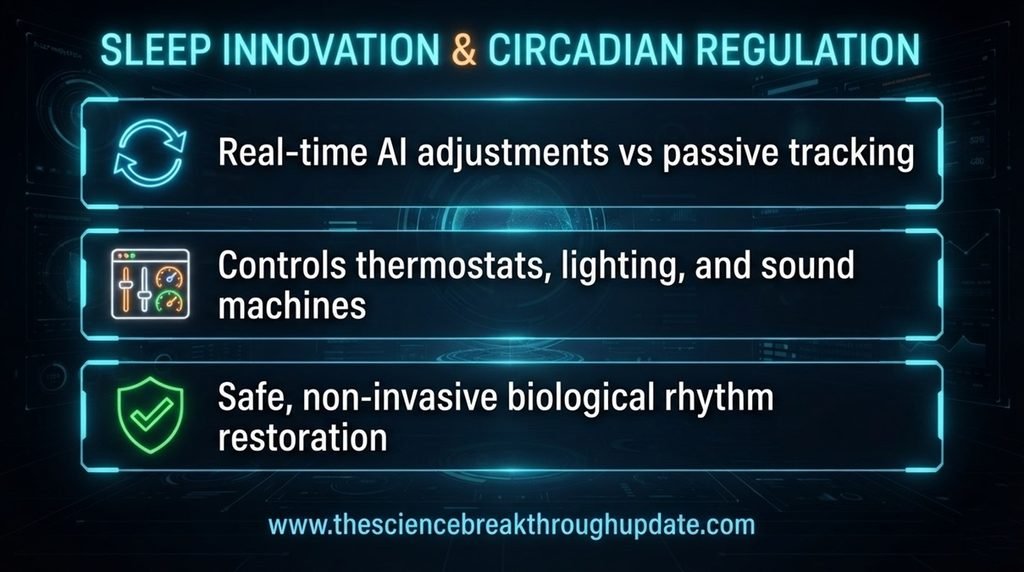
🔄 Regular smartwatches only record your sleep data passively after the night ends. This new system uses active AI agents to change your room environment in real-time while you sleep.
2. What smart home devices can this system control?
🎛️ The system adjusts smart thermostats, automated bedroom lighting, and sound machines based on your biometric signs. It alters these devices instantly when you experience restlessness.
3. Is this technology safe for long-term use?
✅ Yes, this system relies entirely on non-invasive environmental adjustments like temperature and light wavelengths. It helps restore natural biological rhythms without using harmful sleep medications.
News source link: arXiv.org
Share this useful knowledge with your friends now!”
Disclaimer: This content is based on preliminary scientific research (Preprints) from arXiv.org and current global findings. It is shared strictly for educational and informational purposes and does not constitute professional, legal. Readers are encouraged to verify facts independently and consult relevant experts before making any decisions.