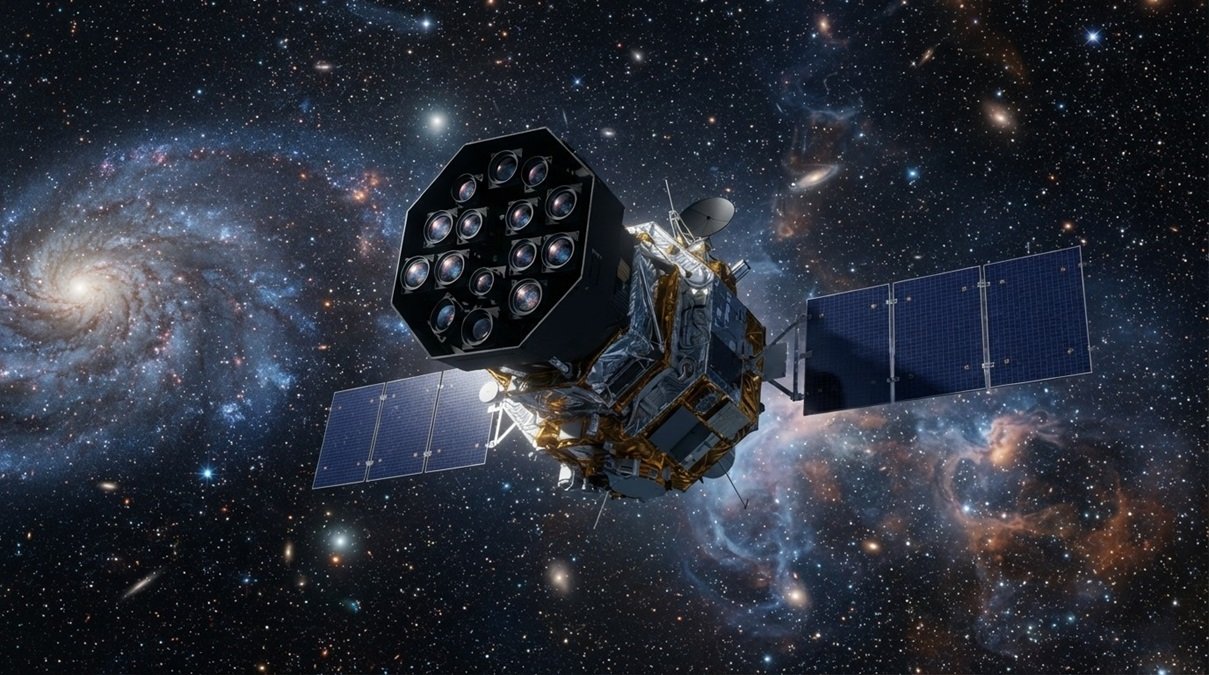
🪐 Searching for an Earth twin in the vast deep space just became much easier due to a major software upgrade.
✨ Astronomers hunting for habitable worlds often face a massive obstacle when analyzing distant starlight. Faint planetary signals easily vanish behind intense stellar activity, cosmic dust, and camera noise, which makes detecting small, rocky planets incredibly difficult. This common issue routinely distorts data and masks terrestrial exoplanets orbiting Sun-like stars.
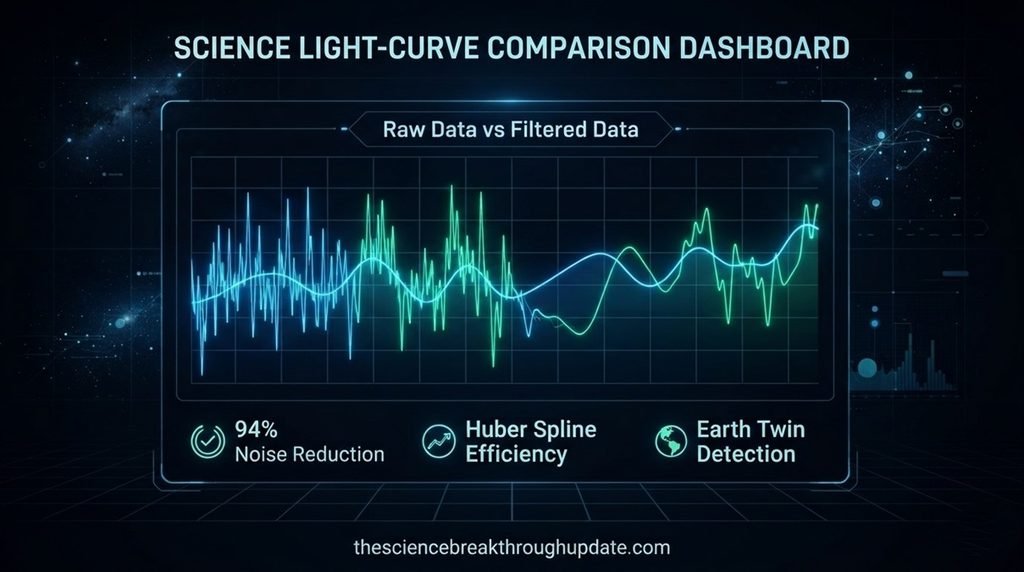
🔭 To solve this, researcher Geert Jan Talens and an international team developed advanced light-curve filtering algorithms. Prepared for publication in Astronomy and Astrophysics, their study successfully tested automated software tools like Huber spline filters on simulated data. This breakthrough allows data systems to isolate the exact, minute dips in starlight caused by passing planets.
The Chaos of Measuring Distant Starlight
- 🌌 Finding a tiny, rocky planet around a bright star is difficult because natural stellar variability mimics planetary transits.
- 📷 Standard observation instruments frequently introduce data artifacts that confuse automated transit search algorithms during long sky surveys.
- 🧼 Traditional data cleaning methods accidentally erase real planetary signatures while trying to filter out background instrumental noise.
- 🎯 Missing these faint signals prevents astronomers from cataloging smaller planets that sit directly inside the habitable zone.
Smart Filters Clean Cosmic Data
- 💻 The research team deployed specialized biweight and Huber spline filters to flatten chaotic stellar light curves.
- 📈 These optimized algorithms successfully separated true planetary transits from random stellar noise across dense simulated datasets.
- 📊 The system evaluated competing data platforms like CETRA and nuance to identify the absolute best processing framework.
- 🛠️ Astronomers can now apply these open-source tools to clean raw data pipelines before running large-scale planet detection software.
The New Era of Planet Hunting
- 📡 This processing breakthrough directly prepares ground stations for the massive data influx from the upcoming PLATO Space Telescope.
- 🚀 Maximizing transit recovery rates ensures that future missions will not miss genuine Earth-sized planets due to signal noise.
- 🛰️ Providing verified, clean planet candidates allows global teams to safely schedule expensive atmospheric follow-up observations using larger telescopes.
- 🌐 The open-source code helps independent observatories worldwide accelerate their local surveys for nearby habitable alien worlds.
My Take: Finding an Earth twin requires better software, not just bigger hardware. This brilliant filtering breakthrough ensures future telescopes will not miss habitable worlds simply because noisy starlight got in the way.
Reader Doubts: Core Questions Answered
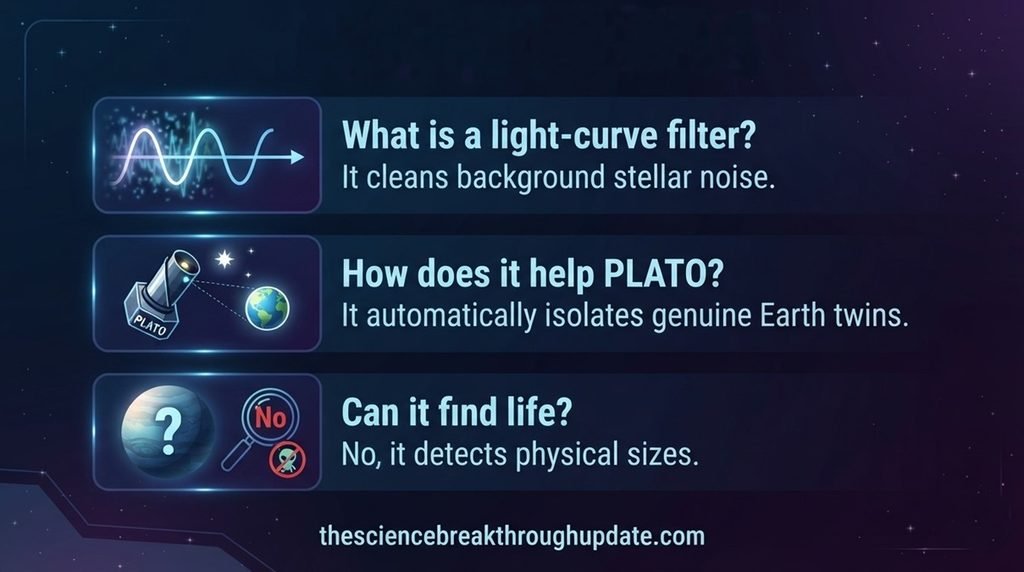
1. What is a light-curve filter in astronomy?
📖 A light-curve filter is a specialized data processing algorithm used to clean up starlight measurements. It removes background noise, camera glitches, and stellar flares so astronomers can spot the real, faint shadows of orbiting planets.
2. How does this help the PLATO Space Telescope mission?
🪚 The PLATO mission will monitor hundreds of thousands of stars simultaneously, generating massive amounts of raw data. These new algorithms act as a digital sieve, automatically sorting through the noise to highlight genuine Earth twins.
3. Can these new algorithms find life on other planets?
🛑 No, the algorithms only detect the physical presence and size of a planet. However, by accurately finding Earth-sized worlds, they provide the exact coordinates that larger telescopes need to scan for atmospheric signs of life.
News source link: arXiv Astrophysics
Share this useful knowledge with your friends now!
Disclaimer: This content is for educational and informational purposes only.