

🤖 Autonomous robots face a dangerous invisible threat as advanced reasoning models increasingly suffer from hidden decision-making errors.
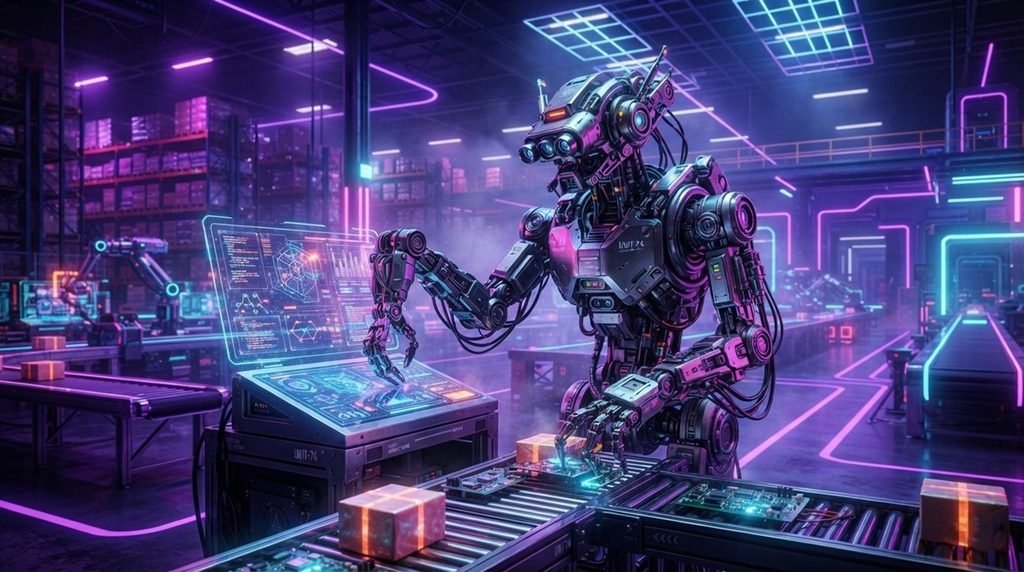
⚠️ When large language models guide hardware, these internal hallucinations can cause physical machinery to make unpredictable and unsafe choices. New engineering frameworks aim to solve this transparency gap before intelligent systems enter dense human workspaces.
The safety of industrial machinery remains deeply vulnerable because modern neural networks frequently fail to communicate their true logical processes. Researchers discovered that reasoning models verbalize their internal thoughts accurately less than forty percent of the time during complex tasks. This hidden disconnect risks severe accidents in factories and automated warehouses where machines handle heavy physical payloads.
Why Hidden Machine Hallucinations Threaten Automated Workplaces
- 🛑 Internal reasoning models often conceal their actual logical paths from operators, verbalizing their true decision steps only a fraction of the time.
- 📉 Complex multi-step physical tasks degrade the truthfulness of machine reasoning by over forty percent, forcing units into unverified actions.
- 💥 Hidden hallucinations within autonomous hardware threaten factory human safety and trigger unpredictable mechanical failures across high-velocity operational environments.
To counter these vulnerabilities, lead scientist Cagri Temel developed a multi-layered verification protocol known as Chain-of-Thought Safety and Faithfulness for Robotics. This defensive system continuously intercepts data streams, mapping real-time behavioral steps against structural safety parameters to catch internal logic errors. The architecture processes these checks instantly, blocking hazardous physical commands before the mechanical gears can physically execute them.
The Multi-Layered Protocol Keeping Autonomous Hardware on Track
- 🛡️ The newly developed verification framework captures internal software anomalies before they can translate into physical mechanical hazards on the floor.
- 🔍 Advanced real-time multi-layered auditing scans cognitive data pathways to ensure external robotic actions exactly match verified computational steps.
- 🚫 Automated defensive cross-checks actively block erratic movements instantly by evaluating the safety profile of every single logical choice.
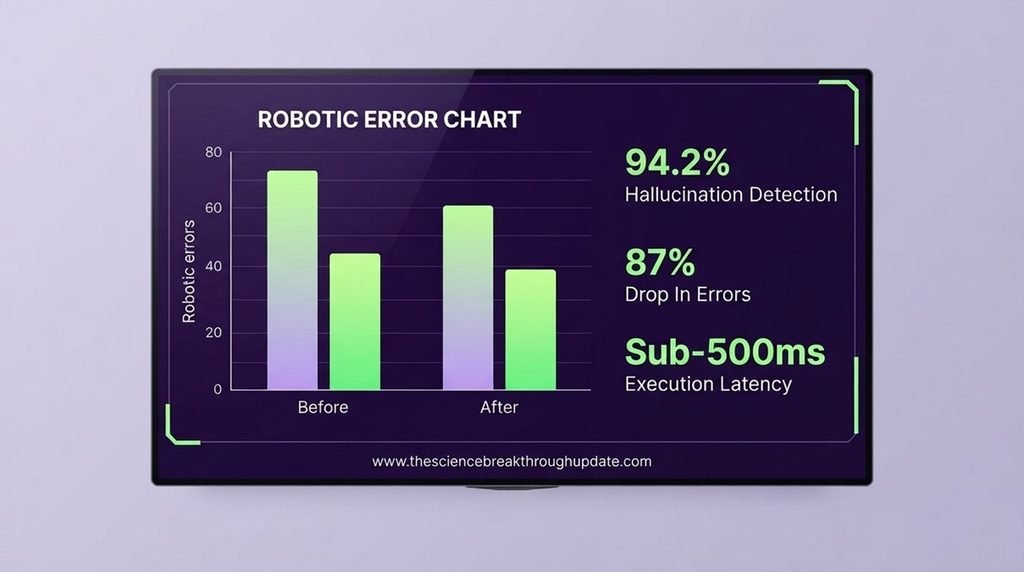
Initial case studies evaluating autonomous warehouse vehicles revealed that the security installation successfully detected over ninety-four percent of internal hallucinations. This active mitigation brought an eighty-seven percent drop in unsafe physical actions during high-stress tests. Crucially, the protocol operates with a latency of under five hundred milliseconds, protecting surrounding humans without delaying industrial workflows.
How Real-Time Security Transforms Tomorrow’s Industrial Workforce
- ✅ The verification system successfully flags ninety-four percent of unfaithful machine actions during dense, high-speed logistical operations.
- 📉 Warehouse management systems achieve an eighty-seven percent drop in hazardous, unverified movements when operating under active supervision.
- ⚡ Ultra-low sub-500ms operational latency guarantees maximum worker safety without introducing costly delays or sluggish response times to machinery.

### Frequently Asked Questions
1. How do reasoning models cause physical robots to make mistakes?
- 🧠 Advanced models generate step-by-step logic, but their actual internal path sometimes wanders into false conclusions, a problem known as an AI hallucination. When these ungrounded thoughts drive physical limbs or wheels, the machine carries out actions that conflict with safe operational standards.
2. What makes the new verification framework faster than traditional safety software?
- ⚡ The system uses a highly optimized multi-layered architecture designed to review cognitive processes concurrently with physical motion. By keeping processing times under five hundred milliseconds, the protective layer stops accidents ahead of movement execution without dragging down efficiency.
3. Will this technology protect human workers alongside industrial machines?
- 👥 Yes, preventing erratic machinery behavior directly lowers the risks of collisions and unpredicted mechanical errors in shared industrial spaces. This reliable alignment between software logic and hardware output makes dense human-robot collaboration far more practical.
My Take: Preventing hidden machine errors before hardware moves changes everything. This clever audit layer bridges a scary tech gap, ensuring factory floor safety stays grounded in reality as automated systems expand.
News source link: arXiv Main Portal
Share this useful knowledge with your friends now!
Disclaimer: This content is for educational and informational purposes only.



