

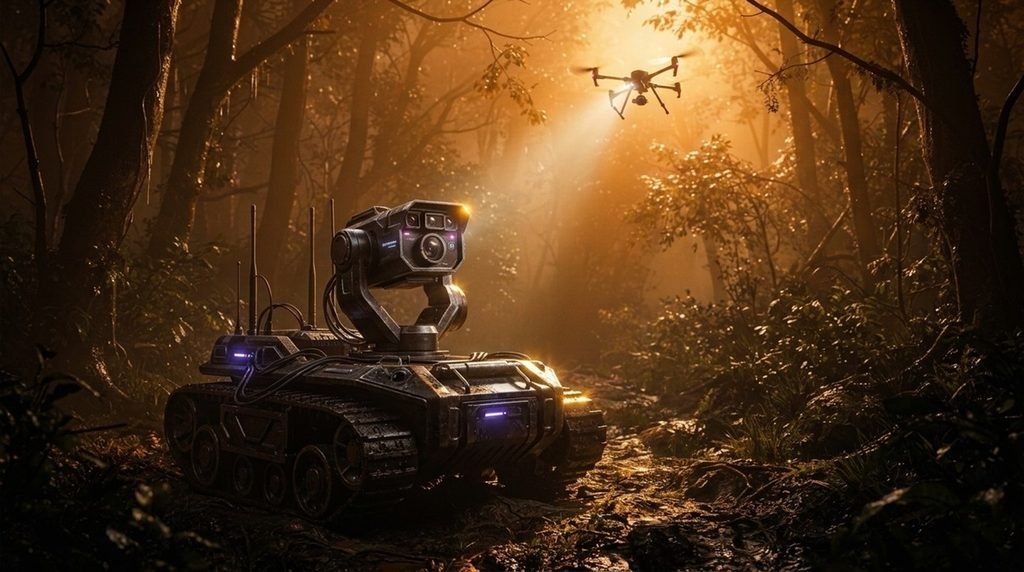
Imagine a ground robot tracking an aerial drone through thick fog or dense forest canopy without losing sight for even a single second.
🚀 Operating cooperative autonomous teams across highly complex air and ground environments presents severe tracking challenges for modern robotic systems worldwide. Traditional vision sensors frequently fail during high-speed tactical maneuvers or poorly lit situations, completely disrupting the critical coordination between airborne drones and ground-based robotic units.
🛠️ To solve this problematic real-world tracking bottleneck, brilliant researchers developed an advanced novel framework named EVPeriscope. This smart system utilizes specialized bio-inspired event-based cameras to track high-frequency propeller rotations, maintaining an unbroken, highly accurate cross-vehicle localization link dynamically across uncharted terrains.
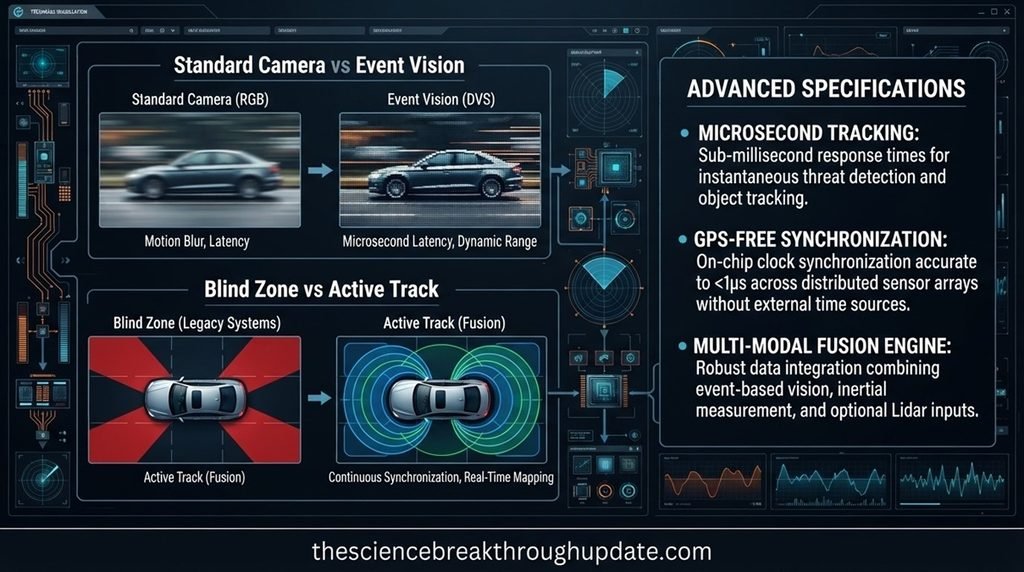
The Blind Spots of Modern Robotic Teams
- 🌲 Traditional optical sensors cannot process the rapid motion of aerial drones against complex, highly cluttered backgrounds like moving leaves.
- 🌫️ Heavy dust, sudden lighting changes, and thick smoke easily blind standard tracking systems, causing ground units to lose their airborne partners.
- 🔋 Legacy frameworks require immense computational power to isolate a drone from ambient visual noise, quickly draining limited onboard vehicle batteries.
Tracking Propellers with Event-Based Vision
- 🔄 The new EVPeriscope system shifts focus entirely onto the high-speed rotational patterns of spinning drone propellers instead of full vehicle bodies.
- ⏱️ Bio-inspired event cameras capture local changes in light intensity at the microsecond level, completely eliminating motion blur during fast tracking operations.
- 🎯 Advanced algorithmic frameworks isolate the unique temporal signatures of spinning blades, allowing ground systems to calculate relative drone coordinates continuously.
A New Era for Search and Rescue Missions
- 🦺 This dynamic method ensures seamless collaboration between air and ground vehicles during critical emergency rescue operations in smoke-filled hazardous zones.
- 📉 Eliminating heavy frame-based video processing drastically reduces the onboard computational load, directly extending the operational battery life of autonomous machines.
- 🗺️ The framework allows robotic units to navigate uncharted, unpredictable terrain autonomously without relying on external GPS positioning or active network configurations.
Frequently Asked Questions
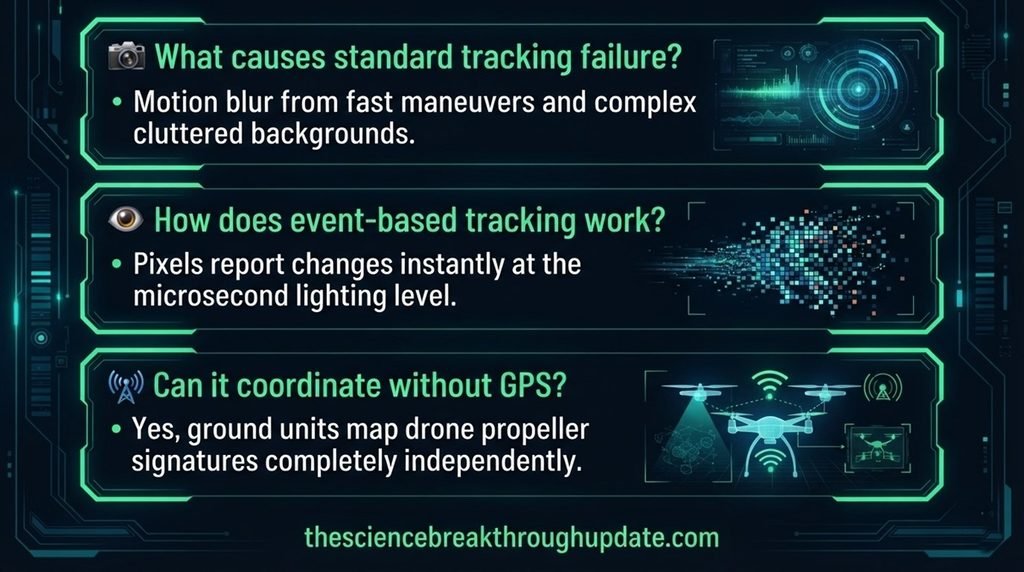
- Why do standard cameras struggle to track drones in difficult environments?
📸 Standard cameras capture full static images at fixed intervals, creating extreme motion blur during highly accelerated tactical drone maneuvers. They record the entire background scenery simultaneously, making it incredibly difficult for standard tracking algorithms to successfully isolate a small drone from moving environmental objects like wind-blown leaves. This immense visual noise frequently breaks down essential cross-vehicle communication links during critical joint operations globally, severely compromising the safety and mission efficiency of automated deployment strategies under adverse weather conditions. - How does event-based vision differ from traditional video recording?
👁️ Event-based cameras do not output heavy, full frames of video data like standard consumer or industrial recording devices traditionally do. Instead, every single pixel on the specialized sensor operates independently and reports information only when it registers a sharp change in local light intensity. This highly data-efficient design completely avoids processing redundant background pixels, thereby saving massive amounts of valuable onboard operating energy. - Can this technology work without a functional GPS signal?
📡 Yes, this localized cooperative framework operates completely independently of global positioning satellites, celestial navigation, or external wireless network infrastructure availability. The ground vehicle maintains continuous relative tracking by processing the physical high-frequency movement signatures of the drone, which guarantees operational reliability deep within dense forests. This autonomous visual link keeps the robotic team perfectly synchronized even when completely cut off from communications.
My Take: Ditching full-frame video to track spinning blades is a masterclass in practical engineering. It realistically untethers rescue teams from fragile GPS networks, making hazardous wilderness deployments far more dependable.
News source link: University of Pennsylvania (arXiv)
Share this useful knowledge with your friends now!
Disclaimer: This content is for educational and informational purposes only.



