
🤖 Forget traditional banking because the first automated financial infrastructure built entirely for autonomous artificial intelligence agents has officially arrived.
The rapidly expanding economy of artificial intelligence faces a hidden structural crisis that threatens to halt its progress. Right now, autonomous agents incur massive computing costs during live execution, but the actual revenue generated from users often arrives much later.
To solve this expensive bottleneck, tech innovators Cary Chang and Jialin Zhou designed a radical solution called TokenBank. This system introduces specialized financial contracts that allow software to fund its own computing expenses, borrow resources, and trade data completely independent of human intervention.
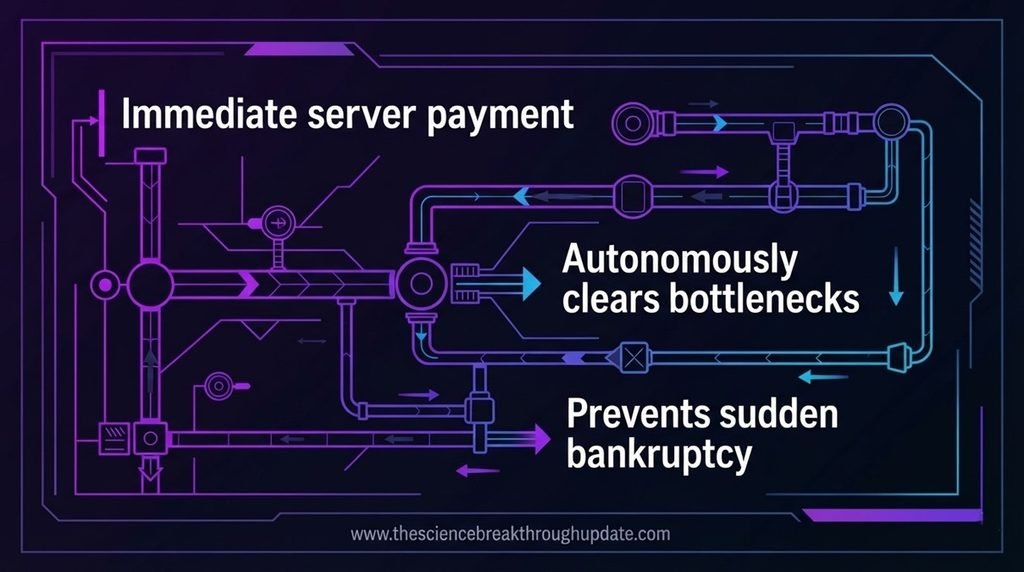
📉 The Hidden Crash in the AI Economy
- Operating autonomous software systems creates severe cash-flow delays because computing bills require immediate payment while customer revenue arrives weeks later.
- Wildly fluctuating application programming interface prices make long-term budgeting impossible for independent developers who deploy advanced multi-model systems.
- Traditional banking infrastructure operates too slowly to handle micro-second computing transactions or manage the specialized risks of autonomous digital assets.
- Unexpected system bugs or network drops cause direct financial losses for digital services, leaving software operators entirely vulnerable to sudden bankruptcy.
🛡️ The Automated Vault Built for Software
- The open-source cloud infrastructure introduces structured smart contracts that legally bind different software systems to guaranteed computing capacities.
- The platform splits the right to execute computing tasks from the actual monetary payments, allowing smooth credit lines between distinct software nodes.
- Automated financing tools allow an autonomous bot to pledge its future user revenue to secure immediate computing power from large external servers.
- Built-in protection policies automatically detect severe execution failures and instantly trigger financial compensation to cover the exact operating losses.
🚀 Why Tomorrow’s Internet Belongs to Machine Finance
- Eliminating human administrative delays allows hundreds of software platforms to establish their own self-sustaining, independent digital micro-economies.
- Small independent software developers can aggressively scale their applications globally without needing millions of dollars in upfront venture capital funding.
- Corporate operations teams can easily track precise computing investments across multiple distinct model providers, stopping sudden cost overruns before they happen.
- Seamless micro-payment settlement enables complex multi-layered software tools to trade resources instantly, dropping service fees for everyday human internet consumers.
My Take: We are quietly shifting from building smart software to launching a parallel, automated economy where bots handle their own corporate finance, proving that the future internet belongs entirely to machine-to-machine trade.
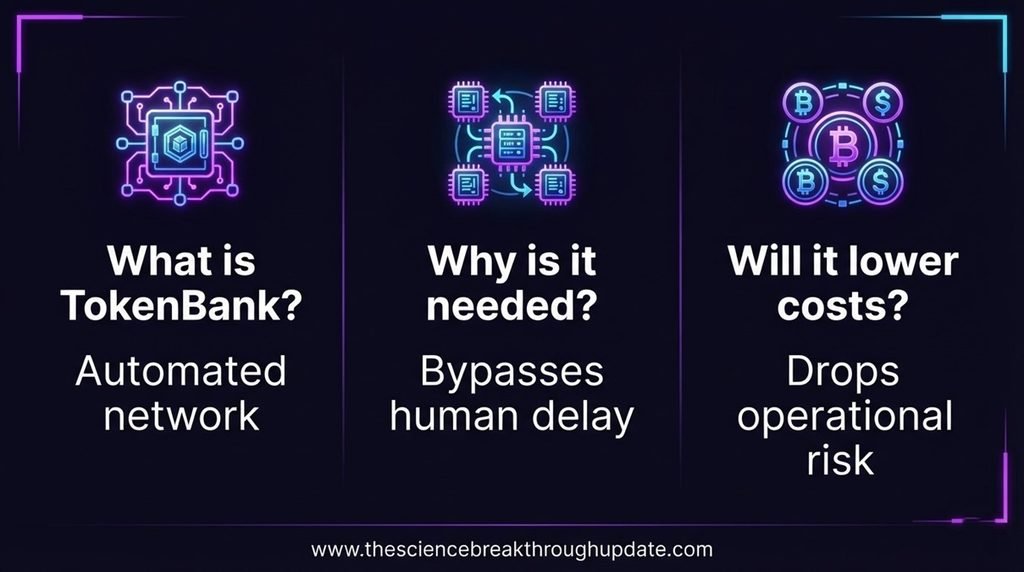
❓ Reader Doubts: Core Questions Answered
1. What exactly is a TokenBank?
It is a specialized financial network designed for automated software systems. The infrastructure uses smart contracts to let computer programs manage computing costs, borrow operational funds, and handle service failures autonomously.
2. Why do computer systems need their own banks?
Modern computer tools encounter severe cash-flow delays because running advanced data operations requires instant payment. Traditional human banks cannot move fast enough to support these high-speed micro-transactions.
3. Will this technology make consumer software cheaper?
Yes, it definitely will. By allowing software systems to automatically optimize their resource budgets and share operational risks, overall computing costs will drop significantly for everyday internet users.
Source Document Link: arXiv.org
Share this useful knowledge with your friends now!”
Disclaimer: This content is based on preliminary scientific research (Preprints) from arXiv.org and current global findings. It is shared strictly for educational and informational purposes and does not constitute professional, legal. Readers are encouraged to verify facts independently and consult relevant experts before making any decisions.