

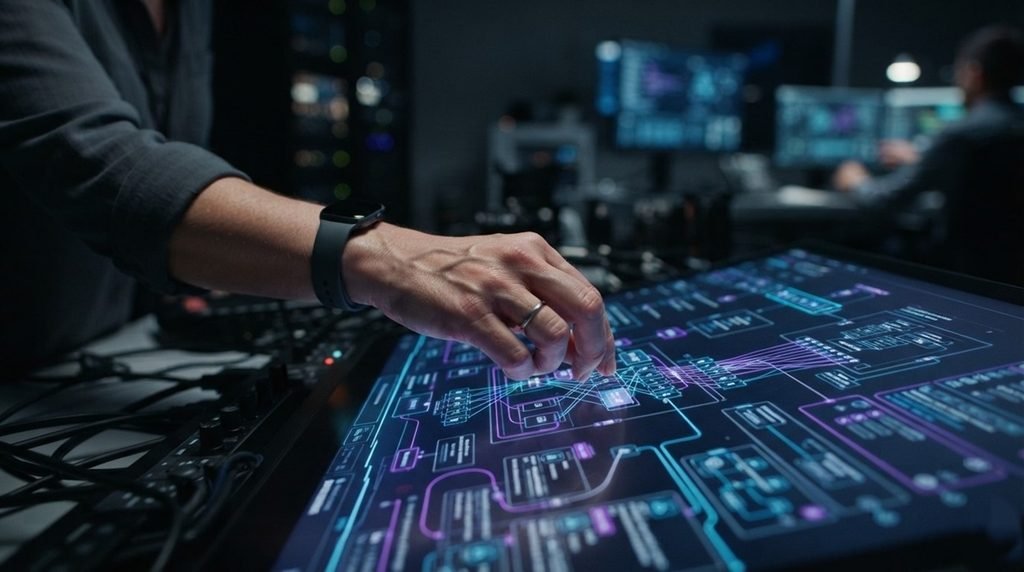
As autonomous AI agents quietly take over corporate coding pipelines, a crucial new study reveals the hidden intellectual line machines can never cross.
Tech professionals constantly worry that autonomous AI development agents will soon steal their livelihoods by completely automating software engineering. While basic tools handle code completion effortlessly, advanced platforms now reason about complex systems, forcing a re-evaluation of the human software architect role.
To investigate this shift, researchers from TH Köln and the University of St. Gallen gathered elite experts at the EuroPLoP conference. Their comprehensive focus group exposed critical systemic risks alongside the exact intellectual boundaries where human decision-making remains completely irreplaceable by machines.
📉 How Automation Breeds Blindness and Cognitive Debt
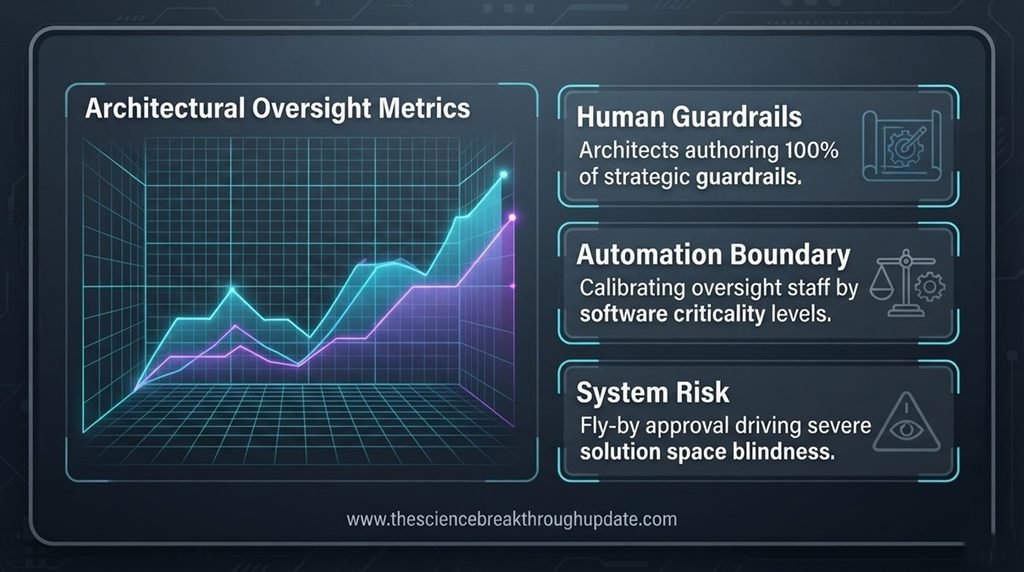
- Accepting automated system recommendations without critical thinking triggers dangerous cognitive debt that slowly erodes an organization’s vital, irreplaceable, long-term technical knowledge bases.
- Software developers frequently fall into a bad habit of fly-by approval where they rapidly authorize bot decisions without intellectually engaging with the underlying architecture.
- Blindly relying on autonomous tools creates severe solution space blindness because engineers stop discovering creative design alternatives during intense, high-pressure infrastructure deployment failures.
- Outsourcing entire systems to generative models severely disrupts traditional engineering mentorship patterns that historically passed crucial practical field experience down to junior programmers.
🛠️ Building the Human Guardrails of Harness Engineering
- Top software practitioners are actively fighting back by pioneering harness engineering to systematically govern exactly how autonomous development agents write project source code.
- This crucial engineering discipline forces human architects to write strict architectural guardrails that serve as the ultimate, unyielding operational boundaries for corporate bots.
- Engineering teams use sophisticated hybrid validation mechanisms to successfully combine traditional deterministic tests with cross-model judge paradigms for maximum digital asset safety.
- Experienced experts must immediately shift their professional focus from routine code generation to precise intent specification to maintain total system governance and security.
🚀 The Rise of the Chief Human Strategist
- This major architectural paradigm shift splits the technology industry into casual demo software and highly regulated, trust-critical corporate enterprise banking platforms.
- Human professionals maintain absolute dominance over strategic decision-making and system organization while autonomous tools merely execute the routine, mechanical code syntax generation.
- Modern engineering teams preserve complete accountability and governance because a designated human operator remains legally liable for every single production deployment failure.
- Technical universities will heavily prioritize core architectural competencies and resilience over teaching students a wide variety of transient programming language framework syntaxes.
My Take: This study shatters the automation myth. Code generation is now a cheap commodity, but high-stakes system governance remains fiercely human, proving that real engineers cannot be replaced by mindless corporate algorithms.
❓ Reader Doubts: Core Questions Answered
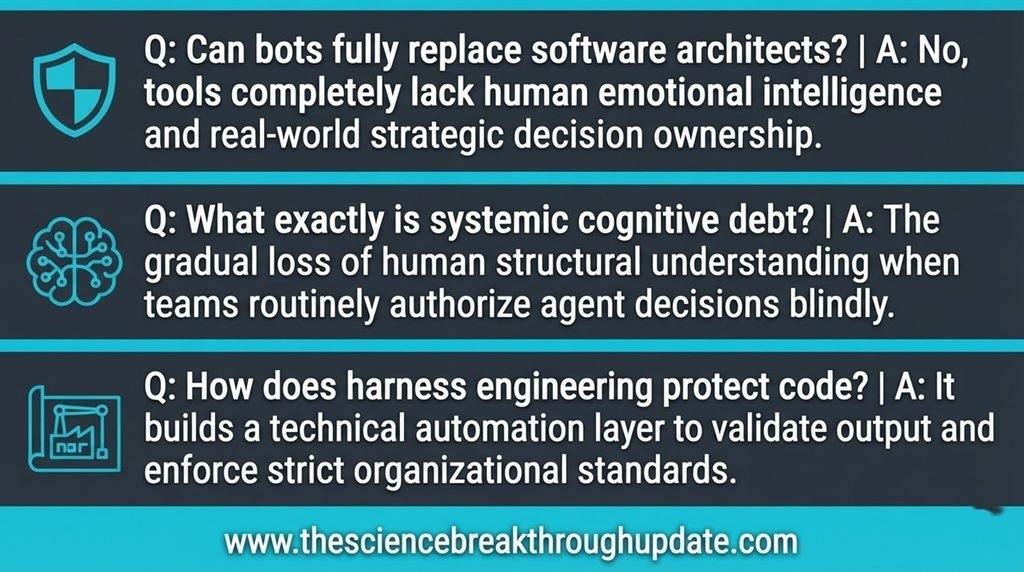
- Can AI completely replace a professional software architect?
No, autonomous tools completely lack the emotional intelligence required to navigate complex stakeholder politics and conflicting corporate goals. Human professionals must always make the final strategic design decisions and establish the core system boundaries. Furthermore, accountability cannot be delegated to an algorithm because true legal liability requires a responsible human engineer. - What exactly is cognitive debt in modern software engineering?
Cognitive debt represents the gradual erosion of human understanding regarding how a complex software system operates internally. This systemic risk occurs when developers continuously accept automated recommendations without full intellectual engagement or proper validation. Over time, this blind reliance degrades the team’s ability to troubleshoot future infrastructure issues independently. - How does harness engineering protect production system quality?
Harness engineering designs a comprehensive socio-technical system that sits directly between the human operator and the large language model. It incorporates customized knowledge layers, observability mechanisms, and deterministic validation rules to safely guide agent behavior. This framework ensures that AI-generated assets strictly conform to established organizational quality standards.
Source Document Link: arXiv.org
Share this useful knowledge with your friends now!”
Disclaimer: This content is based on preliminary scientific research (Preprints) from arXiv.org and current global findings. It is shared strictly for educational and informational purposes and does not constitute professional, legal. Readers are encouraged to verify facts independently and consult relevant experts before making any decisions.



