


Artificial intelligence is learning how to breed, select partners, and pass down digital traits to next-generation models without human coders interfering.
💡 Scientists are quiet about how quickly machine learning models stall when faced with unpredictable, real-world data environments. Traditional neural networks require constant human tuning, massive datasets, and endless processing power just to fix basic algorithmic errors over time. This approach creates an unsustainable bottleneck for developing autonomous systems that can truly adapt on their own.
🧬 A bold research framework by Giorgio F. Gilestro introduces a population-genetic system that mimics biological reproduction inside artificial environments. Instead of humans editing code, algorithms act like living organisms that mate, exchange software traits, and produce diverse digital offspring. This shift allows machine learning agents to self-correct and evolve naturally across multiple computer generations.
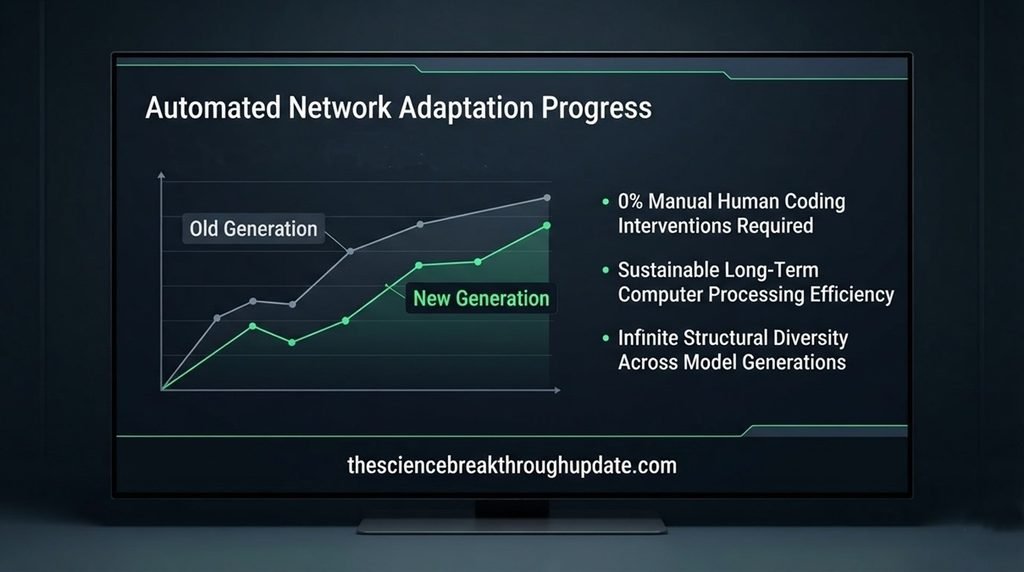
The Wall Blocking Current Autonomous Networks
- 🛑 Modern artificial intelligence struggles with algorithmic stagnation because static networks cannot adapt to sudden environment shifts without manual reprogramming.
- ⚠️ Machine learning architectures often suffer from severe overfitting, which locks the system into rigid patterns that fail in real-world scenarios.
- 📉 The computational cost of training new models from scratch creates a massive sustainability bottleneck for global tech infrastructure.
- 🔄 Current development tracks lack a mechanism for spontaneous trait variation, leaving systems completely vulnerable to repetitive errors.
Introducing Biological Mating into Digital Systems
- 🤝 The proposed population-genetic framework introduces artificial sexual reproduction to allow independent models to swap architectural traits.
- 🧬 Digital organisms combine distinct neural weights through a process mimicking genetic crossover to build entirely unique software variations.
- 🎯 A decentralized selection mechanism ensures that only the most adaptable AI offspring survive to seed the next generation.
- 🤖 The open-ended framework operates automatically, removing human engineers from the loop to let the software self-evolve independently.
The Dawn of Self-Evolving Digital Ecosystems
- 📈 This methodology unlocks continuous autonomous optimization, enabling software systems to fix their own flaws across hundreds of generations.
- 🧩 Merging biology with machine learning delivers unprecedented structural diversity, preventing the systemic blind spots found in traditional codebases.
- 💻 Industries using these self-evolving agents will see drastically reduced training resource demands because the software refines itself organically.
- 📱 The framework lays the groundwork for creating resilient autonomous edge devices capable of surviving unpredictable field conditions alone.
My Take: This framework proves we are moving away from rigid code. Watching algorithms mate and fix themselves sounds wild, but it is the practical key to truly self-sustaining technology.
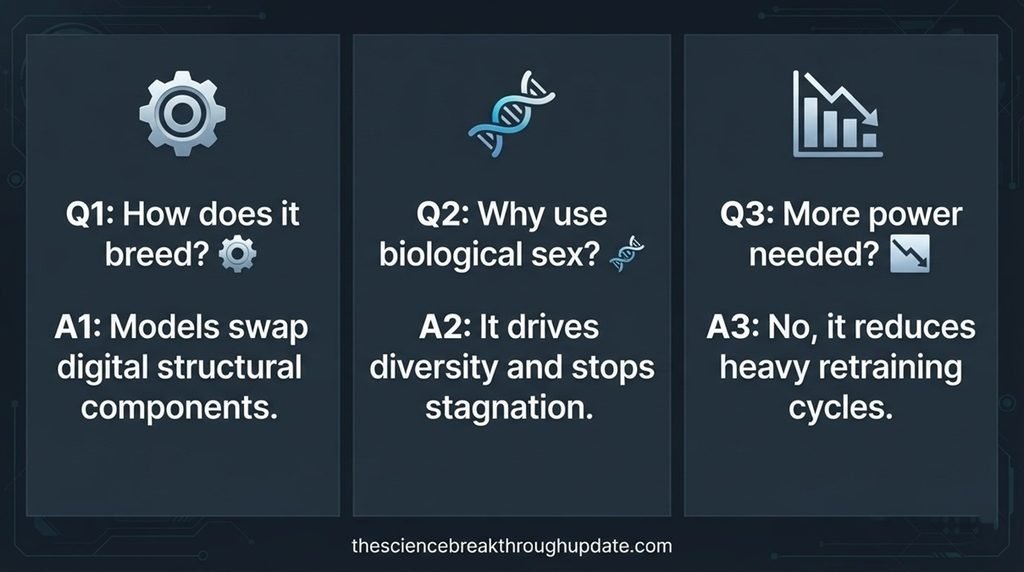
Reader Doubts: Core Questions Answered
- How does artificial intelligence reproduce without human code?
⚙️ The framework groups models into digital populations where high-performing agents swap structural components. This architectural exchange mimics biological mating, creating new model generations with blended traits. - Why is biological sex useful for computer software?
🧬 Biological sex drives diversity and weeds out harmful mutations. Applying this to algorithms prevents software stagnation and helps systems adapt to new data shifts automatically. - Will this framework require more computing power?
📉 No, it actually reduces long-term computational strain. Instead of running heavy retraining cycles, the system allows efficient, organic adaptation over multiple generational cycles.
News source link: arXiv.org
Share this useful knowledge with your friends now!
Disclaimer: This content is based on preliminary scientific research (Preprints) from arXiv.org and current global findings. It is shared strictly for educational and informational purposes and does not constitute professional, legal. Readers are encouraged to verify facts independently and consult relevant experts before making any decisions.



