


We teach artificial intelligence how to paint, write, and drive, but what happens when a machine faces a legal dilemma in the real world?
🤖 The rapid integration of autonomous systems into our daily lives exposes a massive regulatory vulnerability. Current autonomous systems follow strict, predictable code, but they completely lack the cognitive capacity to process complex legal reasoning when facing unexpected real-world dilemmas. This critical limitation means that a machine might execute a mathematically optimal path that simultaneously violates local municipal ordinances, spatial regulations, or liability laws.
⚖️ To bridge this dangerous gap, researchers introduced an architectural framework that embeds legal compliance directly into the machine’s decision-making loop. By utilizing advanced world-model-based planning coupled with formal logic, scientists successfully taught autonomous systems how to evaluate the legality of their actions before execution. This development ensures that future machines can navigate complex environments while strictly respecting human laws, rights, and regulatory frameworks.
The Dangerous Legal Blindspot of Modern Artificial Intelligence
- 🛑 Modern autonomous systems operate entirely on mathematical optimization goals but remain completely blind to local human laws and civil regulations.
- 📉 When autonomous machines encounter unmapped scenarios, their algorithms prioritize efficiency and collision avoidance while routinely ignoring legal boundaries and liability risks.
- 🚧 The absence of built-in legal reasoning prevents the widespread deployment of advanced robotics in highly regulated public spaces and commercial sectors.
Encoding Human Laws Directly into Robotic Brains
- 👨Scientists Dylan Waldner, Yiannis Kantaros, Guido Governatori, Risto Miikkulainen, and Amir Banifatemi solved this issue by building a specialized legal reasoning layer inside the robot’s predictive world model.
- 💻 This system translates complex statutory legislation and safety regulations into strict mathematical logic using Defeasible Deontic Logic that the machine evaluates in real time.
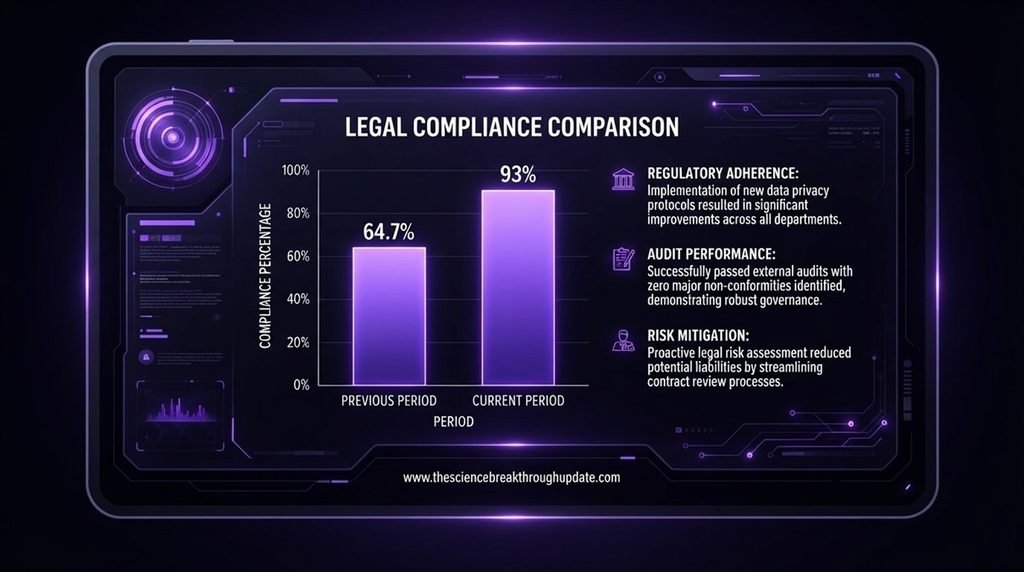
- 📊 The algorithm acts as an automated judge, increasing simulated legal compliance from 64.7% to 93% by checking trajectories before the robot moves.
How Legally Aware Machines Will Safely Change Our World
- 🚀 Integrating statutory compliance into robotics will unlock the safe deployment of autonomous delivery drones and transit systems in crowded European and American cities.
- 🛡️ Insurance companies can drastically lower operational liability rates because these machines offer a verifiable guarantee of lawful behavior.
- 🗺️ This framework establishes a trustworthy foundation for human-robot coexistence by ensuring technology always operates within democratically established legal boundaries.
My Take: Teaching machines basic logic code is fine, but baking statutory compliance directly into their neural architecture is a vital move for preventing real-world urban chaos.
Reader Doubts: Core Questions Answered
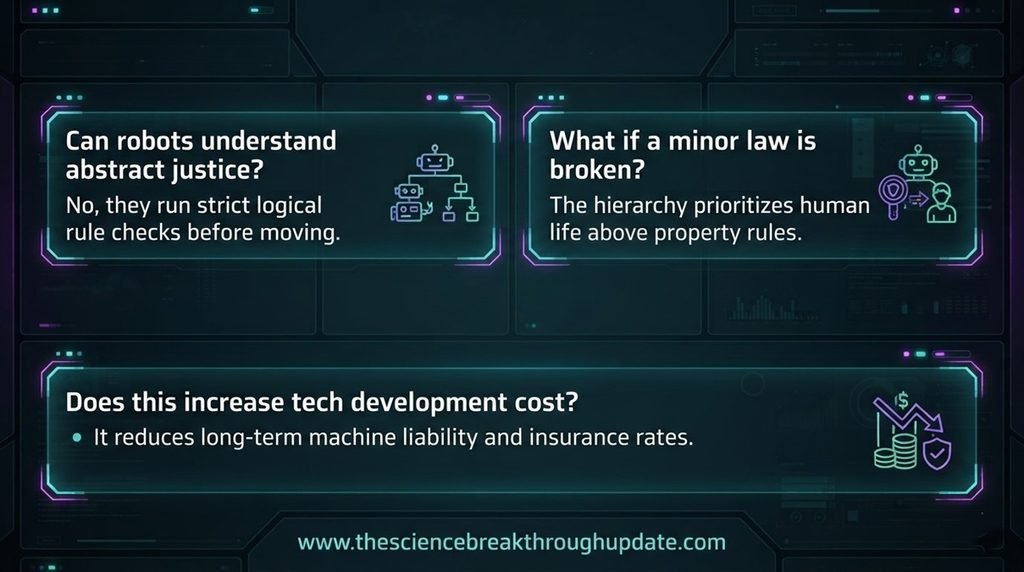
- Can a robot understand the spirit of a law like a human judge?
🧠 No, current systems do not understand human emotions or abstract justice. They process laws converted into strict logical rules to verify compliance before moving. - What happens if a robot is forced to break a minor law to avoid an accident?
🚦 The system uses a hierarchical preference structure. It will prioritize saving human life over minor traffic or property regulations during critical emergencies. - Will this software make autonomous tech more expensive to develop?
📈 The initial integration requires specialized logical mapping. However, it ultimately reduces long-term legal costs and insurance premiums for manufacturers.
News source link: arXiv Robotics
Share this useful knowledge with your friends now!
Disclaimer: This content is for educational and informational purposes only.



