
Predicting stock market trends remains a massive challenge, but a new hybrid AI model cracks the code by merging deep learning with gradient boosting.
📊 Financial analysts constantly struggle with highly volatile stock markets because traditional mathematical models fail to capture sudden shifts. Standard machine learning tools often look at data through a single lens, which creates massive blind spots during rapid market swings. This unpredictability forces institutional investors to rely on flawed data, leading to inaccurate multi-horizon asset pricing and heavy financial losses.
🎓 A brilliant research team from MSA University consisting of Seif ElDein Mostafa, Yahia Ahmed, Farah Datwish, and Marwa Solayman created a powerful hybrid AI framework. This innovative system combines Long Short-Term Memory networks with XGBoost to analyze complex historical price trends and 14 technical indicators simultaneously. The dual-layered architecture filters out market noise, allowing the model to project precise stock returns across diversified equity portfolios.
The Complex Failure of Traditional Financial Models
- 📉 Modern equity markets move too fast for standard statistical methods, which frequently fail to adapt to sudden, chaotic price changes.
- 🔍 Traditional algorithms ignore the deep sequential relationships hidden within historical trading data, making long-term forecasting highly unreliable for active traders.
- ❌ Asset managers cannot balance diversified portfolios effectively when their software delivers weak predictive accuracy across different investment time horizons.
How the Hybrid AI Framework Solves the Prediction Puzzle
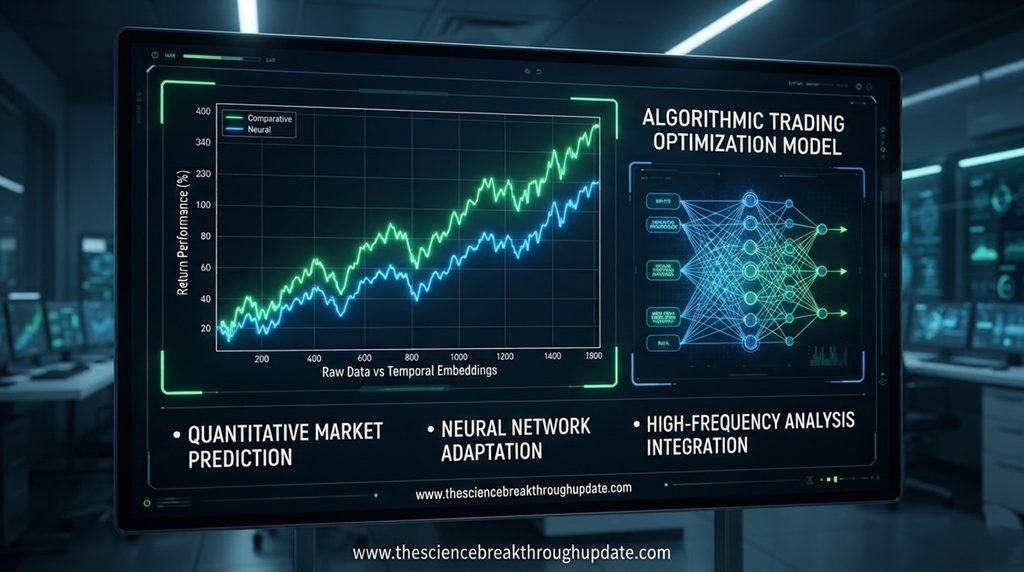
- 🧠 The new system uses specialized deep learning layers to extract 64-dimensional temporal embeddings from raw market data.
- ⚙️ A secondary gradient boosting algorithm processes these features to make highly accurate, multi-horizon directional return predictions.
- 📈 This smart combination allows the framework to handle vast datasets without losing track of subtle, long-term market trends.
The Massive Shift in Modern Portfolio Management
- 🚀 Investment firms can now deploy automated trading systems that achieve an impressive 97.6% directional accuracy on 365-day horizons.
- 🛡️ Risk managers gain a clearer understanding of future asset behavior, which minimizes capital exposure during volatile trading periods.
- 🌐 This open-source machine learning approach paves the way for accessible, data-driven wealth management tools for everyday retail investors.
My Take: This math finally bridges the gap between raw tech and chaotic markets. By pairing sequence tracking with boosting, it gives regular investors a fighting chance against institutional volatility.
Reader Doubts: Core Questions Answered
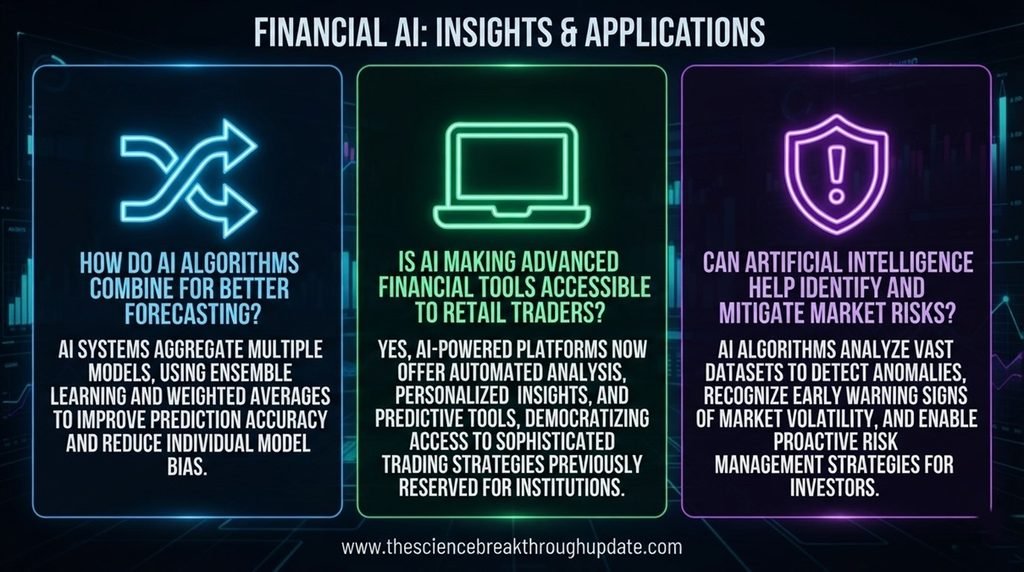
1. How does this new AI model outperform standard stock market predictors?
🔀 This system combines two different AI strengths. It uses deep learning to understand data sequences and gradient boosting to refine the final prediction, which beats single-algorithm methods.
2. Can retail investors use this hybrid system for daily trading?
💻 The underlying framework relies on accessible, open-source technology. While designed for large portfolios, tech-savvy traders can adapt the code to build personal market analysis tools.
3. Does this technology eliminate the financial risk of stock market investing?
⚠️ No AI model can completely eliminate market risk. This tool significantly improves prediction accuracy, but unexpected global events can still cause unpredictable market fluctuations.
News source link: arXiv:2609.13125
Share this useful knowledge with your friends now!
Disclaimer: This content is for educational and informational purposes only.