
A silent bacterial killer once tore through European cities in unpredictable waves, leaving medical experts completely baffled for generations.
🧬 Long before modern antibiotics existed, a terrifying scarlet fever epidemic devastated families across dense metropolitan areas, primarily targeting young children under 10. The lack of historical diagnostic tools left doctors entirely unable to track or predict the deadly bacterial waves killing thousands of urban citizens.
🏥 Public health systems lacked any mathematical framework to decipher why the infection surged violently in some seasons and vanished entirely in others. Medical historians struggled to separate the impact of changing bacterial virulence from the natural immune defenses of the local population.
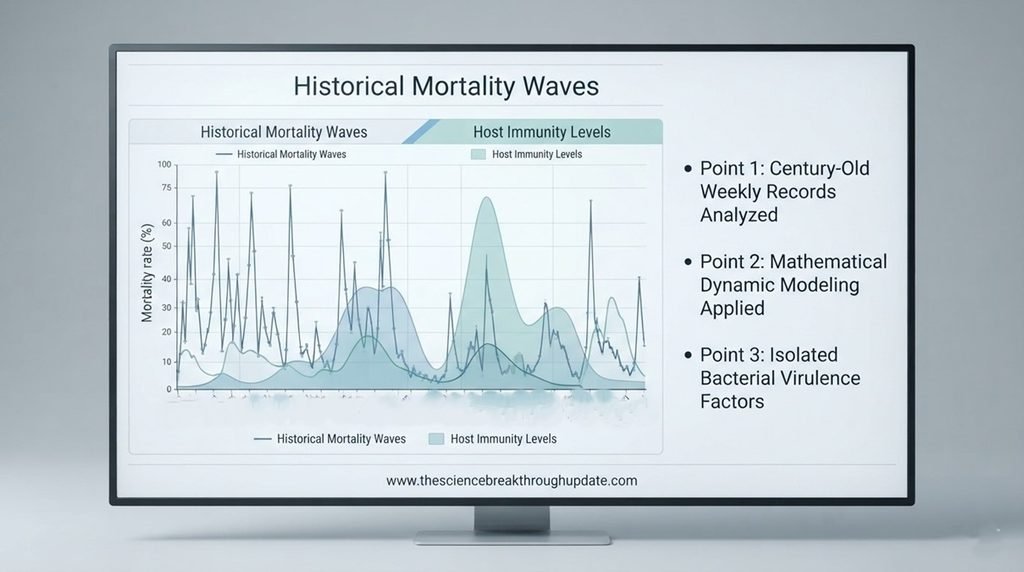
Why Old London Faced Unpredictable Waves of Bacterial Terror
- 🛑 Crowded urban housing and poor sanitation allowed the Streptococcus pyogenes bacteria to spread rapidly among young school children.
- 📈 Changing bacterial strains created sudden shifts in lethality levels, causing sudden spikes in child mortality across poor neighborhoods.
- 😷 The lack of robust quarantine protocols meant that infected individuals freely spread the airborne bacterial droplets through public spaces.
- ⏳ Natural immunity gaps in newborns created a recurring cycle of susceptible hosts that fueled the next major disease outbreak.
How Mathematical Modeling Cracked the Secret of the Epidemic
- 🔍 Researchers Kevin H. Zhao and David J. D. Earn compiled extensive historical records to reconstruct the long-term transmission patterns.
- 📊 The research team applied advanced mathematical dynamic modeling to historical weekly death data to calculate true transmission rates.
- 🧬 By analyzing the demographic shifts, the scientists isolated how host immunity changes directly influenced the multi-year epidemic cycles.
- 🧮 This quantitative approach successfully separated external environmental triggers from the internal biological mechanisms of the bacterial population.
What This Historical Insight Means for Modern Global Health
- 🌍 Understanding these historical cycles helps modern epidemiologists predict how re-emerging bacterial strains might behave in dense modern cities.
- 📋 The study proves that long-term data collection remains vital for managing modern respiratory health threats worldwide.
- 🛡️ Public health agencies can now better design targeted immunization and isolation strategies based on mathematical population modeling.
- 🔬 This computational method provides a reliable blueprint for studying other historic childhood diseases that shaped human evolution.
My Take: This historical modeling proves that raw data from our past is the ultimate weapon against future pandemics, transforming archaic burial records into modern life-saving predictive tools.
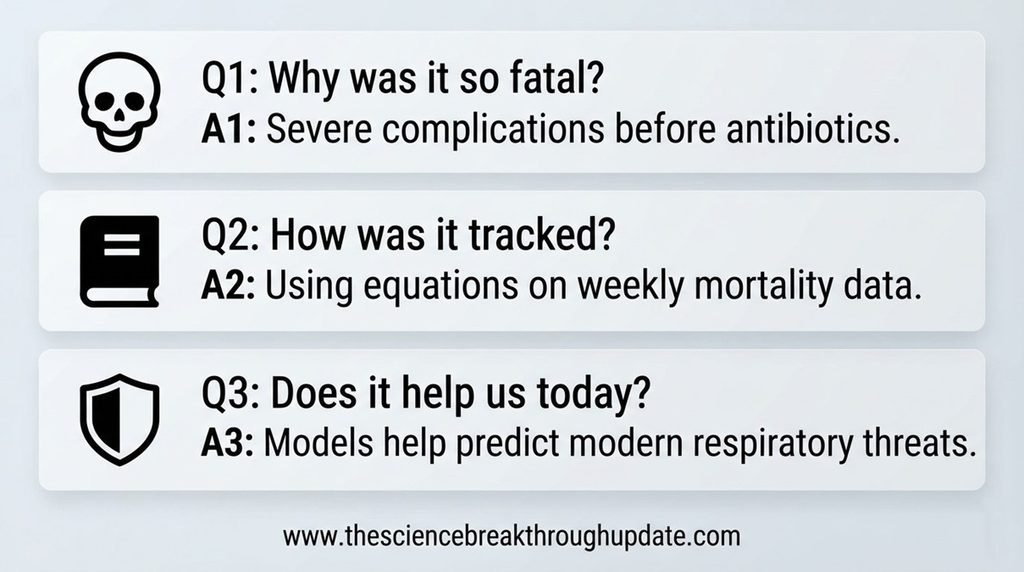
Reader Doubts: Core Questions Answered
- What exactly made scarlet fever so fatal in the past?
- 💀 The disease caused severe complications like rheumatic fever and organ failure before modern medicine existed. The lack of targeted treatments meant doctors could only offer basic supportive care to dying children.
- How did scientists reconstruct these centuries-old infection patterns?
- 💻 The researchers analyzed extensive historical mortality data and weekly burial records from dense urban centers. They fed these physical data points into mathematical equations to recreate the exact speed of transmission.
- Can this specific historical research help protect us from modern outbreaks?
- 🛡️ Yes, understanding how immunity gaps and bacterial changes interact helps health agencies model current infectious diseases. It allows experts to predict how modern populations might react to new variations of old pathogens.
Source Document Link: arXiv.org
Share this useful knowledge with your friends now!”
Disclaimer: This content is based on preliminary scientific research (Preprints) from arXiv.org and current global findings. It is shared strictly for educational and informational purposes and does not constitute professional, legal. Readers are encouraged to verify facts independently and consult relevant experts before making any decisions.