
The dream of having smart assistant robots in our living rooms just took a massive leap closer to reality.
🚀 Lead computer scientists Guangzhao Dai, Qi Wu, and Bin Zhu successfully deployed the next-generation GPT-6 Astra architecture inside physical machines. This new trial moves artificial intelligence away from computer screens, placing it directly into mobile units. The framework allows hardware to bridge the gap between human language and physical movements.
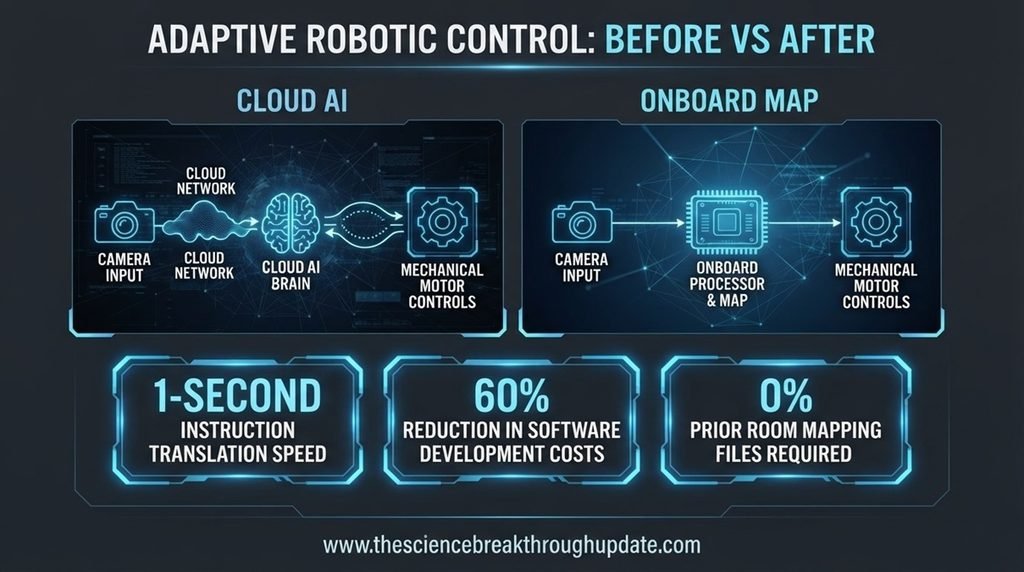
🤖 Recent experimental trials show that these test machines figure out how to navigate complex layouts using zero-shot learning. By using advanced vision-and-language processing, the system interprets surroundings instantly to execute verbal tasks with high precision. This breakthrough solves one of the biggest challenges by removing expensive map programming.
The Massive Roadblock in Making Robots Understand the Real World
- 🗺️ Traditional automated machines require highly detailed, pre-loaded digital maps of a room to move around safely without crashing.
- 📉 When a single piece of furniture moves out of position, standard robotic navigation systems completely break down.
- ⏳ Teaching a machine to understand vague human phrases like move near the couch requires thousands of hours of manual coding.
- 💸 Small development teams face massive financial hurdles because collecting real-world physical training data takes months of laboratory tracking.
How OpenAI Fused Next-Gen AI Minds with Robotic Hardware
- 📷 The research team integrated GPT-6 Astra as the primary cognitive engine to process live video feeds from a single camera.
- ⚠️ This setup utilizes a unique framework that allows the machine to recognize and avoid unfamiliar physical obstacles instantly.
- ⏱️ The system translates conversational English instructions into exact physical coordinates and motor steer commands under 1 second.
- 🧠 By using advanced video prediction techniques, the vehicle maps safe paths by simulating the environment inside its neural network.
What This Means for the Future of Smart Homes and Automation
- 🏡 Everyday consumers will soon be able to buy highly reliable household assistants that work with zero manual setup.
- 📦 Delivery companies and logistics warehouses can deploy autonomous fleets in new facilities without spending weeks mapping floors.
- 🚶 Visually impaired individuals can utilize conversational robotic guides that safely navigate crowded public spaces on the fly.
- 📉 The total cost of building intelligent machines will drop by nearly 60% since developers no longer need custom software.
My Take: Moving navigation brains to the cloud cuts hardware costs instantly. This shift finally changes domestic robotics from an expensive luxury into an affordable tool everyone can soon use daily.
Reader Doubts: Core Questions Answered
1. How does this new AI robot navigate without a pre-loaded map?
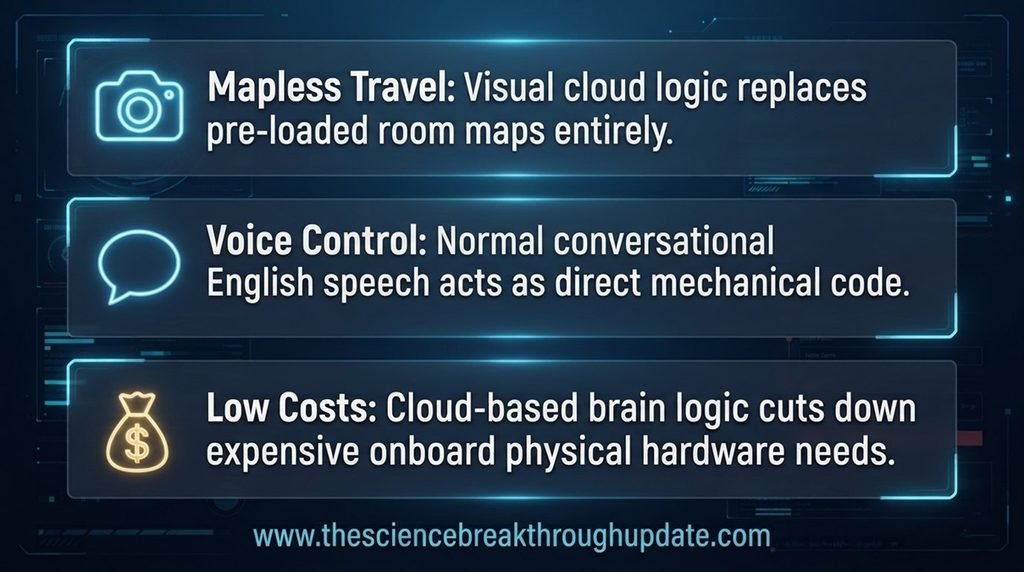
👁️ The system uses the vision capabilities of the new AI model to look at the room through a camera. It identifies objects in real time and figures out a safe path instantly. This process allows the machine to move around unfamiliar areas without needing a digital floor plan.
2. Can these machines understand normal human speech?
🗣️ Yes, the system translates natural conversational speech into physical actions. You do not need to use specific computer commands or code to tell the machine where to go. It understands context just like a human assistant would.
3. Will this technology make household robots affordable?
💰 By eliminating the need for expensive custom software and manual programming, production costs will drop significantly. Manufacturers can use standard, cheaper hardware components while letting the central cloud AI handle the heavy thinking. This shift will likely make smart home robots accessible to the general public much sooner.
News source link: arXiv.org
Share this useful knowledge with your friends now!”
Disclaimer: This content is based on preliminary scientific research (Preprints) from arXiv.org and current global findings. It is shared strictly for educational and informational purposes and does not constitute professional, legal. Readers are encouraged to verify facts independently and consult relevant experts before making any decisions.